SRINAGAR: The Federation of Chambers of Industries Kashmir (FCIK) has called for a strategic and collaborative approach to develop a sustainable, demand-driven cold storage network across Jammu and Kashmir.
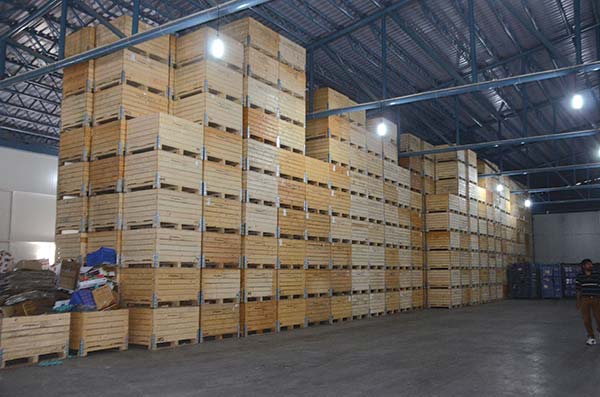
This infrastructure, FCIK argues, is essential for reducing agricultural waste, supporting farmers, and enhancing the region’s competitive stance in both domestic and international markets.
In a recent statement, FCIK highlighted the increasing importance of cold storage facilities in the agriculture and horticulture sectors, describing them as crucial to the region’s farming economy. President of FCIK, Shahid Kamili, noted that cold storage is especially critical for preserving crops like apples, enabling farmers to hold back from distress sales when market surpluses drive prices down. This preservation allows farmers to sell when prices stabilise, helping to improve incomes, reduce post-harvest losses, enhance seasonal planning, and expand market reach.
Despite the potential benefits, FCIK highlighted significant challenges for the sector, particularly the gap between storage capacity and actual demand. Kamili warned that if this mismatch continues, it could hinder the sector’s growth and sustainability. Currently, 86 Controlled Atmosphere (CA) storage units operate in the region, with an additional 14 facilities under development, expected to be operational next year. However, FCIK noted that the rapid expansion of storage infrastructure has outpaced demand, leading to underutilisation of existing facilities.
“Underutilisation of cold storage units places financial strain on operators and discourages further investment. The high fixed costs associated with underused facilities threaten the long-term viability of the cold storage industry,” Kamili cautioned.
Another challenge identified by FCIK is the difficulty cold storage operators face in accessing government incentives. “Many facilities miss out on policy benefits due to issues like missed registration deadlines or other bureaucratic obstacles, resulting in delays or denial of incentives,” FCIK observed.
In response to these issues, FCIK called for improved policymaking, government support, and targeted incentives that benefit both farmers and operators. The Chamber emphasised the importance of incorporating feedback from grassroots organisations like the Jammu & Kashmir Fruits and Vegetables Processing and Integrated Cold Chain Association (JKPICCA), a constituent of FCIK.
Congratulating the newly elected office bearers of JKPICCA, FCIK expressed optimism that the association, in collaboration with FCIK, would provide valuable feedback to government policymakers to address these challenges. The recent JKPICCA elections were held on Saturday at the Directorate of Horticulture, with oversight from officials across departments, including former FCIK President MD Qureshi and IGC Lassipora President Mukhtar Ahmad Khan. FCIK praised the election’s fairness and transparency, which was managed by an election commission comprising Irshad Ahmad Bhat, Ashiq Shangloo, and Mushtaq Ahmad Dar.
FCIK extended strong support to the newly elected JKPICCA leadership: President Bashir Ahmad Naik, Vice President Mohammad Arif Mir, and General Secretary-Treasurer Ishfaq Ahmad Malik. The Chamber congratulated them on their victory in a democratic process that received broad support from the association’s members.