by Umaima Reshi
SRINAGAR: Throughout the twentieth and twenty-first centuries, Muslim philosophers, scientists, and leaders have stood at the forefront of human progress. Their contributions have ranged across disciplines, from theoretical physics to molecular biology and literature. Each has embodied universal values of knowledge, justice, and charity. Among them are Nobel laureates, whose achievements have transformed scientific and humanitarian understanding. Yet beyond the winners lie the thinkers and dreamers whose conviction rests on the belief that the world can change through ideas.
Moungi Mohamed Salah Bawendi
Moungi Bawendi, born in Paris to the Tunisian mathematician Mohamad Salah Baouendi, holds the Lester Wolfe Professorship in Chemistry at the Massachusetts Institute of Technology. He is recognised globally as one of the leading researchers in nanotechnology. In 2023, he shared the Nobel Prize in Chemistry for pioneering the study of quantum dots, tiny particles that emit pure light. The Nobel Foundation praised him for transforming their chemical production and achieving near-perfect results.
During the decade from 2000 to 2010, Bawendi was frequently cited as the world’s top chemist, his work setting new standards in synthesising high-quality, stable, and uniform quantum dots. In 1993, along with his students David J. Norris and Christopher B. Murray, he introduced the total-injection synthesis technique, allowing precise control over particle size and optical quality. This innovation opened new frontiers in medicine, imaging, and quantum computing.
Omar M Yaghi
Omar Mwannes Yaghi was born in 1965 to a Palestinian refugee family displaced from Al-Masmiyya in the former Gaza Subdistrict. His family endured extreme hardship, living in a one-room house without electricity or clean water. From this humble beginning emerged one of the boldest chemists of his time. Yaghi viewed chemistry as a form of structural art, where molecules fit together with mathematical precision.
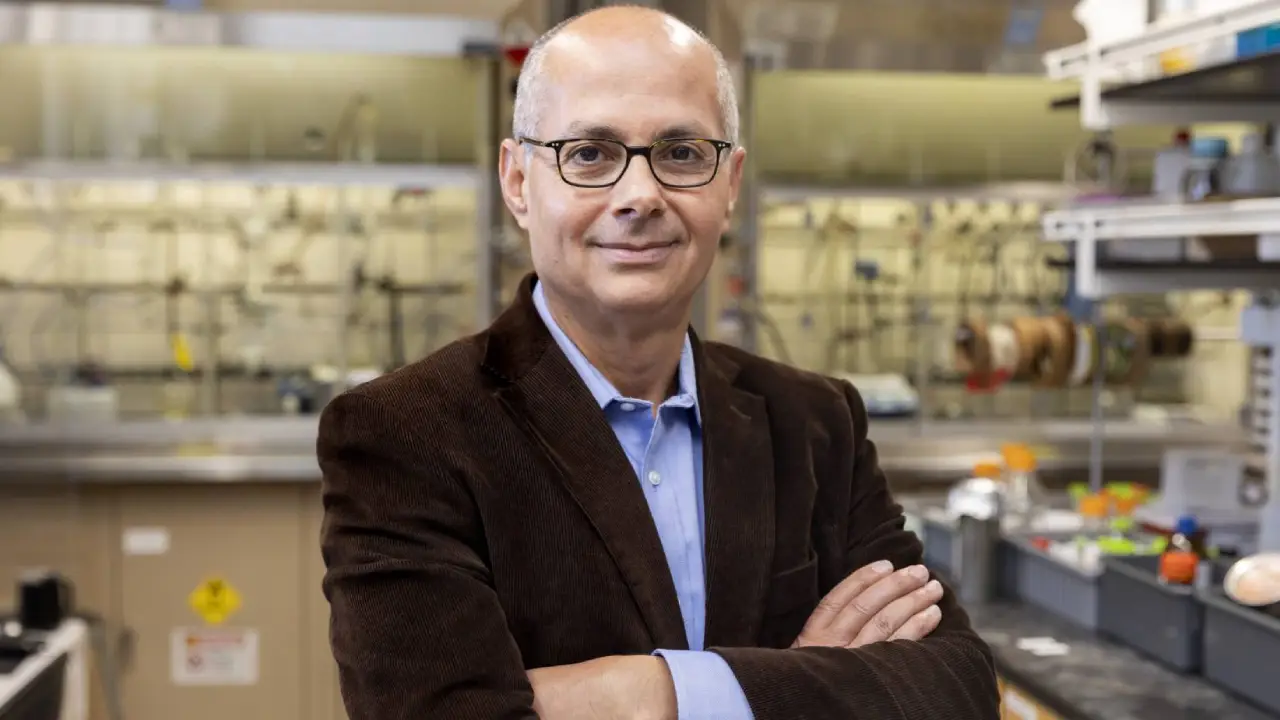
In 1995, he created the first metal-organic frameworks (MOFs), crystalline structures with vast internal surface areas. His later invention, MOF-5, introduced in 1999, stunned scientists with its stability at high temperatures and its remarkable capacity to store gases. Together with Susumu Kitagawa and Richard Robson, Yaghi laid the foundation for a new class of materials with uses in clean energy, carbon capture, and catalysis. His work transformed molecular imagination into tangible architecture, showing that even the smallest particles could redefine how we perceive matter.
Aziz Sancar
Aziz Sancar, a Turkish molecular biologist, has profoundly advanced the understanding of DNA repair, the cell cycle, and circadian rhythm regulation. In 2015, he shared the Nobel Prize in Chemistry with Tomas Lindahl and Paul L. Modrich for uncovering the mechanisms by which cells repair damaged DNA. His detailed studies of photolyase and nucleotide excision repair in bacteria reshaped knowledge of how organisms preserve genetic stability under constant environmental assault.
The trio revealed the intricate systems that protect life from within, ensuring the transmission of genetic material across generations. Their discoveries illuminated the silent processes that sustain continuity in living forms.
Malala Yousafzai
Malala Yousafzai was born on July 12, 1997, in Mingora, Swat Valley, Pakistan. From an early age, she stood against the Tehrik-e-Taliban Pakistan’s ban on girls’ education. At fifteen, a Taliban gunman shot her as she returned from school. She survived and was flown to Birmingham, England, for treatment, an event that sparked worldwide outrage and solidarity.

In 2014, she received the Nobel Peace Prize, becoming the youngest laureate in history. Her advocacy led to Pakistan’s Right to Education Bill and the creation of the Malala Fund, which supports girls’ education globally. Malala’s life remains a testament to courage and the transformative power of knowledge.
Tawakkol Karman
Tawakkol Karman, a Yemeni journalist and activist, became the first Arab woman to receive the Nobel Peace Prize. She shared the honour with Ellen Johnson Sirleaf and Leymah Gbowee for their efforts to promote peace and women’s rights. As the leader of protests against President Saleh’s authoritarian rule, she championed non-violence despite repeated threats and imprisonment.
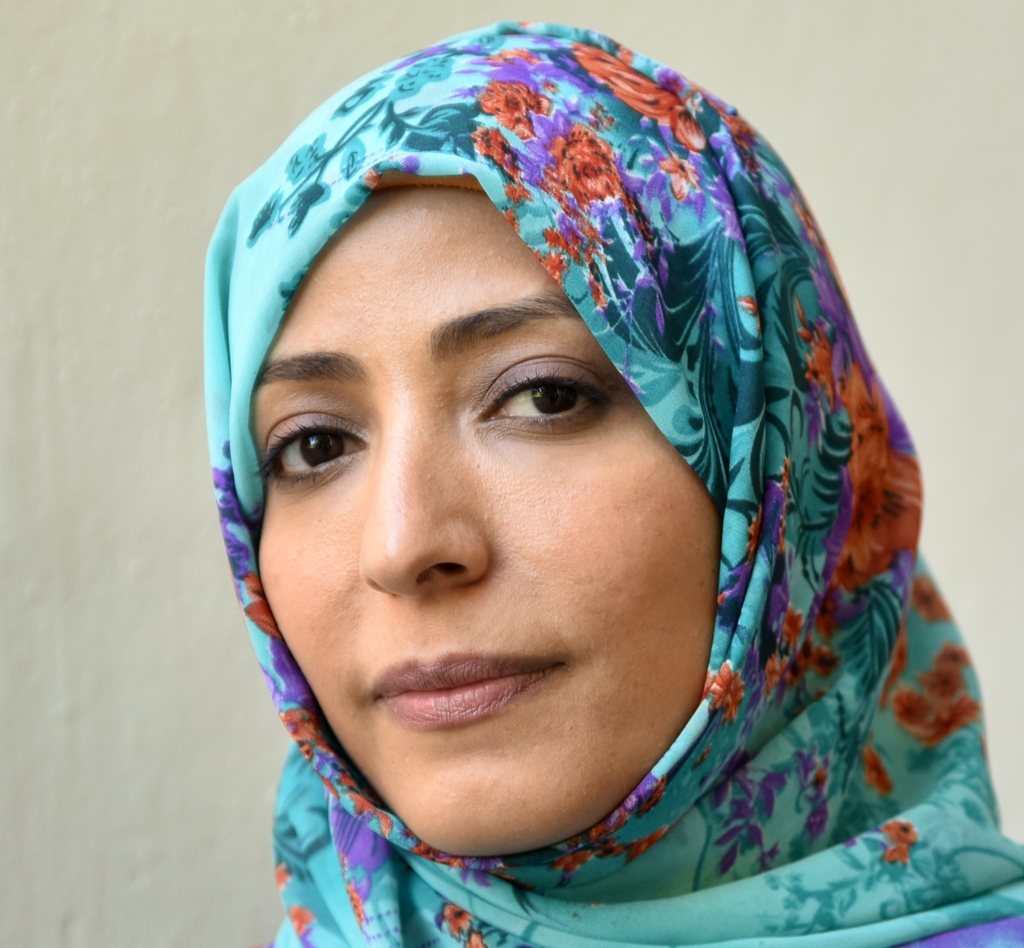
Karman was a strong advocate for unity among Shia and Sunni communities and for interfaith harmony. Like the Iranian laureate Shirin Ebadi, she believed that Islam and women’s empowerment are not opposing ideals but mutually reinforcing values.
Muhammad Yunus
Muhammad Yunus, born on June 28, 1940 in Chittagong, then part of British India and now Bangladesh, revolutionised global finance with his idea of microcredit. In 2006, he won the Nobel Peace Prize for his work through the Grameen Bank, which he had founded in 1983. His approach offered small, interest-free loans to help the poor, especially women, start businesses and gain independence.
During the 1974 famine, Yunus, then an economics professor at Chittagong University, began lending small sums to the needy. This initiative grew into a worldwide model of social entrepreneurship. He has long argued that poverty strips people of dignity, and that trust and opportunity are the most powerful instruments for restoring equality and hope.
Orhan Pamuk
Orhan Pamuk, born on June 7, 1952, is among Turkey’s most celebrated novelists. His fiction explores themes of identity, memory, and the tension between East and West. In 2006, he received the Nobel Prize in Literature for his mastery of storytelling that bridges tradition and modernity.
His best-known works, My Name is Red and The Museum of Innocence, have been translated into more than sixty languages. Raised in a wealthy but secular Istanbul family, Pamuk abandoned architecture to devote himself to writing. Despite political persecution, he has remained deeply attached to Istanbul, which he describes as both muse and mirror of Turkey’s evolving identity. His novels portray a society poised between nostalgia and change.
Mohamed ElBaradei
Mohamed ElBaradei, born on June 17, 1942 in Cairo, rose from diplomat to Director General of the International Atomic Energy Agency. In 2005, he and the IAEA received the Nobel Peace Prize for their efforts to strengthen global cooperation on nuclear safety and non-proliferation.
Educated in law at Cairo University and later at New York University, ElBaradei combined legal insight with diplomacy to advocate for transparency and peace. His leadership reflected a rare balance of science, law, and ethics, offering a model for responsible international governance.
Shirin Ebadi
Shirin Ebadi, born on June 21, 1947, in Hamadan, Iran, was among the first women in her country to become a judge. After the 1979 Islamic Revolution, she was dismissed from her position but continued her struggle for justice and women’s rights. In 2000, she was imprisoned for her criticism of Iran’s theocracy, yet she persisted, founding organisations devoted to legal reform and the protection of children’s rights.
Ebadi received the Nobel Peace Prize in 2003, becoming the first Iranian woman to earn the distinction. The Nobel Committee recognised her for fostering dialogue between Islamic and Western societies and for her quiet but determined support of Iran’s reform movement during a critical historical period.
Ahmed H Zewail
Ahmed Hassan Zewail, born on February 26, 1946 in Damanhur, Egypt, and educated in Alexandria, became known as the father of femtochemistry. He won the Nobel Prize in Chemistry in 1999 for his pioneering use of ultrafast lasers to observe chemical reactions at the femtosecond scale, a millionth of a billionth of a second.
His work opened a new era in chemistry, making it possible to view the rearrangement of atoms in real time, frame by frame. After earning his PhD from the University of Pennsylvania, Zewail joined the California Institute of Technology, where his research transformed the understanding of molecular behaviour and reaction dynamics.
Yasser Arafat
Yasser Arafat, born on August 24, 1929, in Cairo, became the central figure in the Palestinian struggle for statehood. In 1994, he shared the Nobel Peace Prize with Israeli leaders Yitzhak Rabin and Shimon Peres for their efforts to achieve peace under the Oslo Accords, a landmark step in the pursuit of reconciliation in the Middle East.
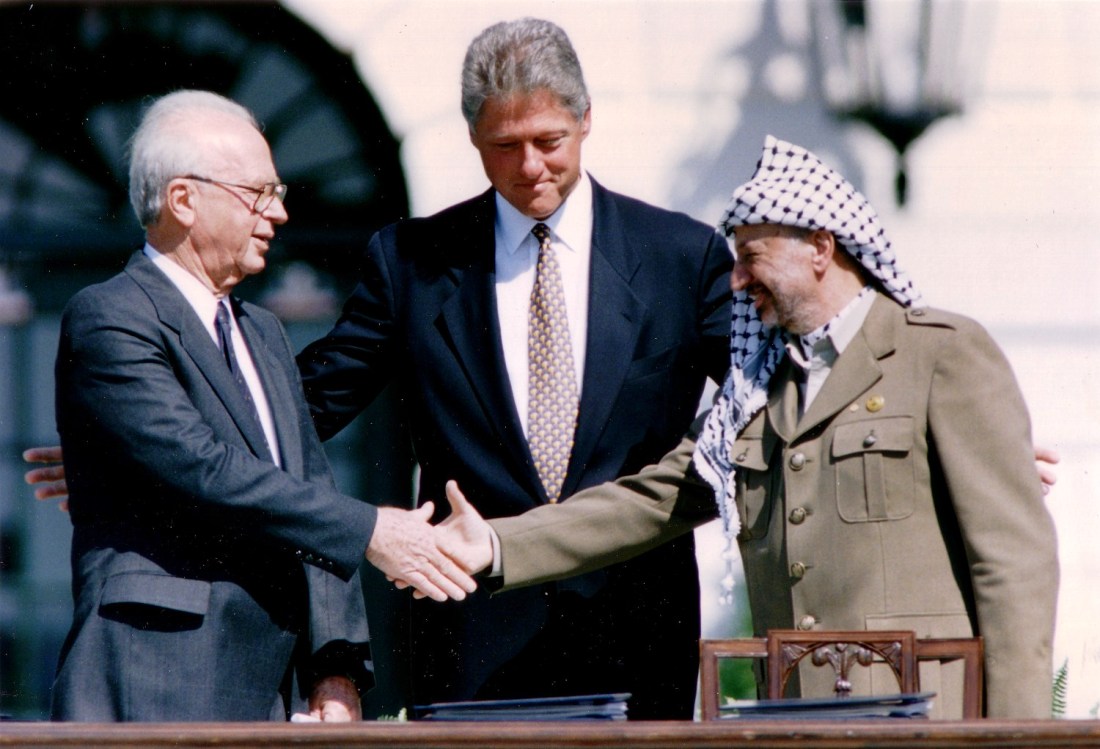
Arafat founded the Fatah movement and later led the Palestine Liberation Organisation, evolving from a guerrilla leader into a statesman. His 1974 address to the United Nations, in which he declared that he held “a peace branch in one hand and a freedom fighter’s gun in the other,” reflected his belief in resistance and dialogue as parallel paths to liberation. Though his legacy remains debated, Arafat’s role in shaping the Palestinian cause is indelible.
Naguib Mahfouz
Naguib Mahfouz, born on December 11, 1911 in Cairo, was Egypt’s foremost novelist and one of the Arab world’s most influential literary figures. Awarded the Nobel Prize in Literature in 1988, he became the first Arab writer to receive the honour. Over his long career, he produced more than thirty novels and hundreds of short stories, exploring faith, time, love, and social change against the backdrop of Cairo’s crowded streets.
Trained as a philosopher and employed as a civil servant, Mahfouz moved from ancient historical narratives to depictions of modern urban life. His celebrated Cairo Trilogy portrayed the evolution of Egyptian society through ordinary families, establishing him as the literary conscience of the Arab world.
Abdus Salam
Abdus Salam, born on January 29, 1926, in Jhang, then under British rule and now part of Pakistan, was a theoretical physicist whose work reshaped modern science. In 1979, he shared the Nobel Prize in Physics with Sheldon Glashow and Steven Weinberg for developing the electroweak theory, which unified the electromagnetic and weak nuclear forces into a single framework.
Salam was Pakistan’s first Nobel laureate and a tireless advocate for scientific education in the developing world. He founded institutions that continue to train generations of physicists, believing that progress in science must belong to all nations, not only the privileged few.
Mohamed Anwar El-Sadat
Anwar El-Sadat, born on December 25, 1918 in Mit Abu al-Kawm, Egypt, received the Nobel Peace Prize in 1978 alongside Israeli Prime Minister Menachem Begin for their efforts to reach a peace agreement at Camp David.
A soldier turned statesman, Sadat rose to the presidency after the death of Gamal Abdel Nasser. His 1977 visit to Jerusalem marked a turning point in Arab–Israeli relations, breaking a long-standing barrier of hostility. His decision to pursue peace cost him his life when he was assassinated by extremists in 1981. Sadat remains remembered as a leader who chose dialogue over enmity and reconciliation over war.
Abdulrazak Gurnah
Abdulrazak Gurnah, born in 1948 on Zanzibar Island, received the Nobel Prize in Literature in 2021. His life and writing have been shaped by exile, a condition that began in the early 1960s when he fled persecution against the Arab community during political unrest. Settling in England, he began to write about displacement, identity, and the search for belonging.
Gurnah’s novels portray the experiences of migrants and the enduring impact of colonialism in East Africa. His writing gives voice to those uprooted by history, bridging the cultural and geographic divides between continents. The Nobel Committee commended him for his unflinching and compassionate depiction of colonial legacies and the struggles of the displaced. Through his narratives, Gurnah revealed exile not only as a condition of loss but also as a testament to endurance and memory.
The Shared Legacy
The stories of these Muslim Nobel laureates form a continuous thread of intellect, resistance, and compassion. Whether in laboratories, courts, classrooms, or conflict zones, they embody a single truth: that knowledge and humanity transcend creed and geography. Their journeys remind the world that Islam’s intellectual tradition, grounded in learning, patience, and justice, continues to nurture progress and hope.