SRINAGAR: The humanitarian crisis in Gaza has intensified as relentless bombardment and ground operations by Israeli forces continue, leading to soaring civilian casualties and widespread devastation. Reports from international media detail the dire situation, with hospitals overwhelmed, essential supplies dwindling, and diplomatic efforts struggling to secure a ceasefire.
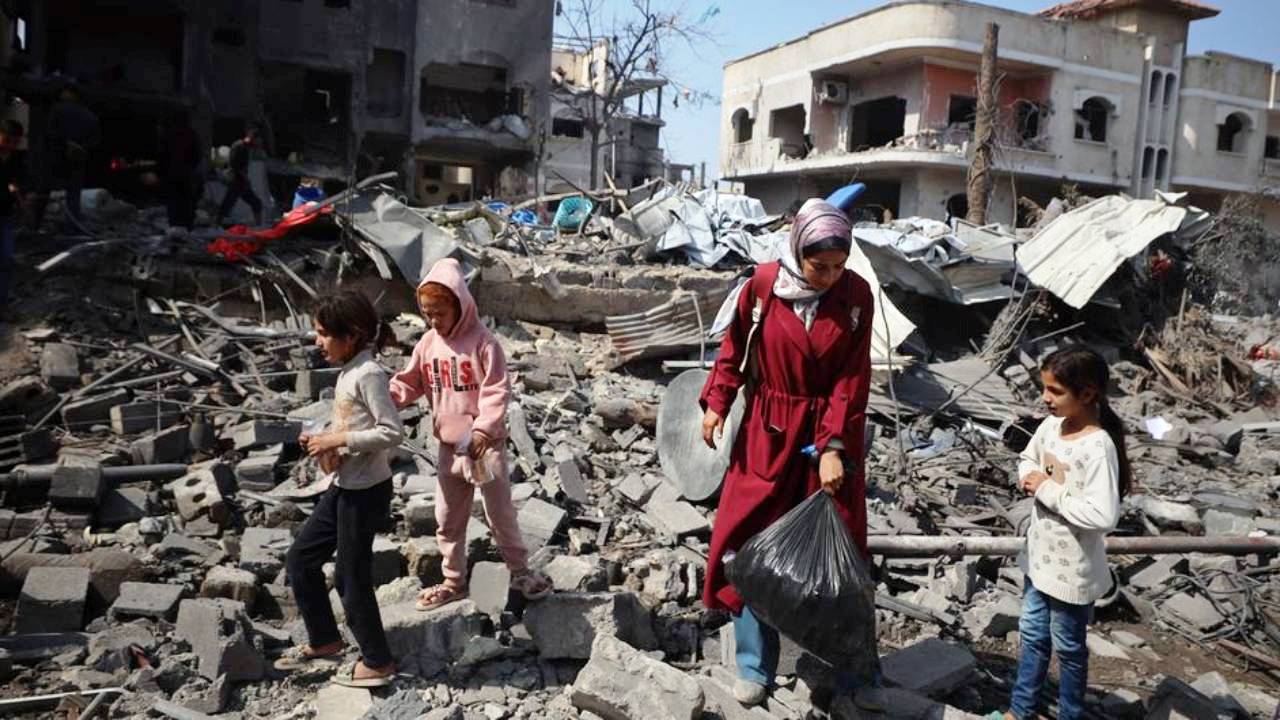
According to reports, Israeli airstrikes have targeted residential areas, refugee camps, and key infrastructure, exacerbating the already catastrophic conditions. Palestinian health officials report that 42 people were killed today alone, bringing the total death toll since the Israeli occupation army resumed its genocidal war on Gaza on 18 March to over 1,000, including at least 322 children. A further 609 have been injured during the same period, according to figures released by the Ministry of Health, a majority of them women and children, while tens of thousands have been injured.
With medical facilities operating beyond capacity and shortages of medical supplies worsening, doctors are struggling to treat the wounded. The collapse of sanitation systems and limited access to clean water have raised fears of disease outbreaks.
The hunger crisis in Gaza has reached catastrophic levels, with malnutrition spreading rapidly, particularly among children. The United Nations has warned that famine-like conditions are emerging due to severe food shortages and restricted humanitarian access. The situation worsened further as the last functioning UN-run bakery shut down due to a lack of fuel and flour, cutting off a crucial food source for thousands of desperate civilians.
International condemnation has mounted, with reports confirming that at least 408, including more than 280 UNRWA staff aid workers have been killed since the resumption of hostilities, highlighting the dangers faced by humanitarian personnel attempting to assist civilians, with humanitarian organisations warning that Gaza is on the brink of an unprecedented catastrophe. The United Nations and aid groups have repeatedly called for an immediate ceasefire to allow humanitarian assistance into the enclave, where food, water, and electricity remain critically scarce. However, despite growing global pressure, diplomatic efforts have failed to secure a sustainable halt in hostilities.
The medical crisis is also worsening, with hospitals running out of essential medicines, including painkillers and anaesthetics. Doctors have reported performing surgeries without proper anaesthesia, forcing patients to endure excruciating pain. The shortage of critical medical supplies has left thousands of injured civilians with little to no access to adequate treatment, compounding the suffering of the wounded.
The situation has sparked protests and demonstrations worldwide, with activists demanding stronger action from the international community to halt the bloodshed. Major capitals have witnessed rallies calling for an end to the violence, an increase in humanitarian aid, and accountability for civilian casualties.
Meanwhile, regional tensions continue to rise as the conflict threatens to spill beyond Gaza. Reports suggest that Israel is keen to seize significant portions of land and potentially bifurcate Gaza into two, further complicating any future political resolution.
Observers argue that military operations appear to be paving the way for territorial reconfiguration, raising fears of permanent displacement for thousands of Palestinians. Reports suggest that cross-border exchanges between Israel and Hezbollah along the Lebanese border have intensified, raising concerns of a broader escalation. The United States and European powers have urged restraint, but the risk of further regional instability remains high.
As the humanitarian toll mounts, efforts to mediate a ceasefire remain deadlocked. The Israeli government maintains that its operations are targeting Hamas and other militant groups in response to rocket attacks, arguing that the offensive is necessary for national security. However, Palestinian leaders and rights organisations insist that civilians are bearing the brunt of the conflict, with entire neighbourhoods reduced to rubble and thousands displaced with nowhere to go.
Amid the mounting crisis, international leaders continue to push for an urgent de-escalation. However, with no immediate resolution in sight, the people of Gaza remain trapped in an increasingly desperate situation, pleading for the world to intervene before it is too late.
(This news item is based on the reportage from international media that operates from occupied territories and Jerusalem)