SRINAGAR: After a long wait, the Geological Survey of India (GSI) has declared the famed Guryul Ravine at Khonmoh, Srinagar, as a National Geoheritage Site, recognising it as one of the world’s most complete records of the greatest biological catastrophe in Earth’s history, the Permian-Triassic mass extinction, which occurred about 252 million years ago.

The announcement came on Thursday during the celebration of the 4th Edition of UNESCO International Geodiversity Day 2025 and the 9th Edition of International Geo-Ethics Day, held under the theme Harnessing Geodiversity for Geoconservation. On the occasion, GSI’s Director General formally passed the resolution declaring two new Geoheritage sites in India, one of them being the Guryul Ravine section in Jammu and Kashmir.
The decision marks a major scientific milestone for the Union Territory, placing the Guryul Ravine, long studied by geologists and palaeontologists from across the world, on the country’s official list of sites of national geological importance. Along with it, the fossiliferous supplementary sections near Barus, Mandhakpal and Pastun in Pulwama have also been recognised as part of the same heritage belt.
Located at the foothills of the Zabarwan range near Khonmoh, the Guryul Ravine preserves a continuous sedimentary record from the Late Permian to Early Triassic period, a time when about 90 per cent of marine life and 70 per cent of land species perished in what scientists call the Great Dying. This extinction event marked the transition between the Palaeozoic and Mesozoic eras, forever altering the course of life on Earth.
The rocks at Guryul Ravine capture this dramatic transformation, preserving rich fossil layers of Bryozoa, Brachiopoda, Bivalves, Gastropods, Ammonoids, and Conodonts. These fossils offer critical clues to understanding how life rebounded after a near-total collapse, making the site a globally significant research archive.
According to geologists, Guryul Ravine is one of the few known locations worldwide that presents a near-complete Permian-Triassic Boundary (PTB) section. Each layer of rock here serves as a natural archive, narrating Earth’s story of extinction, survival, and regeneration.
To mark the declaration, the GSI’s State Unit for Jammu, Kashmir and Ladakh organised a public outreach and Swachhta Hi Sewa campaign at the Guryul Ravine site. The event, led by Dr PS Misra, Deputy Director General, and Abdul Qayoom Paul, Director, GSI Kashmir, was attended by scientists, environmentalists, government officials, and local communities.
The celebration included an awareness workshop, a cleanliness drive, a plantation campaign, and the unveiling of an informative signboard marking the newly declared National Geoheritage Site. Safai Mitras were felicitated for their contribution to maintaining cleanliness at the site.
Senior GSI officers, including Pankaj Kumar, Senior Geologist and Incharge of the Park and Museum Division, and Zahid Majeed, Senior Geologist, coordinated the activities alongside officials from the Department of Geology and Mining, Forest and Wildlife Departments of the UT, and representatives from local administration, NGOs, and educational institutions.
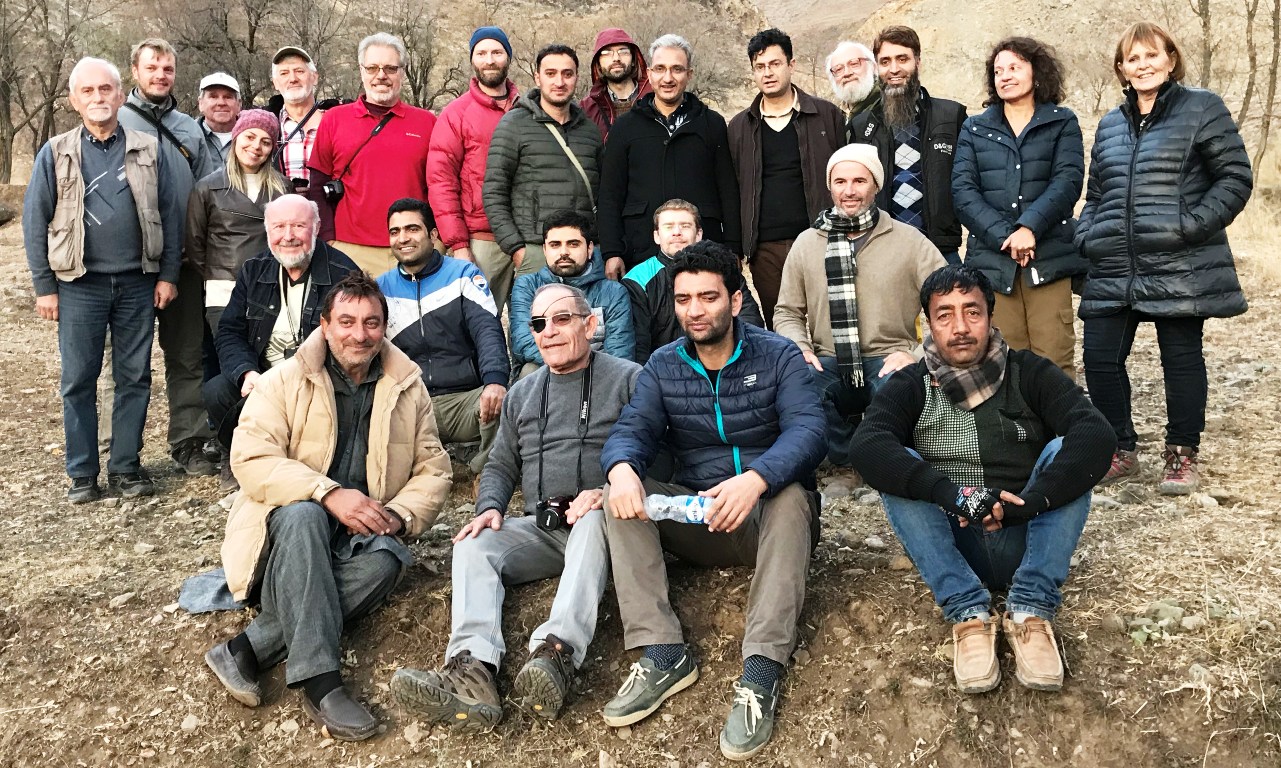
Eminent geoscientists, including Professor Ghulam Jeelani, Head of the Department of Earth Sciences, University of Kashmir; Professor GM Bhat, former Head of the Department of Geology, Jammu University; and Mudasir Nazar, Divisional Forest Officer, Awantipora, attended and addressed the event. They underscored the scientific and educational importance of preserving the Guryul Ravine site for future generations.
Officials from the Forest and Wildlife departments, Environmental Policy Group, local colleges, schools, and members of the public participated enthusiastically in the campaign, which aimed to spread awareness about geoconservation and responsible tourism.
The Guryul Ravine has long been known to the global scientific community. It has attracted researchers from India and abroad for over a century and has often been referred to in geological literature as one of the best-preserved boundary sections from the time of the mass extinction. Despite this, formal recognition as a Geoheritage site had remained pending for decades.
With its new status, the Guryul Ravine joins the list of India’s protected geological landmarks, reaffirming Kashmir’s deep connection with Earth’s ancient history. The GSI has said that the designation will ensure preservation, promote research, and enhance public awareness of the region’s unique geological wealth.
The declaration, coupled with the outreach campaign, symbolised a union of science, society, and stewardship — acknowledging not only the past buried in rock but also the responsibility to protect it for the future.