by Syed Majid Gilani
A nostalgic journey through schooldays in Srinagar, recalling the simplicity, discipline, and shared humanity that once defined a gentler time.
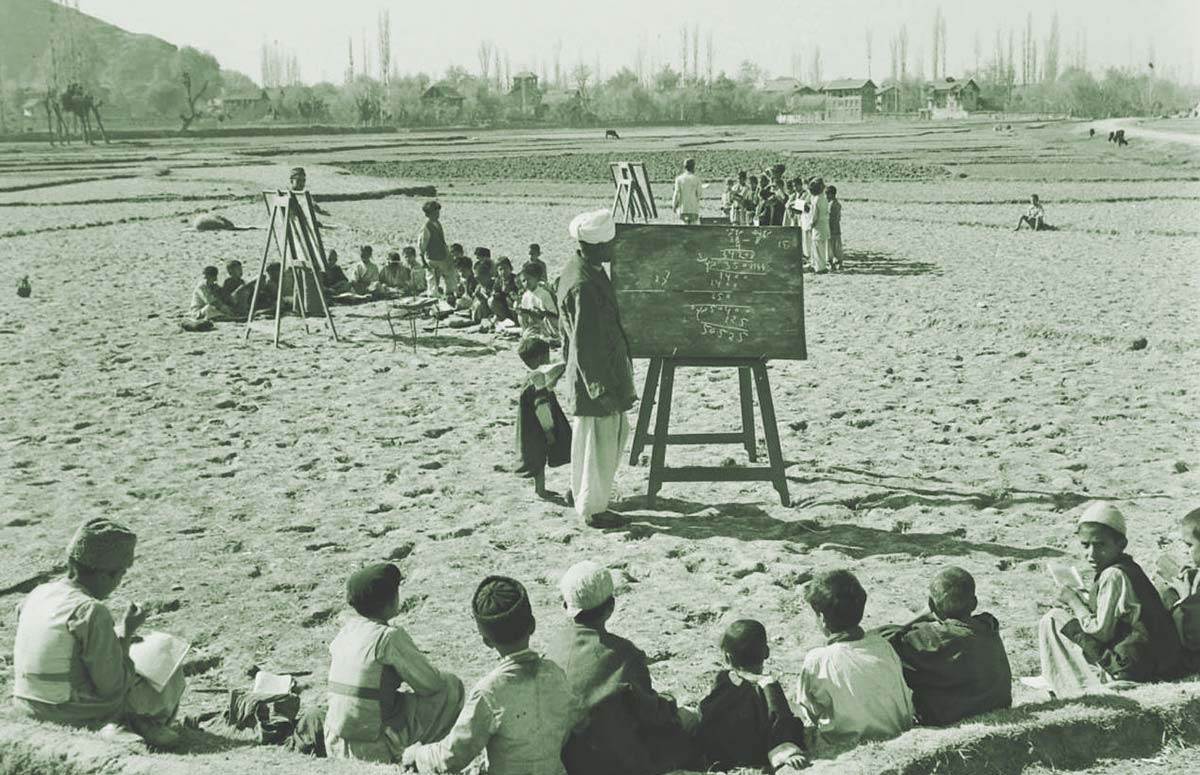
Let us travel back, not just in years, but into a world where life was simple, hearts were kind, and schools shaped both our minds and our character.
My journey began at Caset Experimental School, Rainawari, founded by the respected CL Vishen Sahib. A few years later, I moved to Greenland High School, Hawal, where I studied from Class 1 to Class 10. That school was more than a building; it was a second home, filled with care, curiosity, and friendships that still live in memory.
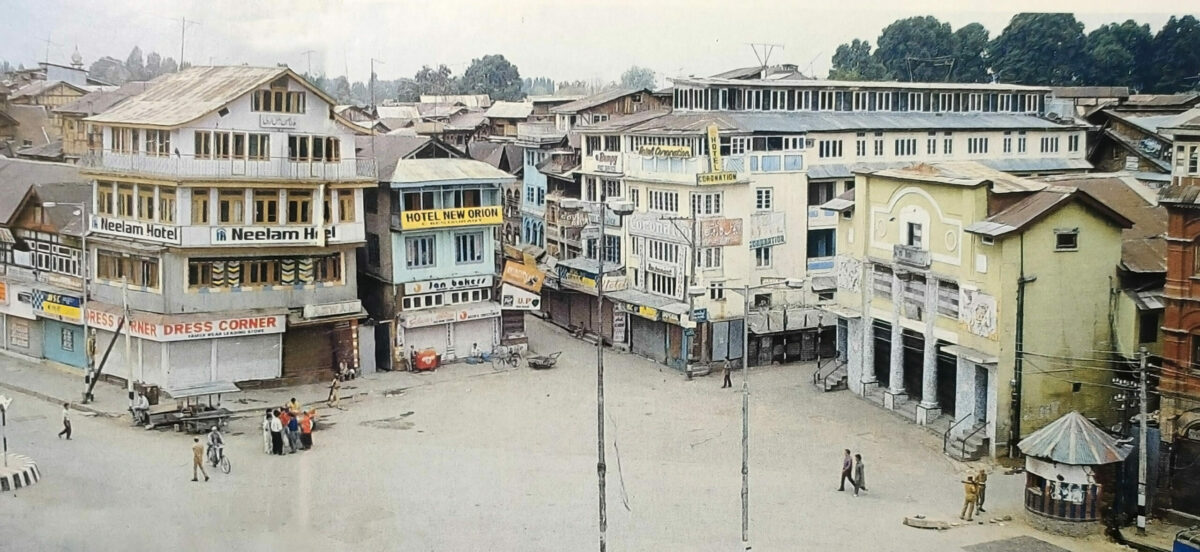
Those were gentler days, the Srinagar of the eighties and nineties, when life moved at its own calm pace and every day carried a quiet charm. People had time for everything: work, hobbies, friendships, and family. Evenings were peaceful, filled with laughter, stories, and the sound of parents talking over tea while children finished their homework nearby.
There were no smartboards, no mobile apps, and no air-conditioned classrooms; benches were plain wooden planks, water came straight from the tap, and schoolbags were light. Yet, we had something far greater—discipline, respect, humility, and truthfulness. School wasn’t about marks or competition; it was about learning how to live with honesty and grace. We didn’t carry sanitisers or branded lunch boxes, just a handkerchief, a pencil box, and a heart full of excitement for the day ahead. Somehow, we stayed healthy, happy, and content.
I remember my teachers with deep affection and gratitude. Siraj Sir, Farooq Sir, and Mukhtar Sir made mathematics interesting; Narinder Sir filled our mornings with energy; and Rita Bakaya Ma’am and Rita Chakoo Ma’am taught science and language with warmth. There were many others, too, each leaving a mark that still guides us in quiet ways.
Discipline then came from love, not fear. A light scolding or a gentle tap on the knuckles was never humiliation but correction. Parents trusted teachers completely, creating a bond of respect that made every child feel safe and valued.
Our teachers came from all communities: Muslims, Kashmiri Pandits, and Sikhs. We celebrated Eid, Milad, Nauroz, Shivratri, and Baisakhi together. There were no walls between us, only shared smiles, prayers, and dreams. It wasn’t religion that united us; it was our culture, our language, and our shared humanity, the true spirit of Srinagar that embraced every heart.
Our principal, the late Mohammad Ashraf Jan Sahib, founder and guiding force of the school, would arrive every morning in his gleaming white Fiat, calm, wise, and dignified. His very presence brought quiet respect. Even the most mischievous student would fall silent the moment he appeared.
We also cherished our non-teaching staff, Maqbool Seab Jr., Halima Ji, Kanta Ji, and Kiran Ji, who were part of the school’s soul, always ready with a smile or a helping hand. Our 52-seater school bus would pick us up from Botshah Colony under a wide Chinar tree, with the kind and chubby Maqbool Seab Sr keeping us disciplined with gentle humour. Very few children used the school bus back then. My late father had enrolled me for it, and I remember feeling quietly grateful and content.
Later, when the school opened a small canteen run by Maqbool Seab Jr., a cup of tea and a crispy samosa cost just two rupees, simple pleasures that felt precious. Every morning, my father handed me a crisp two-rupee note, my pocket money for the day. It was enough for a tea and a samosa, or sometimes an ice cream or a spicy masala roti from outside the school gate. That little note carried deep meaning—my father’s trust and his gentle way of teaching me contentment and joy in simple things.
Outside the gate, orange ice creams sold for fifty paisa, khoya bars for one rupee, and the big pista bar, our rare treat, for two rupees. The warm masala roti, fragrant and spicy, cost one rupee and was everyone’s favourite on cold afternoons.
During lunch breaks, we shared food, stories, and laughter. At the final bell, we lined up quietly and left in order. That simple discipline and unity—I miss it deeply today.
Then came the difficult days. I was in Class 7 when unrest began in the valley. The school bus stopped running. We walked long distances or squeezed into crowded TATA buses, waiting endlessly at the stop. Strikes and curfews became routine, but our school never stopped—and neither did our dreams.
Evenings in Srinagar had their own rhythm: the aroma of freshly baked tchuchwer and kulchas, children playing cricket in narrow lanes, radios playing soft melodies, and families talking across open windows. Life moved gently, defined by simplicity and gratitude.
I still see myself in grey pants, a crisp white shirt, a green sweater, white socks, and polished black shoes, standing tall, not just because of the uniform, but because of the values stitched into it.

Today, when I see students arguing with teachers or parents interfering in classrooms, it hurts softly somewhere inside. Something tender has faded—the humility, patience, and quiet respect that once shaped our lives.
But it isn’t gone forever. We can bring it back by remembering, by sharing these stories, and by reviving that spirit of gratitude, simplicity, and respect that once defined our Srinagar.
I no longer wear that uniform or carry a tiffin box. But deep inside, I am still that boy—with two rupees in his pocket, a hot samosa in his hand, and a heart overflowing with gratitude and joy. Somewhere along the way, life became louder and faster. In our race to move ahead, we lost something gentle—the quiet values that once guided our lives.
And so, whenever I close my eyes and return to those peaceful days—to my school, my friends, and my Srinagar—I find what the world seems to have misplaced. In those quiet, priceless memories, I still find peace.
(The author is a government officer by profession and a storyteller by passion. Ideas are personal.)