SRINAGAR: Serious concerns over “abnormally low” tendering dominated proceedings in the Jammu and Kashmir Legislative Assembly on Friday, with members across party lines warning that awarding public works to contractors quoting 60 to 80 per cent below scheduled rates was compromising quality and fuelling corruption in engineering departments.
The issue surfaced during the debate on grants for ministries under Deputy Chief Minister Surinder Choudhary, as legislators questioned how contractors could realistically execute works at a fraction of approved costs without cutting corners.
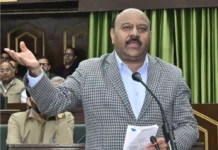
BJP MLA Surjit Singh Salathia termed the practice “bizarre,” arguing that works estimated at Rs one lakh could not be completed at Rs 40,000 without sacrificing standards. “Besides contractors, officers responsible for clearing such bids must also be held accountable,” he said, calling for strict action to deter malpractice.
Congress MLA Iftikhar Ahmed echoed the concern, asking how projects valued at around Rs one crore were being allotted for as little as Rs 40 lakh. “This needs thorough examination so that such precedents do not continue,” he said, warning that the system encouraged corrupt practices.
From the BJP benches, Satish Sharma and Sunil Bhardwaj demanded a more pragmatic tendering framework, insisting that contractors be made accountable for maintaining standards. They called for blacklisting of firms whose work fails quality checks or violates defect liability clauses.
Independent MLA Choudhary Akram said poor-quality works were becoming routine due to lowest-bid contracts and added that delayed payments were further stalling development projects in his constituency.
Several members linked the low-bid culture to deteriorating infrastructure, citing roads that fail within days of macadamisation, incomplete works and frequent repairs that ultimately raise public expenditure. Legislators urged the government to introduce safeguards in the tender process, cap excessive undercutting of rates and fix responsibility on both contractors and officials.
As calls for reform grew louder, the House pressed for systemic changes to ensure that cost savings do not come at the expense of durability and public safety, with many demanding an overhaul of the existing “lowest bidder” model to protect the quality of public works across the Union Territory.