SRINAGAR: Jammu and Kashmir on Sunday reviewed the performance of its electronic traffic enforcement systems, which together comprise 1,380 cameras across the twin cities, even as 648 cameras remain non-functional in Srinagar owing to licence issues.
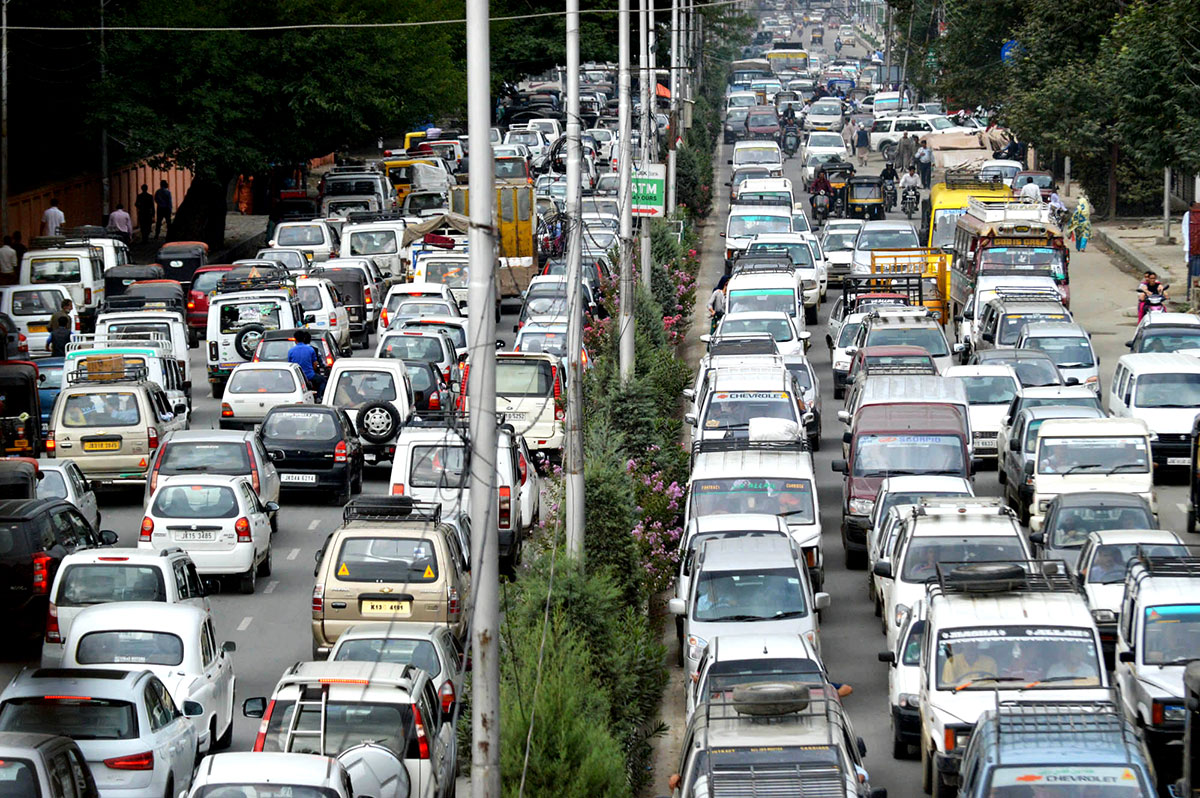
The functioning contrast has been stark: Jammu’s 552 fully operational cameras, active since June 17, 2024, have generated Rs 41.46 crore through 416703 challans, while Srinagar’s system, operational since December 2024 with only 180 functional cameras out of 828, has recorded Rs 1.66 crore in revenue from 15295 challans. These figures were placed before senior officers from Police, Transport and Housing and Urban Development during a high-level administrative review held today.
Inspector General of Traffic M Suleman Choudhary informed the meeting that Jammu’s ITMS continues to operate smoothly, whereas Srinagar’s network has been disrupted after expiry of the system licence. The deliberations also noted the state of the Intelligent Traffic Light System, where twenty-one out of sixty-four sites in Jammu have been closed owing to road widening, while Srinagar has fifty-seven functional sites out of sixty-six.
Commissioner Secretary Housing and Urban Development Department, Mandeep Kaur, stated that a Detailed Project Report worth Rs 1.88 crore has been completed for full restoration and modernisation of all ITLS junctions. She added that the government intends to make every ITMS and ITLS junction functional by December 2025. The administration also discussed extending Rural ITMS to major district intersections in Anantnag, Baramulla, Kathua, Udhampur, Samba and other areas to ensure uninterrupted electronic regulation even as highway construction continues.
The meeting reviewed the existing enforcement structure under which the Motor Vehicles Department and the Police jointly administer digital challaning, with the Judiciary acting as the appellate authority. Officials also presented the proposed framework built around real-time data-driven enforcement, stronger inter-agency coordination, targeted action in high-risk mountainous corridors and wider awareness and capacity-building efforts.
After the technical assessment, Chief Secretary Atal Dulloo expressed concern about the continued underutilisation of intelligent systems, particularly in Srinagar. He noted that these systems were intended to modernise traffic regulation with minimal human intervention and warned that leaving them idle undermines the investment made in them. He directed the departments to ensure immediate repairs, replacement of defective hardware and full restoration of the ITMS and ITLS network so that citizens experience smoother and safer traffic movement across Jammu and Kashmir.