by Mariya Qadri
A nostalgic recollection of childhood days spent in the kani, blending play, family stories, quiet reading, lingering fears, and the beginnings of a lifelong love for literature
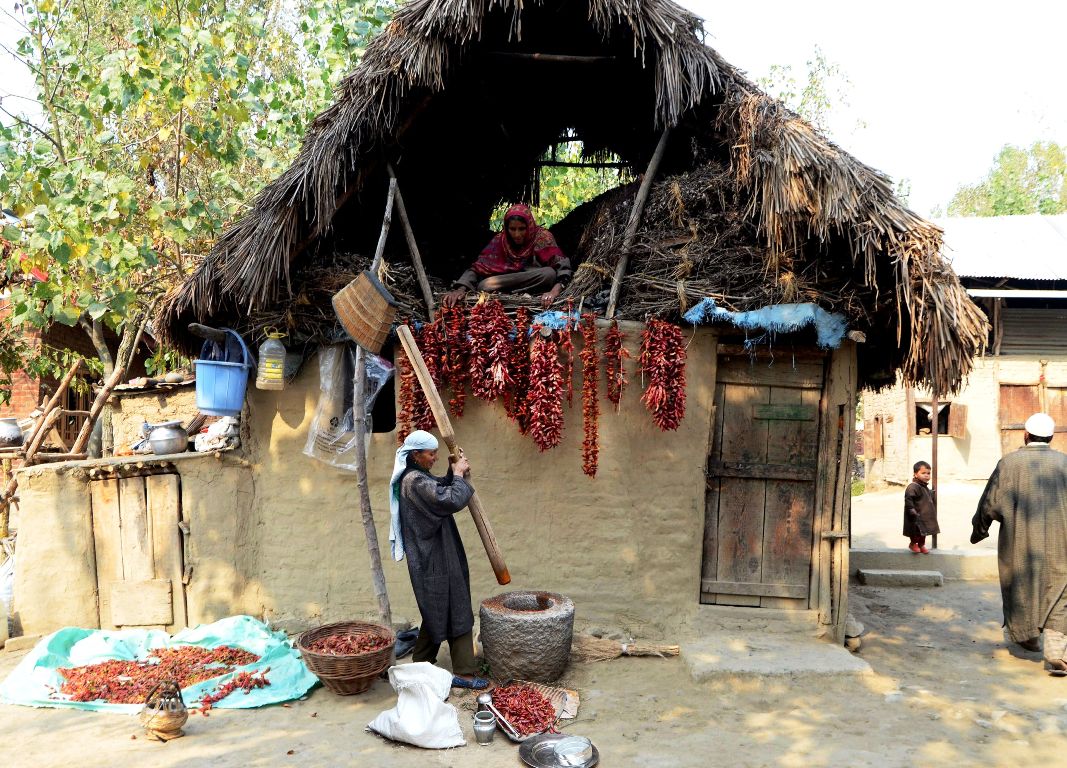
In the quiet hush of summer evenings, when the sun yawned lazily behind the poplar trees, we would climb the creaky wooden stairs to the kani, the attic of our ancestral home. It was a space that smelled of seasons gone by: of dry hay, of smoked walnuts, of old trunks filled with the soft rustle of forgotten clothes. The floor was made of mud, straw, and thick planks of ageing wood, its scent earthy and comforting like grandmother’s lap.
My sister and I, along with our giggling cousins, would spend hours playing among the trunks. We draped old pherans over ourselves like queens, wrapped dupattas over our heads pretending to be brides, and sometimes just lay on the floor, listening to the distant hum of bees outside. The sun filtered in through a small glass window, drawing golden rectangles on the floor where we made our doll weddings.
In one corner, my mother would lay out slices of wangan hachi and al’e hachi, spreading them on old muslin cloths. Rows of walnuts, fresh from our garden tree, would be placed out to dry, filling the room with their damp, woody scent. Sometimes the women of the house would tell us stories as they worked, half-truths, half-whispers, about winters from their girlhood, about snow that buried doors, and ghosts that wandered in the wind.
But when dusk fell, the kani changed. The same wooden beams that sheltered our laughter now moaned in the cold wind, and the walls seemed to breathe secrets. No one went upstairs after dark, not even the bravest adult.
“Rantas chu khansan kani manz,” my grandmother would mutter as she shut the attic door at night. “The djinns from the masjid nearby visit our kani. They love high places.”
We used to laugh, until the night the payal chimed.
It was late autumn, the trees bare, and the house silent. I remember waking to the faint sound of shrin-shrin, like anklets brushing across the floor above. I thought I imagined it. Until I saw my parents standing in the hallway, whispering.
They remembered the story of my great-grandfather, how he once went to the mosque for fajr, the cold still clinging to his shawl. He had asked someone at the wazu khana to pass the jug of water. The figure turned, not a man, but something draped in mist, with musical bells tied around its leg. He ran, barefoot, and just as he reached our garden gate, a pale hand, too long, extended from the dark and tried to hand him the same jug.
Since then, no one dared visit the kani after dark.
But in the daylight, it remained our sanctuary, a space of smells, silences, and stories. A world made of drying vegetables, childhood dreams, and shadows of things we half-believed in.
My father, a passionate reader, subscribed to a constellation of Urdu magazines like Naqushai-Rah, Paigamai-Jahan, Shama and others, and after reading them several times, the magazines would pile up in the kani. I remember how I used to climb up there, curious and excited, to dig through those old stacks and pick out little stories to read. It was in that quiet, tucked-away corner of the house, amidst the slumbering heaps of yellowing pages, that I first discovered solitude and loved it. The kani, with its earthy scent and soft mud floor, became my private world. I would sit there for hours, surrounded by dusty magazines and the silence only an attic can offer, completely absorbed in reading.

This was the place where my love for literature truly began. The words I read felt like secret treasures waiting to be found, and each story opened a door into another world. Sometimes I was so enchanted by what I was reading that I forgot to do my homework or come down for meals. But I didn’t mind. I had found something more lasting: my own space, and a lifelong companionship with books.
And even now, years later, when I close my eyes and think of home, it is not the rooms below, but the kani that returns—the echo of laughter on mud and straw, the warm sting of walnut shells under bare feet, the dusty yellow pages curled with time, the big dreams in the eyes of a little girl, and the ever-present hush of something unseen, waiting behind the trunks.
(The author is pursuing a Master of Arts in English from the University of Kashmir. Ideas are personal.)