by Masood Hussain
SRINAGAR: Sheikh Mohammad Abdullah, Kashmir’s tallest political figure and the first native ruler of the Valley in nearly a millennium, remains the subject of endless debate and reinterpretation. His autobiography, Aatish-e-Chinar, remains one of the most popular books in Jammu and Kashmir, and the most recent biography of him, authored by historian Chitralekha Zutshi, has sparked renewed scholarly interest. Even his granddaughter, Nyla Ali Khan, an academic in her own right, has also written extensively on him. Yet, as a recent online discussion has revealed, a conspicuous void remains: the absence of a consolidated archive of his letters, speeches, and personal papers.
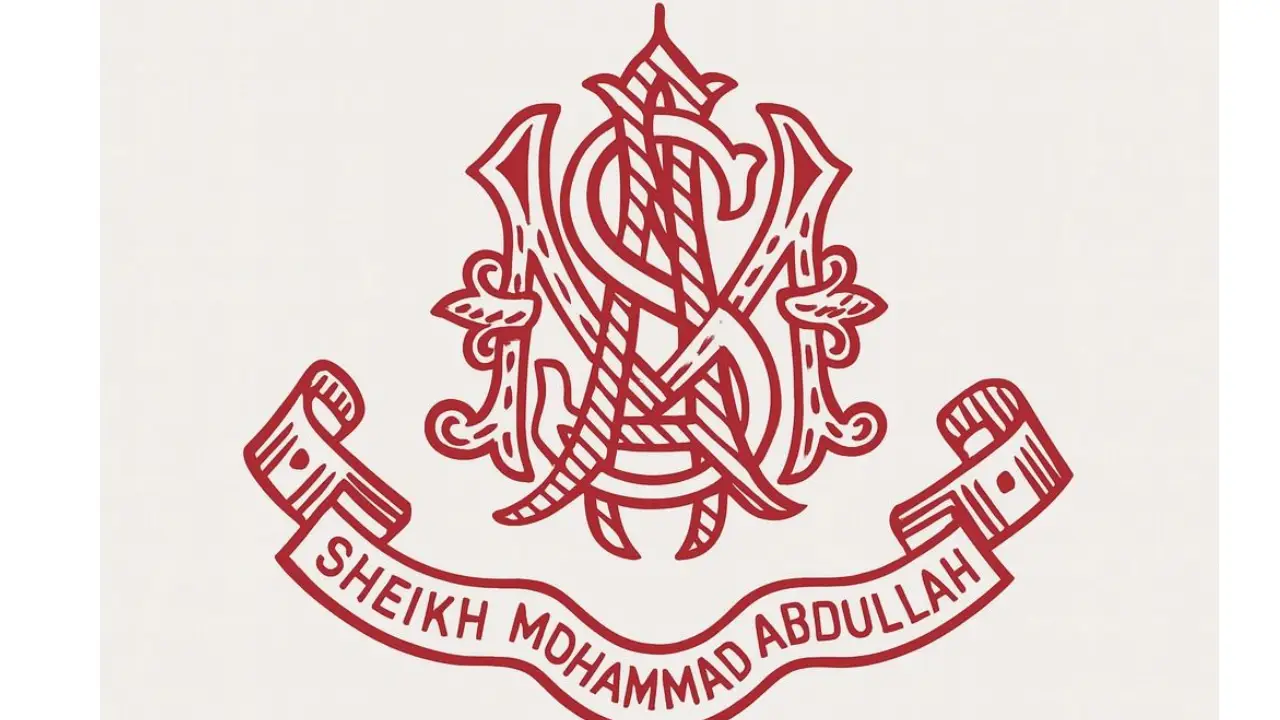
The Facebook debate was triggered by INTACH Kashmir head, Saleem Beg, who noted that Abdullah, like other major leaders of his time, had communicated prolifically through letters spanning over four decades.
“In the 1970s, his letterhead carried a monogram, the image of which I have posted. I wonder if anyone has information about who designed it for him,” Beg wrote. From there, his concerns deepened: “Almost all politicians of his stature left behind collections of papers that were later published, like the Nehru Papers or Jinnah Papers. In Sheikh Sahib’s case, it is all the more essential to have his correspondence in the public domain. His life has remained at best a work in progress and yet epical in all respects. Publishing Abdullah Papers is a critical requirement that will fill many gaps in our understanding of the freedom struggle and our march into modernity. A serious attempt made in 2012 did not succeed.”
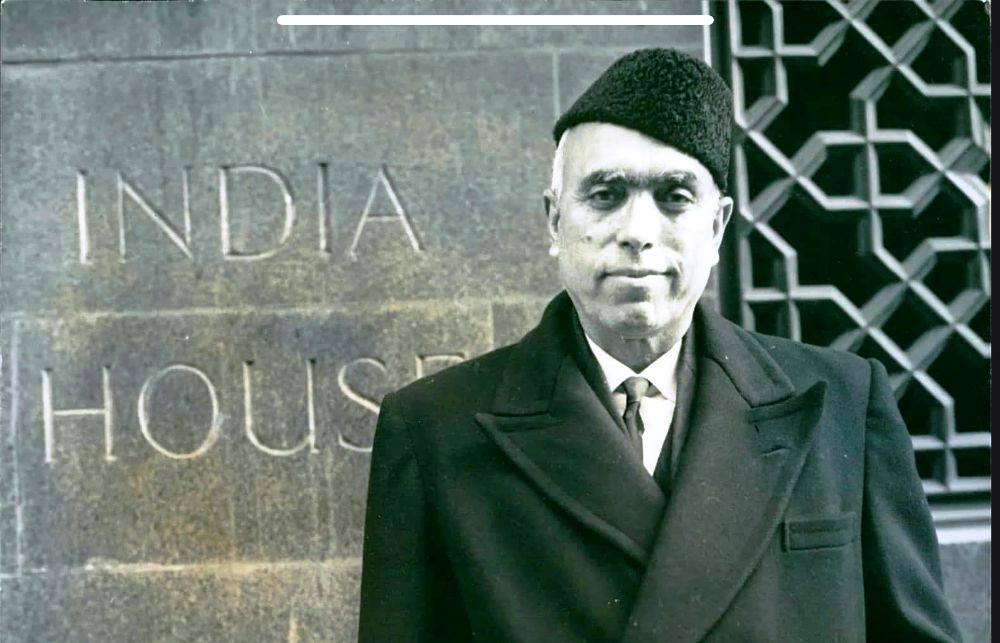
That appeal and the concern drew a chorus of voices. Former minister Naeem Akhtar endorsed the demand, stressing that some of Abdullah’s most historic speeches also deserve publication. “Like his speech at the meeting that changed Muslim Conference into National Conference, his address at the United Nations, the much-mentioned RS Pora speech of 1953, his Huzoori Bagh speech in 1964, the People’s Convention speech, and the 1975 Lal Chowk address,” Akhtar suggested. Beg responded that while Naila Ali Khan had already published some speeches and interviews, “a lot more unpublished or scattered material is waiting to be consolidated.”
The discussion about the monogram itself was taken forward by several participants. MRD Kundangar said his grandfather prepared it, the late Ghulam Mohammad Kundangar, while another participant, Ghulam Mohammad Guru, recalled that the design was engraved on a walking stick by the same artist, a celebrated craftsman of Kashmir. Others, like Tariq Kabuli, attributed the design to Mohan Raina, a well-known freelance artist of the 1950s, to which most people disagreed.

Veteran journalist Mohammad Sayeed Malik expressed scepticism about the very existence of a large personal archive. “I am not aware of any such documents lying with anybody. Certainly, SMA would have communicated with his contemporaries, but as far as I know, there is unlikely to be any record of that. Sheikh Sahib wasn’t particularly fond of this mode of communication. In fact, none of our leaders of that era has left behind any such record,” he remarked.
Countering that view, Iftikhar Ahmad pointed out that Abdullah’s correspondence had been seized during his arrests in 1953, 1958, and 1965. “He used to dictate letters all the time. Some of the correspondence did survive and was supposed to be housed in the library that was planned as part of his mausoleum at Hazratbal. Sheikh Nazir Sahib was supposed to take care of that. Similarly, 20 pages of his autobiography were supposed to be published 30 years after his death. That hasn’t happened either,” he said. Malik acknowledged these as “significant, interesting details worth being followed up,” while adding that many believed Sheikh Nazir owned important documents.
Abdullah’s grandson, Muzzafar Shah, son of his eldest daughter, added a personal recollection. “Some records may be available, but unfortunately all of late Shah Sahib’s library got destroyed in the floods. I remember having seen historically important letters, but did not know their value at the time. Sheikh Sahib’s command of grammar was God-given. While under externment at Kotla Lane or house arrest at Kodaikanal, he dictated letters to the Prime Minister of India and eminent personalities like Kuldip Nayar. My aunt Suraiya Ji, late Tariq Sahib, and late Nazir Sahib played a major role in typing them. He even took up learning Tamil and Hindi at Kodaikanal. This is a very important aspect of the Kashmir case.” Shah added that Naila Ali Khan had researched and published some of these documents but insisted the matter should be raised with Dr Farooq Abdullah and Mohammad Yousuf Taing, since “those 20 pages of Aatish-e-Chinar are supposed to be explosive.”
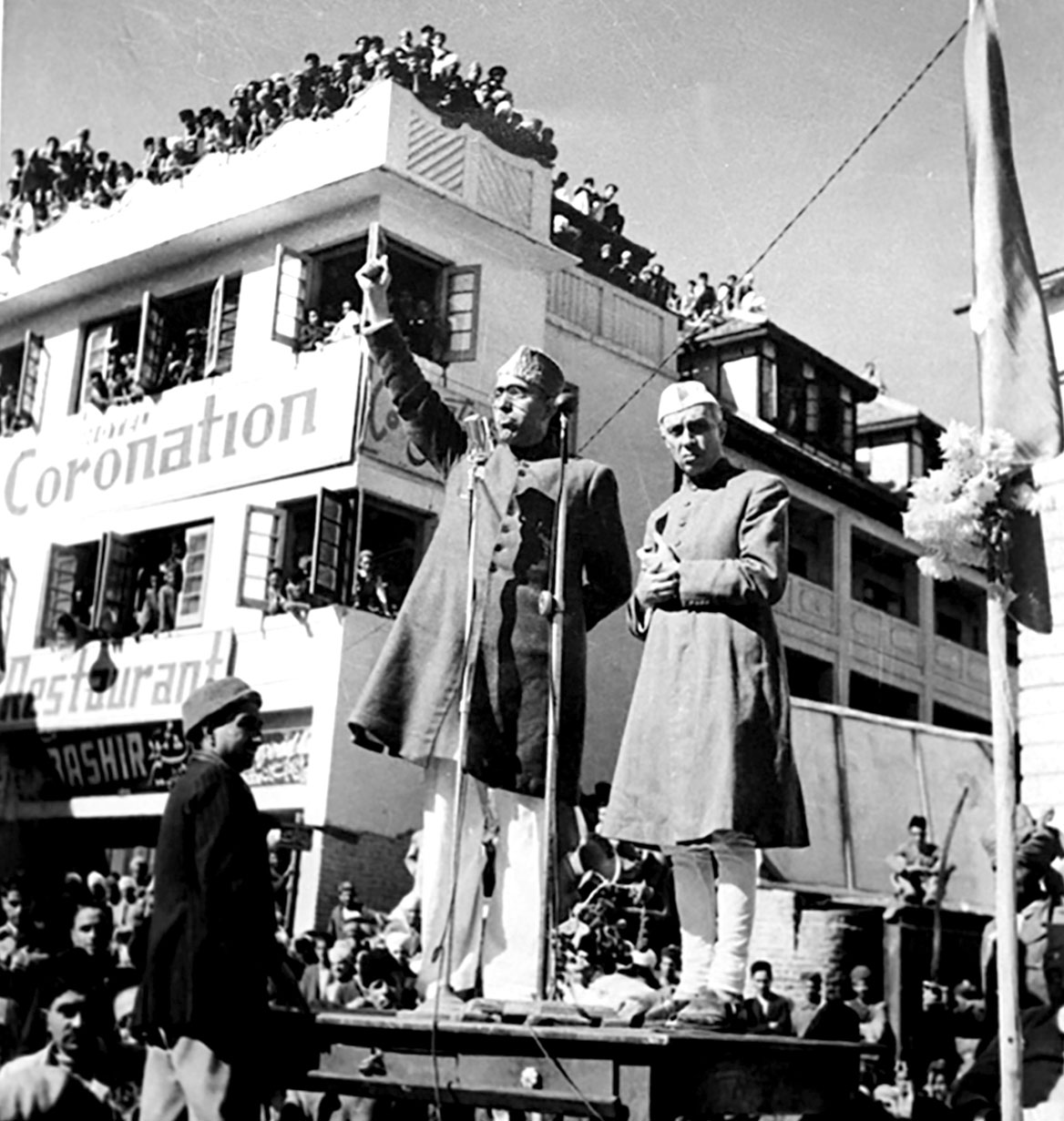
Many others weighed in. Former civil servant Irfan Yasin noted that Sheikh was not known to be a “man of letters,” though such correspondence would be of great interest. Syed Athar Bukhari, in a sharp critique, said Sheikh Abdullah’s statements reflected “a power-centric, self-centred approach,” and that his burial wrapped in the Indian flag symbolised his contradictions.
Some anecdotes, however, confirmed the existence of such letters. Farooq Ahmad Malik recalled seeing one at the People’s History Museum in Manchester, written by Abdullah to communist ideologue Rajani Palme Dutt in 1946, and others preserved in the Prime Minister’s Museum at Teen Murti Bhavan, New Delhi.
Renowned physician Ghulam Qadir Allaqaband said he had seen Abdullah lament his inability to cope with the volume of correspondence. He added that many documents were kept in Sheikh Nazir’s house, which might have been lost in the 2014 floods. Tara Dhar Hasnain, meanwhile, called for systematic archiving at Kashmir University or elsewhere.
Some contributions were deeply personal. Tariq Kabuli shared that he possessed a letter from Sheikh Abdullah’s exile years in New Delhi, written on a personalised letterhead with the monogram, and addressed to his close friend Ghulam Qadir Wani, a prominent contractor who often funded his campaigns. “The letter bore the intertwined SMA logo above a flying ribbon and carried Sheikh’s elegant signature,” he said.

Others, like Mushtaq Ahmad Jan, argued that letters preserved by individuals should be collected and published in a volume to capture Sheikh’s real personality, loved and hated, revered and ridiculed. “These letters may reveal the actual personality of Sheikh Sahib,” he said, noting that even slogans like aele karay, wangan karay emerged from his contradictory public image.
Some said the task had already been attempted. Munir Kapra noted that his father, G H Aijaz, had compiled Abdullah’s speeches and letters from 1905 to 1947 in a three-volume Urdu work Tahreek-e-Kashmir, available at Gulshan Books. Others pointed out that Nyla Ali Khan’s English-language book, Sheikh Mohammad Abdullah’s Reflections on Kashmir, had documented his correspondence with leaders like Lal Bahadur Shastri, Ayub Khan, and even the United Nations. “Unfortunately, it is published in the United States and priced in dollars. It should be reprinted in India for wider access,” said Dr Qasba Nabi.
The debate also touched upon missed opportunities. Jalaludin Shah, a geologist, lamented that Abdullah never emerged as a prolific writer during his long confinements and instead dictated his autobiography to Abdul Rashid Taseer, who declined. “What a chance of converting his ancestral house into a museum has been put under dust. It was built not by his father Ibrahim Sheikh but by public money donated out of love for their leader,” he said. He added a punch: “Sheikh Sahib neither maintained a dairy nor was he a prolific writer. Nor even a regular reader as well. When he was released from Kudh Jail no literary work emerged from his long stay in sanatorium-like confinement. Instead, a jeep loaded poultry of Special variety was dispatched to Saura.”
Amidst admiration and criticism, the consensus remained that a massive gap exists in the preservation and publication of Sheikh Abdullah’s private writings and speeches. As Saleem Beg summed it up, “This shows a lot has survived, but access has been denied. Even when Chitralekha Zutshi was writing her biography, she was not given access to any material. A serious attempt in 2012 also failed because the family was unwilling. The idea of an archive and a museum at Soura never took off.”
The debate, though digital, has reignited a larger question: will Sheikh Abdullah’s words, beyond the speeches remembered and the autobiography published, ever be compiled for posterity? Or will they remain scattered, lost in private collections, floods, and political hesitations, leaving the story of one of Kashmir’s most influential figures forever incomplete?