SRINAGAR: In a bold diplomatic manoeuvre following Operation Sindoor, the Indian government has announced an unprecedented international outreach involving seven high-profile all-party delegations. The delegations, led by prominent Members of Parliament from across the political spectrum, will travel to major global capitals starting May 23 to project India’s united front and firm stance on cross-border terrorism, particularly in response to what New Delhi describes as Pakistan-sponsored terror.
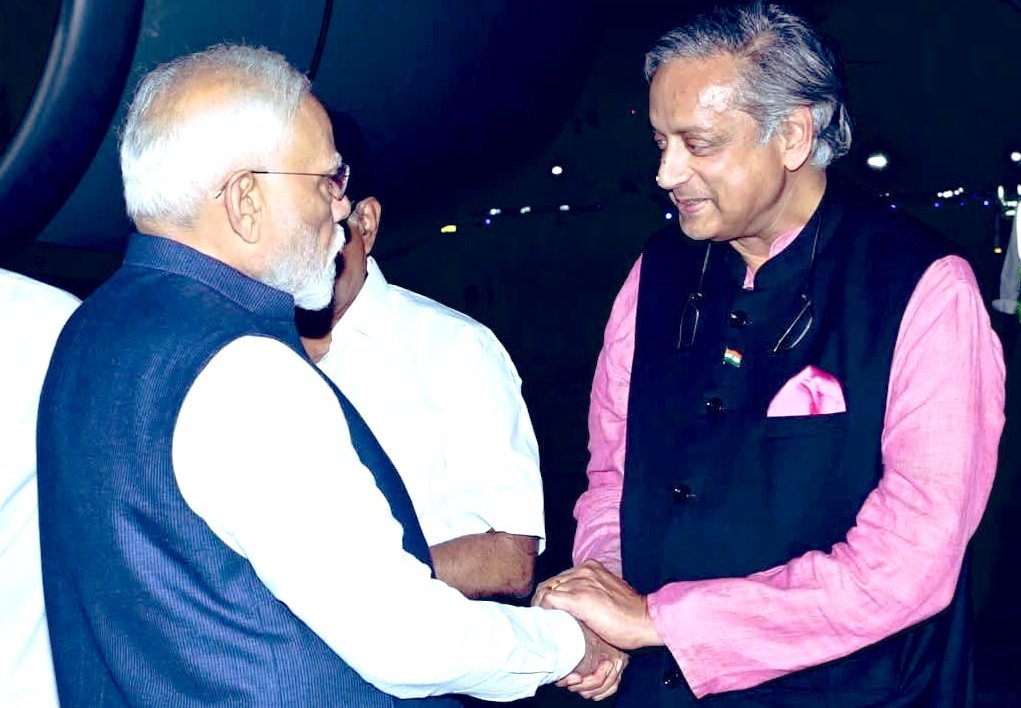
This initiative comes in the wake of the April 22 Pahalgam massacre, which killed 26 civilians, and India’s subsequent military strikes under Operation Sindoor on nine camps in Pakistan.
The seven delegations will be led by Shashi Tharoor (Indian National Congress), Baijayant Panda, Ravi Shankar Prasad (Bharatiya Janata Party), Sanjay Kumar Jha (JD United), Kanimozhi Karunanidhi (Dravida Munnetra Kazhagam), Supriya Sule (Nationalist Congress Party) and Shrikant Eknath Shinde (Shiv Sena).
Each team will include MPs from multiple parties, senior diplomats, and political dignitaries. The delegations will visit the United States, the United Kingdom, the United Arab Emirates, South Africa, Japan, and other influential global players over a 10-day period. A visit to the United Nations and its anti-terrorism agencies is also on the itinerary.
The Ministry of Parliamentary Affairs, which is coordinating the outreach, described the effort as “a reflection of national unity above politics, beyond differences.”
“In moments that matter most, Bharat stands united,” Parliamentary Affairs Minister Kiren Rijiju posted on X. “Seven All-Party Delegations will soon visit key partner nations, carrying our shared message of zero-tolerance to terrorism.”
While the initiative aims to signal national consensus, it has not been without controversy. Senior Congress leader and former diplomat Shashi Tharoor, who has previously drawn flak from within his party for praising aspects of Operation Sindoor, was named one of the delegation heads, despite not being among the Congress’s officially recommended names.
According to sources, when asked to suggest four MPs for the diplomatic mission, Congress President Mallikarjun Kharge and Leader of Opposition Rahul Gandhi proposed Anand Sharma, Gaurav Gogoi, Dr Syed Naseer Hussain, and Raja Brar. Tharoor’s name was not among them.
Yet, the government went ahead and included Tharoor, who accepted the offer publicly. “When national interest is involved, and my services are required, I will not be found wanting,” Tharoor wrote on X. “Jai Hind!”
The Congress party has not yet officially responded to the Centre’s move, though the situation has further strained relations between the government and the principal opposition party.
The outreach follows India’s request at the United Nations to designate The Resistance Front (TRF), which claimed responsibility for the Pahalgam attack, as a terrorist group. An Indian technical team is currently in New York holding consultations with the 1267 Sanctions Committee and other counter-terror agencies.
Foreign Secretary Vikram Misri has reiterated that TRF is a known front for Lashkar-e-Taiba, and Indian officials are reportedly disappointed that Pakistan had TRF’s name removed from the UN Security Council statement on the April 22 attack.
Among those joining the delegations are BJP leaders Nishikant Dubey, Bansuri Swaraj, Anurag Thakur, MJ Akbar, Samik Bhattacharya, Daggubati Purandeswari, and SS Ahluwalia. Opposition leaders like Asaduddin Owaisi (AIMIM), Ghulam Nabi Azad (DPA), Salman Khurshid, Manish Tewari, Priyanka Chaturvedi (Shiv Sena-UBT), Vikramjeet Sawhney (AAP), and John Brittas (CPI-M) are also expected to be part of the mission.
The Ministry said the delegations would “project India’s national consensus and resolute approach to combating terrorism in all forms and manifestations.”
The government’s outreach is part of a broader diplomatic offensive. India has already banned imports and transit of all goods originating from Pakistan and is reportedly blocking shipments rerouted through third countries such as the UAE.
On Friday, Defence Minister Rajnath Singh addressed Indian Air Force personnel in Gujarat, commending the IAF’s role in Operation Sindoor and describing it as part of India’s evolving national defence doctrine. “Our fight against terrorism is no longer just a security issue—it is a matter of national survival,” he said.
Congress leaders Mallikarjun Kharge and Rahul Gandhi have written to Prime Minister Narendra Modi, demanding a special session of Parliament to discuss Operation Sindoor and the implications for India’s internal and external security policy.
Meanwhile, Pakistan’s Prime Minister Shehbaz Sharif has appealed for dialogue, saying both countries should behave like “peaceful neighbours”. However, Indian officials maintain that talks and terror cannot go together.
While political debate continues at home, the seven delegations will now take India’s message abroad: that terrorism, especially when state-sponsored, cannot be tolerated or excused. The government’s decision to include voices from across the political spectrum, even amid internal disagreements, is being portrayed as a strategic assertion of national unity in times of crisis.
Whether this global push translates into tangible diplomatic gains remains to be seen, but for now, India is set to make its case loud and clear across the world.