by Mir Tariq Rasool
A critical exploration of Farooq Nazki’s poetic synthesis, tracing his existential, philosophical, and cultural dimensions that unite tradition and modernity into a dynamic whole.
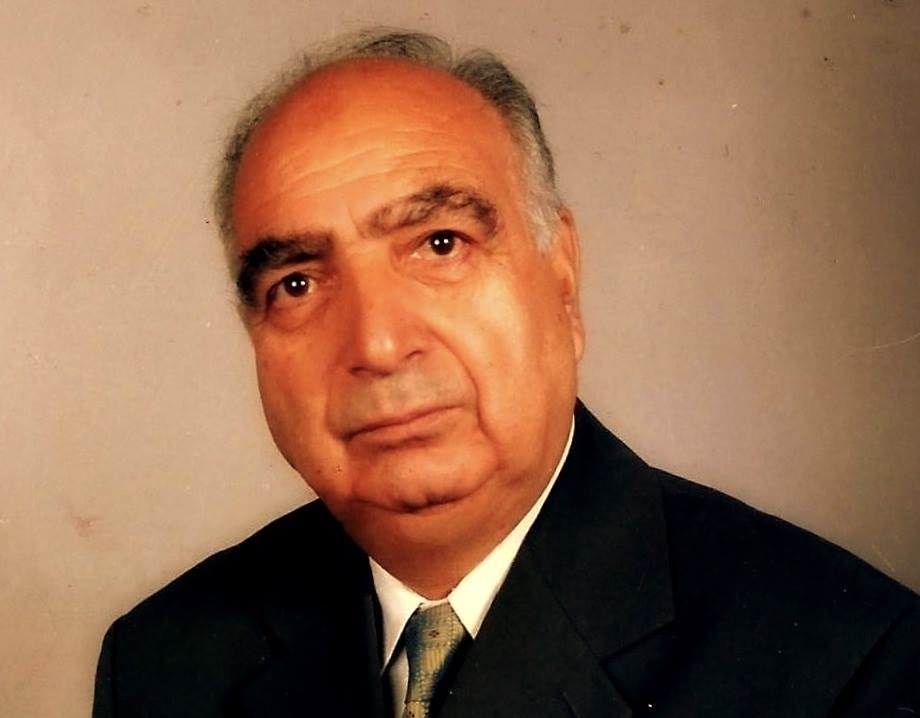
“The whole is always greater than the sum of its parts,” Aristotle wrote. Few literary figures embody that proposition as fully as Farooq Nazki, an ocean of expressions, diction, philosophies, and thoughts, an artistic whole that gathers within itself both the preceding and the succeeding currents of poetic tradition.
To some, Nazki stands as a representative of tradition. To others, he is unmistakably modern. In one poem, he speaks with existential urgency; in another, he turns phenomenological, attentive to the texture of lived experience. One half of his literary canvas may glow with Romantic fervour, while the other chisels a classical restraint.
Reading Nazki, one senses an ongoing existential crisis, an exploration of Being and the Other, with semantic play orienting toward manifold tones that move intensely from the historical to the philosophical, from the resonance of memory to the beauty and darkness of the vale.
From experiencing pratyabhijñā, the philosophy of recognition, to reflecting the pratibimba, the mirrored image of the situations and circumstances he lived through, Nazki traverses metaphysical terrains: from wajood (existence) to mawjud (the existent) to wajood-ul-wajood (Being of Being). He has touched nearly every element of poetic tradition, mysticism, modernism, postmodernism, phenomenology, ontology, and even structuralism, without ever surrendering to doctrinal rigidity.
His poetry echoes the tonal memory of Dina Nath Nadim, Rehman Rahi, Amin Kamil, and Rashid Nazki. His long poem Satbaran resonates with the lyric mysticism of Wahab Khar, Ahmad Batwair, Shams Faqeer, and Rasool Mir. Yet Nazki is no mere inheritor; he is a synthesiser.
Nazki is exceptional in his use of rhetorical antithesis in both Urdu and Kashmiri poetry, crafting his art with something akin to Hegelian dialectics. In Naar Heutun Kanzalwanaus, he places mountains upon the lashes of the beloved, compressing the firmness of patience into an expression of elation. He never restrains the freedom and flight of thought, yet he grants equal and appropriate expression to emotions of Being, existence, resilience, creation, the Creator, and the created. Immersed in his work, a reader encounters multiple shades of humanity dwelling within the being of Farooq Nazki.
In Naar Heutun Kanzalwanaus, Nazki initially situates the reader within a severe existential crisis:
Oubra loung naye dola biehay ba Khuda Piem haov dazyeth
Aftabyech kraayei saethyen wa’aav taamath pieov haryeth
(Had clouds not surfaced, we would have burned down;
The blistering sun would have reduced the wind to ashes.)
Yem na zahan garyi nerhun soont’as teimyi khalwat gudaaz
Taeri qa’harus menz thaavekh neyth neyn achun peyth paett gandyeth
(Those lovers of solitude who never ventured out in spring
Were blindfolded and stripped naked in the frosty depth of winter.)
Yet Nazki is also a poet of hope and resilience. Many of his poems reverberate with existential endurance within the music of hope. Hope incarnates in many forms: aubur (a shadow of cloud), meyrjaen vuth (smiling lips), sar taza bahar (blooming spring), Veyth (river), qalam (pen), sheena mayeni (snow piles), daari trayei (peeping out of the window), gulaab, shadow, aab heu jaama (watery gown). Through brilliant metaphors, Nazki symbolises the fragile yet persistent nature of hope. He suggests that hope, sustained by deep determination, can endure defeat and collapse. Wherever he encounters resilience, he engages hope.
Beyond hope, Nazki’s poetic universe unfolds as a dialogue between the self and the collective consciousness of the Kashmiri ethos. His poetry moves beyond personal interiority into historical memory and cultural sensibility, transforming individual experience into shared symbolic meaning. His metaphors carry the dust of landscapes, the echo of ancestral voices, and the tremor of existential questioning, binding geography with philosophy.
The ontological dimension of Nazki’s work is particularly striking. His articulation of Being is fluid, unfolding through contradictions and recognitions. The Kashmiri linguistic texture lends his philosophical restlessness both musicality and immediacy. Meaning emerges not from abstraction but from lived experience. Ontology and phenomenology converge, inviting readers to confront their own existential bearings.
His sensitivity to temporality reveals a profound engagement with the dialectics of past and present. Memory in his verse is neither a nostalgic retreat nor a passive recollection; it is an active force shaping identity. Historical references and cultural allusions become creative reinterpretations, situating modern anxieties within a continuum of tradition. His poetry thus resists simplistic categorisation as purely modernist or purely traditional. It becomes synthesis, continuity through transformation.
Nazki’s paradoxes, light and shadow, silence and resonance, presence and absence, dramatise complexity without reducing it. His voice remains open-ended, inviting multiplicity rather than closure.
His exploration of vulnerability is equally compelling. Emotional landscapes are empathetic rather than detached. Suffering is acknowledged but never surrendered to; vulnerability becomes articulation. An ethical awareness permeates his work, transcending linguistic and local boundaries while remaining deeply rooted in cultural specificity.
Nature in Nazki’s poetry is not decorative. The seasons, rivers, mountains, and blossoms of the vale become epistemological frameworks through which emotional and philosophical states are understood. Nature is metaphor, witness, and participant, reconnecting poetic discourse with ecological consciousness.
His bilingual expression in Urdu and Kashmiri expands his aesthetic reach. Urdu offers classical refinement and intertextual depth; Kashmiri provides immediacy and rootedness. By inhabiting both, Nazki demonstrates how poetic identity flourishes through plurality.
He articulates existential angst poignantly:
Ye kon sa mausam-e-hijrat hai,
ke apne hi ghar mein ajnabi hoon main.
(What strange season of exile is this
That I feel like a stranger in my own home?)
Here, estrangement is ontological. The house symbolises tradition and inherited meaning. To feel alien within it is to confront the fragility of the lifeworld. Existential philosophy insists that even within constraint, one remains responsible for one’s stance. Silence is never pure neutrality; it is a choice.
In another poem, he writes:
“My lush forests were laid waste.
Serpents were settled in my lakes.
The sanctity of Koh-e-Maraan was plundered.
Monuments of indifference were erected.
And I remained silent.”
This is existential guilt in an ontological sense. As Martin Heidegger observed, anxiety reveals our being-in-the-world — our entanglement with surrounding structures. Nazki’s poem performs that revelation. The speaker cannot detach from moral erosion; his silence is woven into it.
Nazki’s legacy continues to inspire readers and scholars alike. His work resists stagnation, evolving alongside shifting contexts. His integration of philosophical inquiry with lyrical expressiveness ensures that new meanings emerge with each generation.

Ultimately, Farooq Nazki’s poetic contribution affirms creative wholeness. Echoing Aristotle, his oeuvre is indeed more than the sum of its diverse philosophical and aesthetic parts. It is unified yet dynamic, encompassing mysticism and modernity, introspection and collectivity, despair and hope.
To read Nazki is to encounter a voice that negotiates complexity without fear, embracing contradiction as a pathway to understanding. His poetry stands as both a mirror and a guide, reflecting the intricacies of existence while illuminating the possibility of transcendence.
And perhaps that is where his greatness truly resides: not in belonging to a single school, nor in echoing a single philosophy, but in holding them together without fracture. Like the valley he so often invokes, shadowed yet luminous, wounded yet enduring, Farooq Nazki remains a testament to the indivisible wholeness of art, where every part breathes, and the whole continues to live.
(Former Secretary Adbi Markaz Kamraz, the author, serves as a patron of the Kashmir Literary and Philosophic Foundation. The views expressed are personal.)