by Haseeb A Drabu
Jammu and Kashmir’s Industrial Policy 2021–30 prioritises subsidies over structure, returns over risk reduction. Without correcting trade imbalances, market failures, and infrastructure gaps, incentives alone cannot deliver sustainable industrialisation.
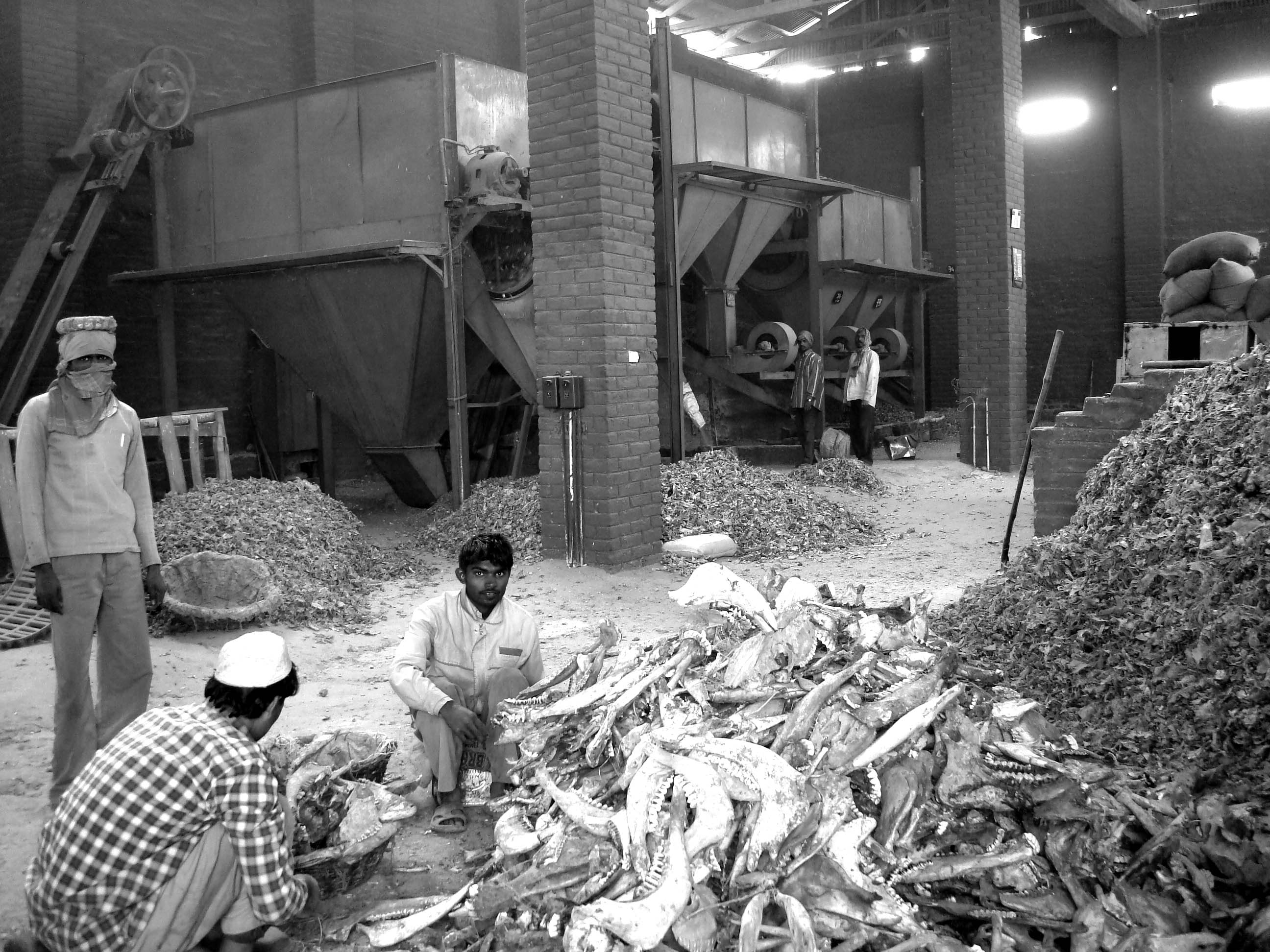
Jammu and Kashmir’s Industrial Policy 2021–30, now under review for “tweaking,” stands out less for its strategic clarity than for its remarkable bureaucratic imagination. Nowhere is this more evident than in the very first, and most elaborately articulated, operative incentive: a 100 per cent subsidy on diesel generator sets. These machines, indispensable only because of chronic power unreliability, are also among the most polluting industrial inputs. In a region otherwise marketed as ecologically fragile and environmentally conscious, the policy begins by subsidising greenhouse gas emissions.
Not to be misunderstood as environmentally careless, the policy promptly corrects itself. Industries are offered a 60 per cent subsidy on pollution control devices. The logic is breathtaking in its symmetry. First, the state spends public money to encourage pollution; then it spends more public money to partially mitigate the pollution it has just incentivised. The result is presented as a “sustainable and balanced” industrial ecosystem.
Incentives sans infrastructure
Stripped of rhetoric, the policy resembles a system where the government pays the arsonist to light the fire and then subsidises the fire brigade for containing it. This is not sustainability; it is circular policymaking dressed up as environmental prudence.
Beyond such contradictions, the Industrial Policy 2021 is essentially a compendium of concessions: tax exemptions, capital subsidies, reduced utility charges, and discounted land allotments. Each incentive is hedged with conditions, approvals, and discretionary controls that make actual access cumbersome. Ease-of-doing-business rankings notwithstanding, availing benefits remains a procedural maze—particularly for small and medium local enterprises without political or bureaucratic leverage.
The policy also marks a decisive departure from earlier industrial strategies. Previous frameworks were protectionist by design, favouring small-scale units, local entrepreneurs, and preferential procurement by government agencies. The 2021 policy pivots sharply toward “industrialisation” by attracting large external capital, with subsidies scaled to investment size and eligibility opened widely to outside players. Given Jammu and Kashmir’s limited fiscal capacity, this shift toward incentive-driven industrialisation is not merely risky; it is fiscally imprudent.
Across India, the incentive race has already become a losing proposition. States like Gujarat offer capital expenditure support capped at Rs 200 crore, operational expenditure reimbursements of up to Rs 40 crore annually, full reimbursement of electricity duty, and generous per-employee incentives. Telangana, Tamil Nadu, and Uttar Pradesh are undercutting even these offers. Against such competition, Jammu and Kashmir’s incentives, Rs 2.5 crore spread over five years, are inconsequential.
More importantly, there is a fundamental sequencing difference. These states first invested heavily in infrastructure, logistics, and urban ecosystems before deploying incentives. Jammu and Kashmir is attempting the reverse: offering incentives in the absence of reliable power, efficient logistics, agglomeration economies, or deep supplier networks. History suggests this approach rarely works.
Despite repeated announcements of impressive investment commitments, the ground reality remains unchanged. Industrial landscapes look much the same, while anecdotal evidence increasingly points to the migration of local capital and entrepreneurial talent—not to Indian metros, but to the Middle East. The official narrative of national investors queuing up is not corroborated by visible industrial expansion or employment generation.
High local demand, inadequate local supply
Macroeconomic data tells a more sobering story. Manufacturing’s share in gross state domestic product has declined from 7.13 per cent in 2015–16 to about 5.7 per cent in 2024–25. Simultaneously, Jammu and Kashmir now runs one of the highest inter-state trade deficits in the country, estimated at nearly Rs 50,000 crore. This indicates not weak demand, but misplaced demand. Kashmiris consume goods and services in large volumes, but overwhelmingly import them from outside the region.
The structural problem, therefore, is not insufficient consumption but excessive leakage. Almost half of the state’s income flows out through imports, resulting in a weak consumption multiplier. Administrative changes following the constitutional reorganisation have aggravated this. The dismantling of preferential local procurement mechanisms, particularly the replacement of SICOP with a national e-procurement platform, has meant that the single largest consumer, the government itself, now sources most goods externally. Import intensity, historically high at 40–50 per cent of SDP, has peaked further, dampening growth impulses and investment responses.
In this macroeconomic context, the principal objective of industrial policy should not be to chase headline investments but to reduce income leakages and strengthen the domestic multiplier. Only by expanding the effective home market can the investment accelerator be triggered.
A viable industrial strategy for Jammu and Kashmir must rest on three pillars. First, it must stabilise and support existing enterprises, many of which are already in structural decline. Luring new industry while existing units languish destroys capital stock, increases volatility, and undermines income generation. The post-2019 slowdown, state GDP growth falling to under 4 per cent from nearly 7 per cent earlier, reflects this neglect. Manufacturing growth has not only slowed but also become more erratic.
Second, industrial policy must explicitly pursue import substitution, informed by the composition and scale of imports. Third, to enable both objectives, the incentive regime must shift from a horizontal, buffet-style model to a vertical, à la carte system tailored to specific economic outcomes.
Admittedly, import substitution is constrained. Jammu and Kashmir’s largest import categories, petroleum products, food grains, and industrial goods, are not easily replaced given scale limitations. Yet with nearly half the economy dependent on imports, even partial substitution can yield substantial gains. A hybrid strategy combining selective import substitution with export orientation is both realistic and necessary.
Energy imports alone account for Rs 25,000–30,000 crore annually. Even a 10–20 per cent reduction through renewable capacity creation, local assembly of panels and turbines, and distributed generation could save Rs 3,000–5,000 crore while generating green manufacturing jobs. Food grains and livestock imports, together exceeding Rs 11,000 crore, are equally obvious candidates. The handicrafts sector, contributing roughly 10 per cent of GSDP, depends heavily on imported raw materials. Localising these inputs could save Rs 500–1,000 crore annually while boosting artisan incomes and exports.
Incentives, however, are not the central problem; design is. The Industrial Policy 2021 identifies fifteen “focus sectors,” ranging from agriculture and manufacturing to film tourism and wool production. When everything is prioritised, nothing is. Unsurprisingly, these sectors mirror administrative departments rather than economic logic.
An effective policy must be framed around markets, not sectors. Interventions should target factor markets, land, labour, and credit, and product markets, addressing failures that inhibit private investment.
Risk-return conundrum
Kashmir’s economy is best described as a high-risk, high-apparent-return trading system. Returns appear attractive due to low entry barriers and quick turnover, but investors face two layers of risk. The first is overt: political instability and security concerns. The second is structural: small market size, high logistics costs, absence of agglomeration economies, and fragile supply chains. Together, these deter serious, long-term capital—not because returns are low, but because risks are unusually high.
This leads to the first principle of a credible industrial policy: prioritise risk reduction over return enhancement. Past policies have focused almost exclusively on subsidising returns through financial incentives. This approach is ill-suited to a region attempting to transition into manufacturing, which demands large upfront investments and long gestation periods.
Reducing risk has stronger and more durable macroeconomic effects than temporarily boosting returns. It requires the state to move beyond facilitation toward active market-making. The government must deliberately create and sustain markets by generating initial demand, absorbing early risks, and providing liquidity where private actors hesitate.
Market-making can take multiple forms: first-loss guarantees, political risk insurance, viability gap funding, and the creation of a dedicated Kashmir Industrial Risk Fund to cover losses arising from disruptions. Such instruments would lower the cost of capital and encourage banks to lend. The state can also operate government-backed digital marketplaces linking Kashmiri producers directly with national and global buyers, initially acting as the counterparty to build scale and confidence.
Equally critical is aggressive export promotion: GI tagging, quality certification, global branding, and legal protections modelled on the EU’s Protected Designation of Origin system. Without such safeguards, Kashmir’s premium products, from saffron to handicrafts, remain vulnerable to cheap substitutes.
The third principle is to abandon a purely outward-oriented industrial strategy that seeks to build mass-manufacturing capacity competing nationally. Such an approach exposes local enterprises to intense competition and risks wiping out existing businesses. Instead, investments must focus on activities shielded from easy substitution through geography, uniqueness, branding, or policy protection.
Fourth, while outside investment is essential, preference should be given to financial capital, private equity and venture funds over direct industrial capital from large conglomerates. Financial capital allows local firms to retain control, scale organically, and align with regional priorities, avoiding enclave-style industrialisation.
Finally, the incentive regime must move decisively toward a curated, performance-linked model. Incentives should be selective, customised, and tied to measurable outcomes: local employment, sourcing, multiplier effects, and environmental sustainability. This vertical approach would guide private capital toward sectors aligned with Jammu and Kashmir’s comparative advantages while avoiding fiscally expensive misadventures in unsuitable industries.

The lesson is straightforward: play to strengths, not weaknesses. By focusing on risk reduction, market creation, targeted incentives, and structural correction of trade imbalances, Jammu and Kashmir can build a resilient, locally anchored industrial ecosystem.
A final irony remains. National trade policy permits the import of premium global produce, Washington apples, California almonds, and foreign walnuts, directly undercutting Kashmir’s horticultural strengths. Simultaneously, national incentive schemes promote large-scale manufacturing where the region has little comparative advantage. The result is an economic paradox: expose the foundation to global competition while subsidising a structurally weak superstructure. No amount of bureaucratic creativity can prevent such an edifice from eventually collapsing.
(An economist, the author was Jammu and Kashmir state’s last finance minister. Ideas are personal.)