by Haseeb A Drabu
India’s GST Council reshaped fiscal federalism through shared sovereignty, yet rising cesses, weak state coordination, and institutional gaps threaten to tilt the balance back toward centralisation.

India’s Goods and Services Tax (GST) Council stands as one of the most ambitious institutional experiments in the country’s post-independence economic history. Conceived not merely as a tax reform but as a structural reconfiguration of fiscal federalism, it represents a rare moment where sovereignty itself was pooled between the Union and the States. Yet, nearly a decade into its existence, a fundamental question persists: has the GST Council strengthened India’s federal compact, or is the Union undermining it to enable a subtler form of recentralisation?
At its core, GST was never just about simplifying indirect taxes. It emerged from deeper political-economic currents, particularly the rise of regional capital and the growing influence of regional political parties since the 1990s. Liberalisation had unleashed sub-national economic energies, but India’s fragmented, origin-based tax regime acted as a barrier to efficient market integration. The GST was thus less an act of tax idealism and more a negotiated response to economic and political pressures from below.
The creation of the GST Council under Article 279A marked a constitutional watershed. For the first time, India institutionalised a forum where both the Union and States jointly legislate on taxation. This was a “grand bargain”: States surrendered significant legislative autonomy over indirect taxes, while the Union gave up its unilateral authority. The result was a sui generis body, neither fully federal nor entirely unitary, vested with de facto sovereign power but framed in law as a recommendatory institution.
This paradox lies at the heart of the GST Council’s functioning. Its decisions, though technically recommendations, operate as binding outcomes. This legal ambiguity has helped avoid constitutional friction, but it also raises questions about democratic accountability. Taxation, traditionally debated in legislatures, is now largely shaped within a closed institutional forum, albeit one composed of elected representatives.
In operational terms, the Council’s early years were marked by an extraordinary commitment to consensus. Dozens of meetings produced hundreds of decisions, all without formal voting. This consensus-driven approach, reinforced by a non-majoritarian voting structure, ensured that even smaller states had a voice. The principle of “one state, one vote” and the requirement of a 75% weighted majority created strong incentives for negotiation rather than imposition.
Yet, consensus can be both a strength and a constraint. The initial design favoured gradualism, leading to a complex multi-rate structure that deviated from the ideal of a simple, unified tax. While recent reforms under “GST 2.0” have rationalised some of these rates, the broader challenge remains: how to balance political feasibility with economic efficiency.
On the fiscal front, GST has delivered measurable gains. Tax collections have nearly doubled in recent years, compliance has improved, and the number of registered taxpayers has expanded significantly. The creation of a national common market has reduced logistics costs and eliminated cascading taxes, contributing to greater economic integration. These are not trivial achievements.
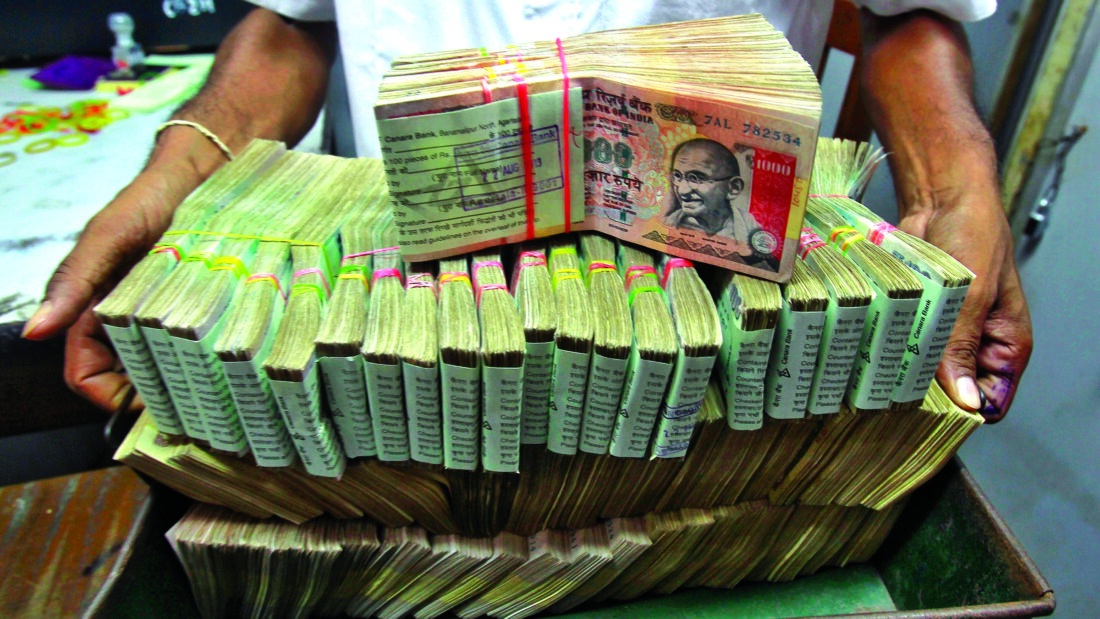
However, beneath these successes lie structural weaknesses that threaten the long-term viability of the system. One of the most striking issues is the extreme concentration of the tax base. A tiny fraction of taxpayers accounts for a disproportionate share of revenues, indicating that the promise of broad-based formalisation remains unfulfilled. The informal sector, particularly in business-to-consumer transactions, continues to operate at the margins of the GST framework.
Equally concerning is the divergence in fiscal outcomes across states. While GST was designed to be progressive, shifting from origin-based to destination-based taxation, its real-world impact has been uneven. Some states, particularly those with strong industrial or service sectors, dominate collections, while others struggle to maintain revenue neutrality. The compensation mechanism that initially cushioned these disparities has lost momentum, exposing underlying tensions.
The most serious challenge, however, comes from outside the GST framework itself: the proliferation of cesses and surcharges by the Union government. These levies, which are not part of the divisible pool shared with states, have grown dramatically over the past decade. As a result, the effective share of states in total tax revenues has declined, even as the formal devolution ratio remains unchanged.
This trend undermines the very spirit of the GST bargain. While the Council was meant to institutionalise shared sovereignty, the expansion of non-shareable revenues allows the Union to bypass this arrangement. It is a form of fiscal centralisation that operates not through overt institutional change, but through the strategic use of tax instruments.
Yet, it would be simplistic to attribute all fault lines to the Centre. States themselves have often underutilised the institutional space provided by the GST Council. Despite having both voice and vote, they have largely remained reactive rather than proactive. The absence of coordinated state-level strategies has weakened their collective bargaining power within the Council.
This points to a deeper issue: federalism is not merely about institutional design, but about political practice. The GST Council offers a platform for cooperative federalism, but its effectiveness depends on how its members engage with it. Without sustained coordination among states, the balance of power is likely to tilt in favour of the Union, regardless of formal safeguards.
Another critical gap lies in the lack of coordination between the GST Council and the Finance Commission. While the former determines the size and structure of the tax pool, the latter decides its distribution. The absence of a formal institutional link between these two bodies creates inconsistencies in fiscal policy, particularly in a system that has shifted from production-based to consumption-based taxation.
This disconnect has practical consequences. Devolution formulas designed for an earlier tax regime may no longer align with the realities of GST, leading to potential misallocation of resources. Bridging this gap requires not just technical adjustments, but a rethinking of India’s broader fiscal architecture.
Looking ahead, the future of the GST Council will depend on its ability to evolve beyond tax administration into a more comprehensive institution of federal governance. This involves addressing unresolved issues such as the treatment of small businesses, the integration of the informal sector, and the impact of taxation on consumers. It also requires a renewed commitment to the principles of transparency and accountability.

Most importantly, it demands a political consensus on the limits of centralisation. The success of GST as a federal institution hinges on maintaining the delicate balance between unity and autonomy. If the current trajectory of expanding cesses and weakening state coordination continues, the Council risks becoming a mechanism for central control rather than a forum for shared governance.
In that sense, the GST Council is both a success and a warning. It demonstrates the possibilities of cooperative federalism in India, but also highlights its vulnerabilities. The question is not whether the institution will endure—it almost certainly will—but whether it will fulfil its original promise.
Will it remain a genuinely federal space where power is negotiated and shared, or will it gradually become another instrument of central authority? The answer will shape not just the future of taxation in India, but the very nature of its federal democracy.
(The write-up is based on the author’s inaugural speech at the International Conference on Socio-Economic Impacts of GST in India, organised by the Centre for Development Studies under the aegis of ICSSR, Government of India)