SRINAGAR: The Jammu Kashmir government has said it is firmly committed to eradicating drug addiction and curbing its growing tendency across the Union Territory, adopting a coordinated, multi-departmental strategy involving the Social Welfare, Health and Medical Education, and Home Departments.
The Social Welfare Department, acting as the nodal agency for Drug Demand Reduction, is implementing a range of preventive, counselling, and rehabilitation measures with a special emphasis on youth. All twenty districts of Jammu Kashmir are covered under the Nasha Mukt Bharat Abhiyan (NMBA), with district-level committees in place to monitor and implement de-addiction and awareness initiatives.
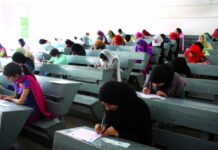
According to official data, over 12,565 awareness and outreach activities have been conducted under the NMBA, reaching more than 1.09 crore people, including over eleven lakh youth and nearly nine lakh women, across 24,166 educational institutions and 8,203 villages. The government has also identified more than fifty master trainers in coordination with the Ministry of Social Justice and Empowerment to lead future training programmes.
Drug De-addiction Centres are currently functional in Kulgam, Bandipora, and Rajouri districts, while the Ministry of Social Justice and Empowerment has approved the establishment of similar centres in Ramban, Reasi, and Udhampur. Proposals for setting up de-addiction facilities in the remaining districts have been sent to the Centre, and Deputy Commissioners have been asked to identify suitable buildings for the purpose.
In addition to these, the Union Territory has operationalised one Outreach and Drop-in Centre (ODIC), one Community-based Peer-Led Intervention (CPLI), and one De-Addiction Centre in Jammu province, while two ODICs and one CPLI are functioning in Kashmir province. A national toll-free helpline (1800-11-0031) and the UT’s own Tele-Manas helpline (14416) are providing psychological counselling and support to victims of substance abuse and their families.
During the current financial year up to September 2025, 1,799 awareness activities have been organised in Jammu division and 2,674 in Kashmir division, involving over 2.7 lakh participants. These have included rallies, street plays, debates, yoga sessions, sports events, and medical camps, often conducted in collaboration with departments like Education, Police, Labour, Food Supplies, and Mission Shakti.
The Health and Education Departments have taken complementary steps to regulate the sale of habit-forming drugs, monitor supply chains, and prevent diversion or misuse. Monthly sale records from pharmaceutical depots are being reviewed, and special enforcement drives are being conducted to curb unregulated trade.
A zero-tolerance policy has been adopted against violations under the Drugs and Cosmetics Act, 1940, with licenses of erring dealers cancelled immediately. CCTV surveillance, computerised billing, and controlled dispensation systems have been made mandatory for pharmacies, especially in rural and far-flung areas.
Officials said strict inter-state coordination is being maintained to check cross-border smuggling of controlled drugs, and regular supervisory inspections are conducted to monitor distribution patterns. The government maintains that its combined enforcement, awareness, and rehabilitation efforts aim not only to control the menace but also to offer a humane pathway to recovery for those affected by addiction.