SRINAGAR: Student enrollment across Government Degree Colleges (GDCs) in Jammu and Kashmir has recorded a significant increase, rising from 43,030 in 2024 to 48,641 in 2025, reflecting a growth of over 5,600 students and indicating a clear recovery trend in the higher education sector.
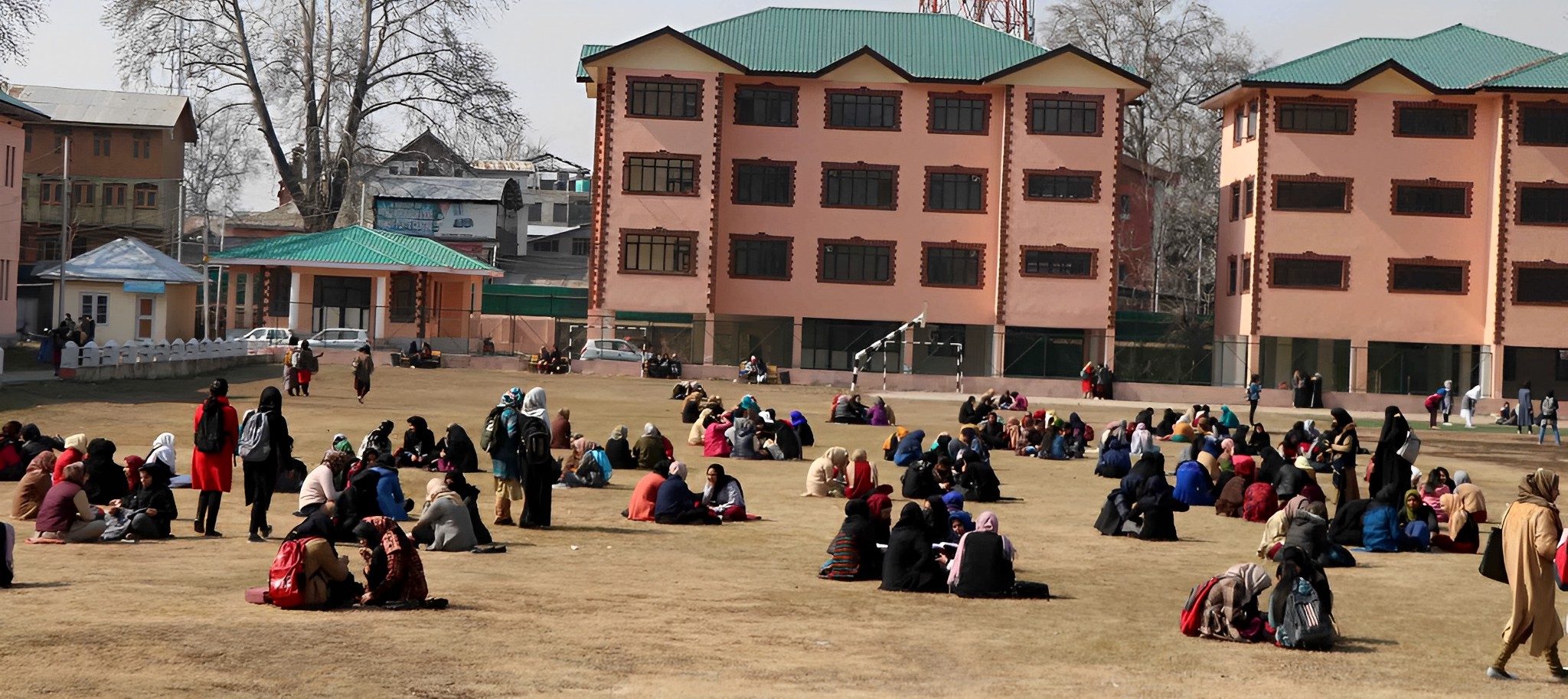
Replying to Un-Starred Assembly Question tabled by MLA Bashir Ahmad Shah Veeri, the Higher Education Department informed that 143 colleges are currently functional across the Union Territory, with the latest figures showing a marked improvement in admissions during the current academic session.
The increase comes after a period of fluctuation, with officials attributing the rebound to policy interventions such as the introduction of a centralized admission portal, rationalization of subject combinations and the rollout of the Four-Year Undergraduate Programme (FYUGP), which has enhanced student interest in government colleges.
District-level trends support the broader recovery, with colleges in Anantnag registering an increase of about 11.8 per cent in enrollment. However, some institutions continue to reflect localized declines. Government Degree College Bijbehara, for instance, saw its enrollment drop from 462 in 2024 to 324 in 2025, a decrease of 138 students over two years.
The data also highlights stark contrasts in institutional performance. Among the highest enrolled colleges are major institutions such as Government Gandhi Memorial Science College Jammu with around 1,494 students, Government MAM College Jammu with over 1,600 students, and Islamia College of Science and Commerce Srinagar with more than 1,100 students, indicating strong demand for established urban colleges.
On the other end, several colleges report extremely low enrollment figures. Institutions such as GDC Tulail, GDC Gurez and GDC Chatroo have enrollments in double digits, while some colleges like GDC Baghi Dilawar Khan and GDC Chattisinghpora currently have no active student enrollment, raising concerns over viability and utilization.
The government maintained that establishment of new colleges follows due feasibility assessment, but acknowledged that utilization levels may vary due to demographic changes, accessibility and evolving student preferences.
Officials said the department is undertaking continuous review of colleges, including infrastructure, course offerings and enrollment patterns, to ensure optimal use of resources. Measures such as restructuring academic programmes and aligning courses with employment opportunities are being pursued to sustain the upward trend.
The latest figures suggest that while disparities persist across institutions, the overall trajectory of higher education enrollment in Jammu and Kashmir has turned positive, signalling renewed student engagement with government-run colleges.