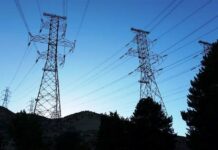
SRINAGAR: Jammu and Kashmir has received Rs 5,537.32 crore in direct financial benefits from six major NHPC hydropower projects over the last five financial years through water usage charges and its entitlement of 12 per cent free power plus 1 per cent Local Area Development Fund (LADF), according to a detailed government reply tabled in the Legislative Assembly.
The figures, contained in a reply of the Power Development Department to an unstarred question, show that the Union Territory received Rs 3,582.06 crore in water usage charges during 2021-22 to 2025-26, while the monetised value of 12 per cent free power and 1 per cent LADF during the same period amounted to another Rs 1,955.26 crore. The six NHPC stations covered by the figures have a combined installed capacity of 2,250 MW.
Salal, with an installed capacity of 690 MW, accounted for the largest share of water usage charges at Rs 1,754.98 crore over the five years. Its free power plus LADF was valued at Rs 295.78 crore. Uri, with 480 MW capacities, contributed Rs 567.20 crore in water usage charges and Rs 248.41 crore through free power and LADF.
Dulhasti, with 390 MW capacity, generated Rs 501.83 crore in water usage charges and Rs 521.86 crore in monetised free power and LADF. Sewa-II, a 120 MW project, contributed Rs 36.08 crore in water usage charges and Rs 128.97 crore through free power and LADF. Uri-II, with 240 MW capacity, contributed Rs 615.54 crore and Rs 355.60 crore respectively, while Kishanganga, with 330 MW capacity, contributed Rs 112.43 crore in water usage charges and Rs 404.64 crore in free power and LADF.
Taken together, the six stations have an installed capacity of 2,250 MW and have provided Jammu and Kashmir with a substantial recurring revenue stream in addition to the electricity generated from its water resources.
The government has also stated that the 12 per cent free power entitlement due to Jammu and Kashmir is being supplied by NHPC in accordance with the applicable provisions. It said there was no shortfall in free-power supply and no outstanding claim or dues pending from the Union Territory on this account.
The data show that the free-power position has become more consistent in the last two financial years. At Salal, for example, the free power supplied against the 12 per cent entitlement was lower than the prescribed entitlement in the first three years, resulting in a cumulative excess in billing of 45.46 million units, but there was no shortfall in 2024-25 or 2025-26. Similar patterns are recorded for Uri, Dulhasti, Uri-II and Kishanganga, with the reported shortfalls largely occurring in the earlier years.
The government reply also sets out the scale of business generated locally by the hydropower projects. It said the direct financial benefits from free power, water usage charges and taxes and duties are supplemented by indirect economic activity generated during both construction and operation.
According to the department, operation and maintenance of the projects creates recurring opportunities for local contractors, firms and service providers. Routine and specialised maintenance, repair and upkeep work, along with transportation, security, housekeeping, equipment handling and other support services, provide business and employment opportunities for skilled, semi-skilled and unskilled workers.
The government said this creates a continuing local economic ecosystem in which expenditure on maintenance, contracts, procurement and outsourced services circulates in the project areas. It also said the development of such local businesses helps build a pool of skilled manpower for future hydropower projects.
NHPC’s corporate social responsibility activities provide an additional benefit, with the government stating that approximately Rs 19 crore is contributed annually towards local infrastructure development.
The figures also provide an indication of the revenues being generated by NHPC from the six projects. During the five-year period, the projects recorded combined annual generation ranging from around 7,700 million units to more than 8,000 million units in different years, depending on hydrological conditions and individual project performance.
For NHPC, the six projects together reported revenue from operations of Rs 4,275.29 crore in 2021-22, Rs 4,498.88 crore in 2022-23, Rs 4,538.17 crore in 2023-24, Rs 4,531.84 crore in 2024-25 and Rs 4,350.80 crore in 2025-26, according to the figures supplied by the company. The corresponding combined profit before tax was Rs 2,084.03 crore, Rs 2,725.79 crore, Rs 2,343.80 crore, Rs 2,076.78 crore and Rs 1,792.57 crore respectively.
The government, however, said that no proposal is presently under consideration for greater Jammu and Kashmir ownership, revenue sharing or transfer of the existing NHPC projects.
Under the present arrangement, NHPC operates six major power stations in J&K — Salal, Uri-I, Dulhasti, Sewa-II, Uri-II and Kishanganga — with a combined installed capacity of 2,250 MW.
The government has separately entrusted three more major projects — Sawalkot, Uri-I Stage-II and Dulhasti Stage-II — to NHPC for implementation on a Build, Own, Operate and Transfer (BOOT) basis for 40 years.
The agreement for the 1,856-MW Sawalkot Hydroelectric Project was signed between NHPC and JKPDCL on December 11, 2021. The project is currently under appraisal and approval by the Government of India.
Implementation agreements for Uri-I Stage-II, with a capacity of 240 MW, and Dulhasti Stage-II, with a capacity of 260 MW, were signed between NHPC and JKPDCL on March 27, 2026. Both projects are under construction.
According to the government, these projects are to be handed over to Jammu and Kashmir after 40 years from the date of their commercial operation.
The reply therefore places the present arrangement in two distinct categories: the six operating NHPC stations are already providing Jammu and Kashmir with recurring water usage charges and free-power benefits, while the newer projects being developed on the BOOT model are expected to remain with NHPC for the stipulated 40-year operating period before transfer to the Union Territory.