JAMMU: The Jammu and Kashmir government has pledged to make the media sector freer and more accessible by restoring facilities withdrawn over the past five years. The announcement has reignited debates over press freedom in the region, with opposition leaders demanding an end to restrictions on independent journalism.
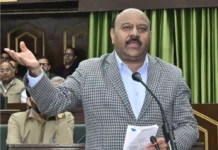
During discussions in the Legislative Assembly, National Conference MLA Tanvir Sadiq raised concerns over the lack of government advertisements for prominent newspapers, including Greater Kashmir, Kashmir Reader, and Kashmir Times. “These are widely read newspapers that serve as the voice of the people. Why have they been denied advertisements for years?” he asked, urging the government to rationalise the criteria for ad distribution. Similar demands were made by MLA Tangmarg Farooq Ahmed Shah, who called for an equitable approach to supporting media houses.
PDP MLA Waheed-ur-Rehman Para went further, stating that journalism has been the biggest casualty in Jammu and Kashmir. He criticised the increasing restrictions on journalists, frequent internet shutdowns, and the alleged attempts to silence critical voices. “Free and fair journalism is essential for democracy, but in Kashmir, it is being systematically stifled,” he asserted. Para urged the government to create a press environment free of fear and intimidation.
The government also disclosed that it is in the process of formulating a New Media Policy to encompass emerging digital platforms, including social media, news web portals, and websites. The policy, according to officials, aims to align with the evolving media landscape while following the standards set by the Directorate of Advertising and Visual Publicity (DAVP). However, journalists and opposition leaders remain sceptical about whether the policy will genuinely promote media freedom or further tighten government control over digital platforms.
The availability of high-speed internet in Jammu and Kashmir has led to the rapid growth of digital media. However, concerns have been raised about the rise of amateur-run platforms lacking professional journalistic standards. Observers believe that while digital media has provided a new avenue for news dissemination, the proliferation of unverified content has impacted the credibility of journalism in the region.