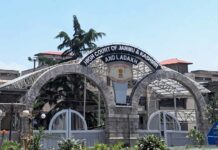
SRINAGAR: The Jammu and Kashmir and Ladakh High Court has allowed the medical termination of the pregnancy of an 11-year-old minor who allegedly became pregnant after being sexually assaulted, holding that she cannot be compelled to carry the pregnancy to term merely because the gestation had crossed the statutory 24-week period by the time the judgment was pronounced.
Justice Wasim Sadiq Nargal, in a judgment pronounced on September 22, 2026, directed the respondents to take “immediate and all consequential steps” necessary for carrying out the medical termination of the minor’s pregnancy. The court also directed that necessary psychological counselling and support be provided to the child before and after the procedure.
The petition, WP(C) No. 2206/2026, was filed through the minor’s father, Mohammad Farooq Bokad. The petitioner was represented by advocates Shabir Ahmad Najar and Sajad Ahmad Shah, while the respondents, including the Union Territory administration, Health and Medical Education Department, Home Department, Directorate of Health Services Kashmir, Lala-Ded Hospital, police authorities and the SHO concerned, were represented by Government Advocate Faheem Nisar Shah. The matter was heard by Justice Wasim Sadiq Nargal.
According to the judgment, the minor, who is about 11 years old, had shifted with her family from her native place in Reasi to Wussan Bangil in Kwarhama, Baramulla, in March 2026 for rearing cattle and livestock. During her stay in Kashmir, she developed fever, vomiting, cough and abdominal pain. She was initially taken to a local medical practitioner and was subsequently taken to Sub-District Hospital Magam, where doctors advised an ultrasound examination. The examination revealed that she was pregnant.
The judgment states that when questioned by doctors, the child disclosed that she had been forcibly subjected to sexual intercourse by an unknown person during her stay in Kashmir. The incident, according to the court record, had not earlier been disclosed to her family. The matter was subsequently brought to the notice of the police, following which the minor was taken into protective custody and, after completion of medico-legal formalities, lodged in a shelter home.
The court recorded that despite the investigation, the person allegedly responsible for the offence had not been identified or arrested at the time of the judgment.
The petition sought a direction for termination of the pregnancy on the ground that continuation would expose the child to serious risks to her life and health and cause grave injury to her physical and mental well-being. It also sought directions to the police authorities to ascertain the whereabouts of the accused and arrest the person responsible, besides compensation under the applicable Victim Compensation Scheme.
Appearing for the minor, the petitioner’s counsel argued that the pregnancy was the consequence of the alleged rape of an 11-year-old child and was wholly involuntary. Counsel submitted that, given the child’s age and the attendant physical and psychological risks, continuation of the pregnancy could seriously endanger her life and cause grave injury to her physical and mental health.
The counsel further argued that the right to life and personal liberty under Article 21 of the Constitution encompasses bodily integrity, dignity and protection of physical and mental health, and sought appropriate directions for medical termination in accordance with law. Directions were also sought for apprehending the alleged offender and extending compensation to the victim.
The government, however, did not oppose the relief. Government Advocate Faheem Nisar Shah submitted that the respondents had no objection to the relief being granted, particularly in view of the opinion of the Medical Board and the law laid down by the Supreme Court on the subject.
The High Court had earlier, on September 8, directed the Principal of Government Medical College, Baramulla, to constitute a Medical Board to determine whether termination of the minor’s pregnancy was medically feasible. The Senior Superintendent of Police, Baramulla, was also directed to ensure that the minor was produced before the Board under appropriate protection and to personally ensure compliance with the order.
The Medical Board subsequently examined the child and submitted its opinion in a sealed cover. After multidisciplinary clinical, gynaecological, radiological, psychiatric and psychological, general medical, paediatric, anaesthetic and forensic assessment, the Board concluded that the minor was physically and mentally fit to undergo medical termination of pregnancy.
The Board assessed the pregnancy at approximately 22 weeks and five days and stated that termination at that stage was medically feasible, although it carried increased maternal and procedural risks, including bleeding or haemorrhage, infection, possible blood transfusion, transfusion-related complications, prolonged hospitalisation and anaesthetic or procedure-related complications. It recommended that the procedure be undertaken at an appropriately equipped tertiary-care facility under specialist supervision with necessary medical precautions and support.
The court noted that under the Medical Termination of Pregnancy Act, 1971, read with the Medical Termination of Pregnancy Rules, 2003, certain categories, including survivors of sexual assault or rape and minors, are eligible for termination of pregnancy up to 24 weeks. Rule 3-B specifically includes “survivors of sexual assault or rape or incest” and “minors” among the categories eligible for termination up to 24 weeks.
However, by the time the judgment was pronounced on September 22, the pregnancy had advanced to approximately 24 weeks and two days. The court noted that it had therefore crossed the statutory period contemplated under Rule 3-B while the matter was pending consideration before the court.
The court held that this development could not, in the circumstances of the case, by itself result in denial of constitutional protection to the minor. It noted that the delay was not attributable to any deliberate inaction on the part of the petitioner but occurred while the medical opinion was being obtained and the court was considering the relief.
The court held that the statutory framework had to be read harmoniously with its constitutional jurisdiction under Article 226. In doing so, it relied upon a Supreme Court judgment in S v. Union of India, SLP No. 14454/2026, decided on April 24, 2026. The High Court referred to the Supreme Court’s observation that “a lack of remedy under a Statute does not bar a constitutional remedy” and that courts must consider the circumstances from the perspective of the pregnant woman and her constitutional rights rather than mechanically compelling continuation of an unwanted pregnancy merely because the statutory period has elapsed.
Applying those principles to the case, the High Court said the minor, being about 11 years old, could not be compelled to carry to term a pregnancy resulting from the alleged sexual assault. The court also took into account the Medical Board’s finding that she was physically and mentally fit to undergo termination and that the procedure remained medically feasible.
“The victim’s tender age, her vulnerability, the circumstances in which the pregnancy has arisen, her physical and mental condition and the medical opinion furnished by the duly constituted Medical Board are all relevant circumstances which this Court cannot lose sight of while considering the prayer for termination,” Justice Nargal observed.
The court consequently allowed the petition and directed the respondents to take immediate steps for carrying out the termination. The Principal/Medical Superintendent of Associated Hospital, Government Medical College, Baramulla, was directed to make the necessary arrangements at the earliest possible opportunity. The minor was also permitted to have her mother and/or lawful guardian present during the procedure, subject to applicable medical protocol.
The court issued additional directions concerning the ongoing criminal investigation. Since the accused had not been apprehended and material arising from the termination could have relevance to the investigation, the respondents were directed to preserve foetal tissue or other material, wherever medically and legally permissible, in accordance with forensic protocol. The material is to be collected, identified, preserved and sealed before being forwarded to the competent forensic laboratory for DNA profiling and any other examination required by the investigating agency.
The High Court further ordered that the privacy and identity of the minor be safeguarded throughout. Her identity, medical records and other particulars capable of leading to her identification are to remain confidential, with disclosure restricted to persons or authorities for treatment, investigation or compliance with statutory or legal requirements.
It also directed that all expenses connected with the termination, including treatment and care before and after the procedure, be borne by the respondents in accordance with law and the recommendations of the Medical Board. The procedure is ordinarily to be undertaken at Government Medical College, Baramulla, subject to the treating specialists’ assessment of the available infrastructure and specialist personnel. If the doctors consider treatment at a better-equipped medical centre necessary for the child’s safety, the respondents have been directed to ensure her immediate referral and transportation without requiring any further order from the court.
Given the advanced stage of gestation and the medical and psychological considerations involved, the court ordered that its directions be complied with “forthwith and without any delay”, subject to the assessment of the treating specialists and safeguards prescribed by the Medical Board. The petition was thereafter disposed of in those terms.
The judgment was reserved on September 21 and pronounced on September 22, 2026, by Justice Wasim Sadiq Nargal of the High Court of Jammu and Kashmir and Ladakh at Srinagar.