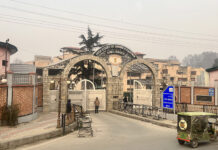
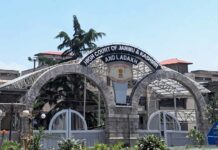
SRINAGAR: The Jammu Kashmir and Ladakh High Court has reduced the non-pecuniary compensation awarded to a road accident victim from Rs 5 lakh to Rs 50,000, holding that the claimant’s 5 percent disability was curable, did not affect his livelihood and was not permanent.
Justice Rajesh Sekhri passed the judgment on September 22, 2026 while allowing an appeal filed by Bajaj Allianz General Insurance Company against an award of the Motor Accident Claims Tribunal, Srinagar.
The case arose from an accident on November 11, 2016, when a motorcycle carrying two cousins near Pothkha was hit by a Tavera bearing registration number JK01R-6955. The motorcycle driver suffered 50 percent disability, while the pillion rider, Aijaz Ahmad Najar, suffered 5 percent disability, according to the medical certificates placed before the Tribunal.
The Tribunal had awarded Rs 5 lakh each to the two claimants as non-pecuniary damages for pain, suffering and trauma, along with other compensation, directing the insurance company to pay the amounts with interest at 9.5 percent per annum.
Bajaj Allianz challenged the award only in relation to the Rs 5 lakh non-pecuniary compensation granted to Najar and the 9.5 percent interest rate.
The High Court examined the medical evidence concerning Najar and found that the 5% disability recorded by the Medical Board was curable and did not affect his ability to work as a carpenter.
Dr Nissar Ahmad Khan, who had examined Najar along with an orthopaedic specialist and the Chief Medical Officer of the Medical Board, stated that the claimant could continue working as a carpenter because his limbs were normal. During cross-examination, he said the 5 percent disability related to the whole body, was curable and was not a disability that affected the claimant’s livelihood.
The court also noted Najar’s own evidence that he was able to walk after the accident and had received treatment at government hospitals, including SKIMS.
Justice Sekhri observed that compensation for pain, suffering and loss of amenities must be assessed objectively, taking into account factors including the victim’s age, extent of disability, medical expenses, loss of earnings during treatment and any impact on future earnings.
The court said tribunals must strike a balance while determining non-pecuniary damages and that compensation should be fair and reasonable rather than either inadequate or excessive.
Referring to Supreme Court judgments, the High Court noted that compensation for pain and suffering had varied according to the seriousness of injuries and extent of disability. It cited cases involving victims who had suffered disabilities as high as 90 percent and, in one case, the loss of both hands.
The High Court also found that the Tribunal had applied the same Rs 5 lakh measure of non-pecuniary damages to both claimants despite the substantial difference between their recorded disabilities of 50 percent and 5 percent.
The court consequently set aside the Tribunal’s award to Najar to the extent challenged and fixed his non-pecuniary compensation for pain, suffering and loss of amenities at Rs 50,000.
It also reduced the interest rate from 9.5% to 6% per annum, directing that the entire compensation payable to Najar be released with interest at 6% from the date of filing of the claim petition until realisation.
The appeal was accordingly allowed and the Tribunal’s award modified.