by Fiaz Pampori
DODA: The ageing suspension footbridge in Premnagar, once a vital artery for thousands of villagers, now stands as a crumbling monument to neglect and administrative apathy. Constructed in 1966 over the Chenab River, it was once hailed as a symbol of progress, offering safe passage across the river that bifurcates the district. Decades later, the same bridge has become a source of daily anxiety for those who rely on it.
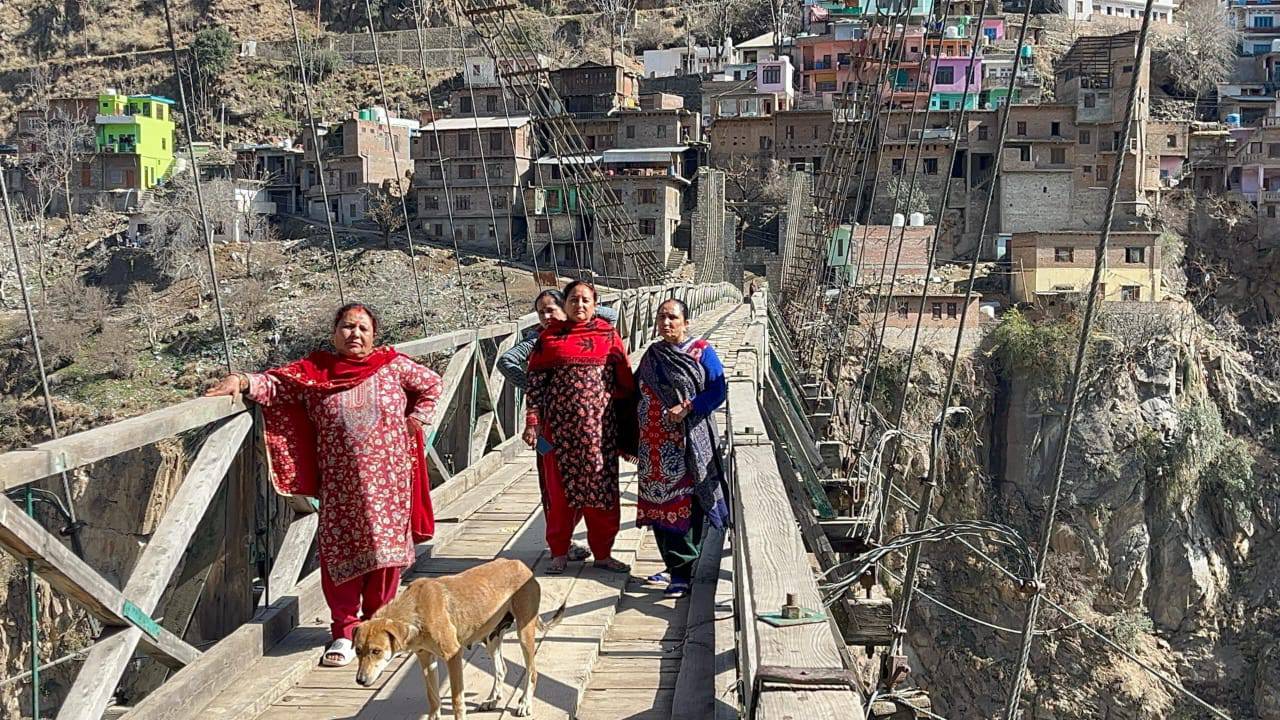
For years, residents urged the authorities to repair the deteriorating structure, citing the risks posed to students, traders, and daily commuters. Instead of undertaking urgent renovation, officials recently issued a notice declaring the bridge unsafe. New restrictions followed: no more than two people were permitted on the bridge at any time, and the use of mules, horses, or other livestock was entirely prohibited.
“We were hoping for repairs, but instead, they placed restrictions,” said Bashir Ahmed, a schoolteacher who crosses the bridge daily. “This is not a solution. It has made our lives even more difficult.”
From Engineering Feat to Public Hazard
When it was built, the Premnagar bridge was considered an engineering triumph, constructed at a time when only one or two bridges existed along the 100-kilometre stretch of the Chenab between Ramban and Kishtwar. Before its existence, villagers had to rely on precarious iron cables and cradle boxes to cross the river, risking their lives with each journey.
“When this bridge was built, it felt like a blessing,” recalled Mohammad Yousuf, an elderly resident. “We thought those risky days were over. But now, we fear for our lives again, just like in the past.”
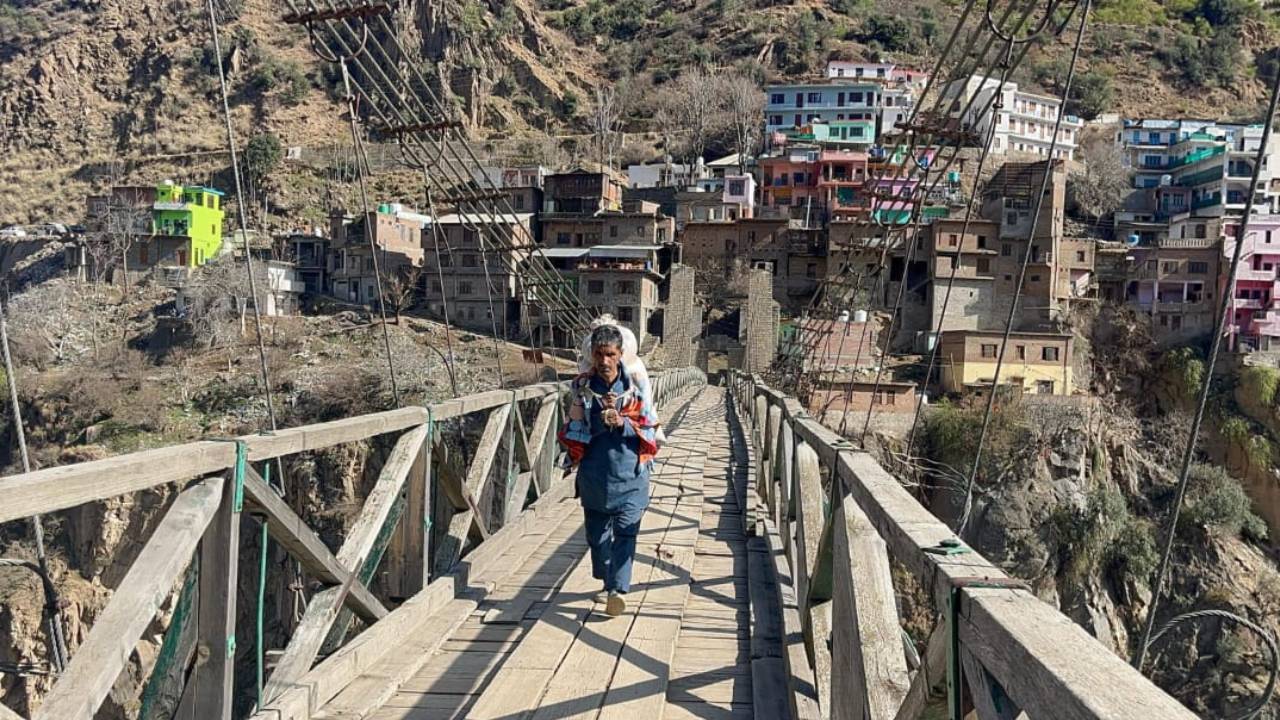
Over the years, a lack of maintenance transformed the bridge into a safety threat. Wooden planks have rotted, iron cables have rusted, and the once-solid stone pillars have weakened. With thousands still dependent on the bridge, villagers warned it was only a matter of time before disaster struck.
“The condition of the bridge is terrifying,” said Aijaz Ahmed, a local activist. “We are forced to use it every day, but every step feels like a gamble with our lives.”
Restrictions Deepen Hardships
Rather than initiating repairs, the administration imposed strict limitations in the name of public safety. But for those who use the bridge, the restrictions only compounded their daily struggles.
“How do they expect us to limit movement on a bridge that thousands use daily?” asked Suneeta Devi, a shopkeeper in Premnagar. “My shop is on the other side of the river. If only two people can cross at a time, how will I reach my shop on time? How will the students reach school?”
Traders and transporters were hit particularly hard. Many had depended on pack animals to carry goods across the bridge, but the new rules forced them to seek expensive and time-consuming alternatives.
“Carrying goods by hand is impossible,” said Abdul Rashid, a trader. “Earlier, we could take heavy loads across with animals. Now, we are struggling to run our businesses.”
Parents, too, expressed concern for their children’s safety. Each morning, they sent them across the precarious structure, hoping they would return unharmed.
“The bridge shakes when we walk on it,” said Shabnam, a college student. “It is scary, but we have no other way to reach our classes.”
Allegations of Misuse and Apathy
Residents alleged that funds allocated for the bridge’s maintenance had either been misused or left unspent. Despite reported budgetary provisions for repairs over the years, visible work remained minimal.
“Some time back, we saw a few workers on the bridge for a few days, replacing a few planks at the entrance,” said Suneeta Devi. “That was all. If money is being spent, where is the work?”
The lack of transparency has fuelled public anger, with calls for an investigation into the use of maintenance funds growing louder.
Officials from the Public Works Department (PWD) defended their decision, stating that the bridge had weakened to such an extent that restrictions were unavoidable. “It has deteriorated over the years, and until a major repair or a new bridge is built, these restrictions are needed for safety,” said one official.
But residents countered that timely maintenance could have prevented the current crisis.
“Why wait for the bridge to collapse before taking action?” asked Aijaz Ahmed. “Why not repair it on time and save us from this mess?”
Calls for a Permanent Solution
With no repair work in sight, villagers began demanding the construction of a new bridge. Although a motorable bridge exists approximately six kilometres away, it remains impractical for many who rely on the Premnagar bridge for daily commuting.
“Every time we raise this issue, we get assurances, but nothing happens,” said Mohammad Yousuf. “If they cannot repair this bridge, at least build a new one nearby.”
The bridge’s deteriorating state has attracted attention beyond the district. Journalists, photographers, and adventurers have flocked to the site, drawn by news of its precarious condition. But for locals, the daily ordeal is not a spectacle.
“We do not need people coming here to take pictures,” said Abdul Rashid. “We need authorities to take action before it is too late.”
Uncertain Future
Despite growing public pressure, authorities have taken no concrete steps to address the issue. There has been no official announcement regarding repair timelines or plans for a new structure.
Infrastructure experts have described the crisis as emblematic of a wider neglect of rural connectivity. “Bridges like these are crucial for thousands of people, yet they are often overlooked in development plans,” said one expert. “Regular inspections and timely maintenance could have prevented this crisis.”
For now, the residents of Premnagar continue to cross the bridge each day, fully aware that it might collapse without warning. Some believe only a tragedy will prompt authorities to act.
“We are living with uncertainty,” said Shabnam. “Every time we step on that bridge, we pray it holds up.”
The bridge that once symbolised hope and connectivity for the people of Doda now stands as a grim testament to official inaction. Until meaningful steps are taken, the villagers of Premnagar remain suspended in a daily struggle, balancing their lives on a structure that was meant to serve them, but now threatens to fail them.