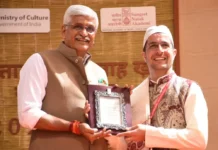
SRINAGAR: Dachigam National Park has secured the highest score in the Management Effectiveness Evaluation (MEE) of protected areas across India. The park scored an impressive 92.97 per cent in the national assessment conducted by the Wildlife Institute of India (WII) under the Union Ministry of Environment, Forest and Climate Change.
Minister for Forest, Ecology and Environment, Javed Ahmed Rana, lauded the officers of the Wildlife Protection Department for what he described as a “benchmark achievement” in managing protected areas within the ecologically sensitive landscape of Jammu and Kashmir. He termed the recognition a model for other conservation zones in the Union Territory to follow.
“This accomplishment highlights the exceptional dedication and management capability of our wildlife staff and reaffirms our commitment to protecting the biodiversity of J&K,” Rana stated.
Dachigam National Park, located near Srinagar and spanning 141 sq km, emerged as the top-ranked protected area among 438 sites evaluated across the country. The evaluation considered parameters such as biodiversity conservation, ecological management, staff capacity, and community engagement.
The Minister emphasised that protected areas are vital to global biodiversity efforts and are essential for maintaining ecological balance. He underlined the role of anti-poaching initiatives, habitat restoration, and public awareness campaigns, and reiterated the government’s focus on enhancing eco-tourism and scientific monitoring of biodiversity in the region.
Rana expressed gratitude to the Ministry of Environment, Forest and Climate Change for their continued technical and financial support, and urged officers to maintain momentum in their conservation work to protect India’s diverse flora and fauna.
Dachigam, known globally as the last stronghold of the critically endangered Hangul (Kashmir stag), has received special recognition for its conservation strategies. Recommendations from the WII include operationalising the Hangul Conservation Breeding Centre and further promoting eco-tourism within the park to ensure long-term sustainability.