SRINAGAR: The Federation of Chambers of Industries Kashmir (FCIK), the leading industrial chamber in the Valley, has urged J&K Bank to prioritise fostering long-term loyalty among local customers, stressing that the bank’s sustainable growth and resilience are intrinsically linked to the support of its local base. The FCIK attributed J&K Bank’s profitability to the trust and loyalty of Jammu and Kashmir’s residents, who make up the vast majority of its depositors and borrowers.
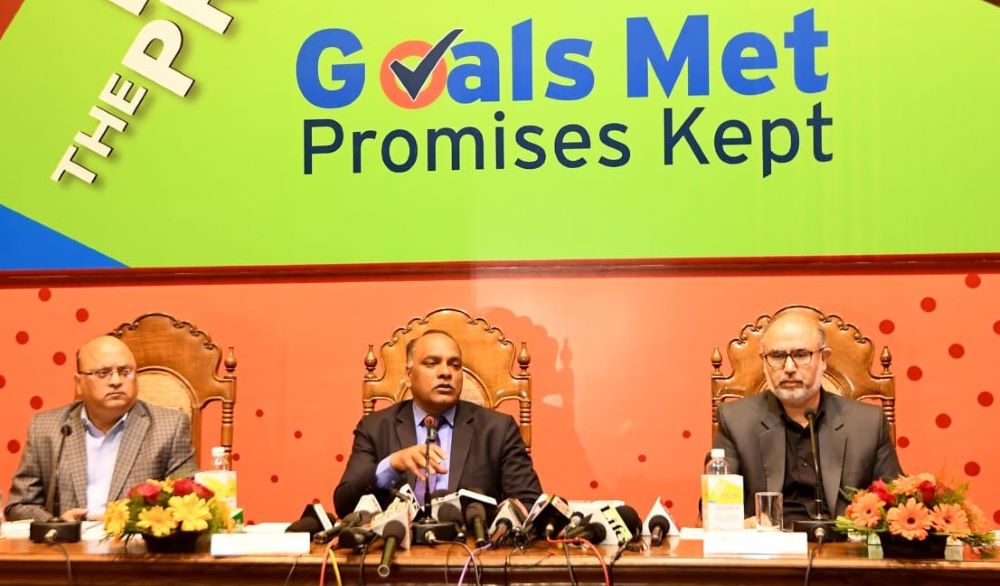
According to FCIK, of the total Rs 1,37,918 crore in deposits, Rs 1,23,000 crore — approximately 89 per cent — originates from the Jammu and Kashmir region. This deposit profile, FCIK noted, is pivotal in maintaining the bank’s profitability. “The Current Account Savings Account (CASA) ratio offers J&K Bank a strategic advantage, with 48.60 per cent of its deposits originating from current and savings accounts,” FCIK said, highlighting that despite these accounts yielding no interest, current account holders are charged for almost every service provided.
FCIK further pointed out that J&K Bank has consistently maintained the lowest cost of deposits among India’s scheduled commercial banks, standing at 4.4 per cent in the 2023-24 fiscal year, down from 3.8 per cent, 3.65 per cent, and 4.10 per cent in the prior three years. FCIK attributed this competitive edge to the enduring loyalty of local depositors, emphasising the critical role of government transactions routed through J&K Bank due to its majority government ownership and designation as the agency bank for the Union Territory.
Highlighting the importance of local borrowers to J&K Bank’s lending portfolio, FCIK revealed that 68.5 per cent of the bank’s total loans and advances, amounting to Rs 66,000 crore out of Rs 96,139 crore, are held by borrowers within the region. Of these, Rs 23,000 crore, or 24 per cent of the overall portfolio, consists of retail loans to local employees backed by government guarantees, which FCIK noted are highly secured.
Acknowledging J&K Bank’s longstanding role as the primary financial supporter of local businesses, particularly since 1989, FCIK expressed disappointment with the unfavourable terms often imposed on these borrowers. “Local businesses are subject to higher collateral requirements despite central government initiatives promoting collateral-free schemes,” FCIK said. Additionally, FCIK criticised the bank for imposing high-interest rates on borrowers, citing security risks as justification, with some industries, such as poultry, facing overcharges of 4-5 per cent.
Despite these hurdles, J&K Bank has witnessed a significant improvement in its Non-Performing Assets (NPA) ratio, dropping to 3.95 per cent from 8.7 per cent in 2021-22. FCIK attributed this decrease to the unwavering commitment of local borrowers, some of whom have gone so far as to sell ancestral properties to repay debts in response to the bank’s stringent recovery methods.
However, FCIK called for transparency regarding the decline in NPAs, questioning reports that substantial loans outside the Union Territory had been written off due to their unsecured status. FCIK argued that while local customers remain loyal, many are feeling alienated by the bank’s coercive methods and anti-customer approach, resulting in an exodus of clients to other banks, with more contemplating similar moves. The bank’s future, the FCIK warned, could be jeopardised if it loses the loyalty of its local base.
Turning to the recently inaugurated Omar Abdullah-led government, FCIK appealed for intervention in J&K Bank’s policies to restore local trust and address pressing issues. The Chamber called for an end to coercive practices and urged for an inquiry into the exclusion of local professionals from top leadership roles within the bank, arguing that greater representation would strengthen the bank’s community ties and ensure a loyal customer base