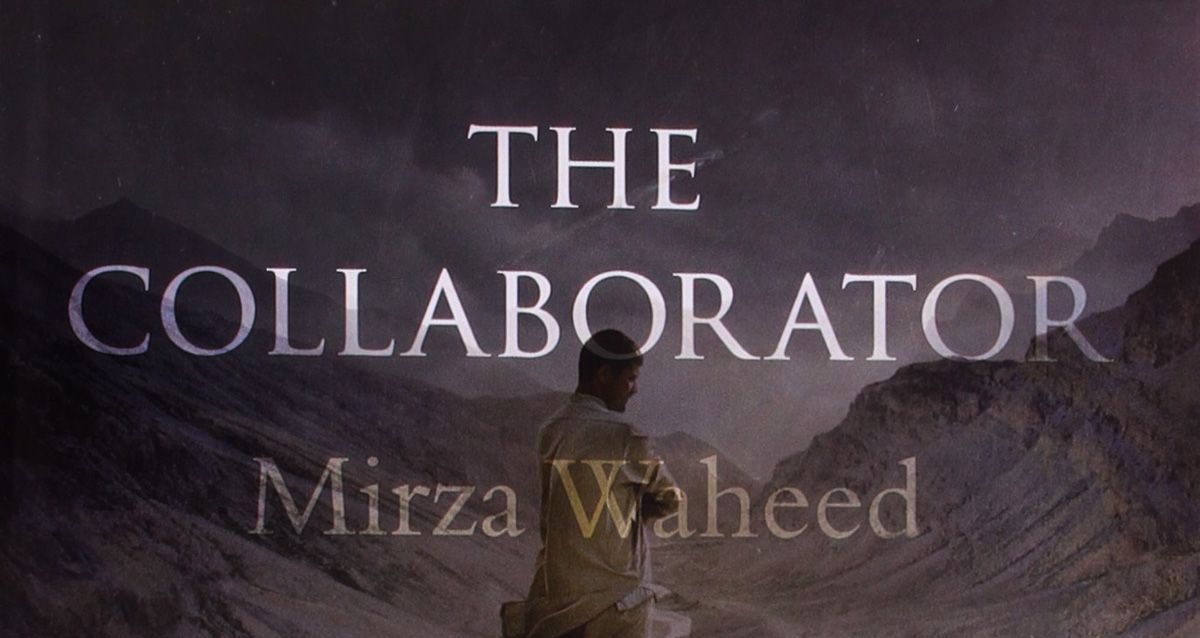
SRINAGAR: Renowned novelist Mirza Waheed has publicly disassociated himself from the screening of a film adaptation of his critically acclaimed novel The Collaborator at the Tamuz Shomron Film Festival (TSFF), held in the Israeli settlement of Ariel in the occupied West Bank. Mirza’s announcement follows his decision to sign a global cultural boycott pledge, alongside over 5,000 writers and publishers, aimed at opposing Israeli cultural institutions complicit in what he describes as the “overwhelming oppression of Palestinians.”
The pledge, which Mirza considers a historic mobilisation akin to the cultural boycott against apartheid South Africa, has been signed by many celebrated writers and publishers. It denounces the complicity of Israeli cultural organisations in supporting or remaining silent about the ongoing dispossession and oppression of Palestinians.
Mirza explained his objection to the film’s inclusion in TSFF, which is supported by the Shomron Cinema Fund, widely criticised as the “settler film fund.” Mirza noted that even within Israel, prominent filmmakers and actors have boycotted the fund for its role in “whitewashing the occupation.”
“The screening of this film at a festival held in an illegal settlement amidst what experts have called a genocide is fundamentally wrong,” Mirza said. “I cannot allow my work to be associated with any platform that normalises injustice or undermines Palestinian rights.”
Mirza shared how his travels through Palestine during the Palestine Festival of Literature last year opened his eyes to the extensive system of apartheid faced by Palestinians. “I saw racism on an industrial scale; there is nothing like it on the planet,” he remarked, describing the stark inequalities in land, water, housing, and movement enforced by the Israeli occupation.
The author expressed dismay at discovering the film’s inclusion in the TSFF programme, stating that he had no role in the decision. While acknowledging he cannot control the producers’ choices, he firmly declared that his participation in any promotion of the film is contingent on its withdrawal from the festival.
Mirza also addressed criticism of cultural boycotts, emphasising their role as tools of solidarity rather than exclusion. “Boycotts are statements of intent not to cooperate with systems of oppression and cruelty,” he explained. “They are solidarity put into practice, declaring one’s refusal to look away as mass injustices occur.”
His decision aligns with a broader international condemnation of Israeli settlement activities in occupied Palestinian territories, which the International Court of Justice recently ruled illegal under international law.