by Shoaib Nazir
SRINAGAR: As October’s autumn settles over the misty slopes of Harwan and Shalimar in Srinagar, the annual chestnut (panjaeb gaer) harvest begins. The spiny fruit of tall chestnut trees represents more than a seasonal snack, it is a source of income, tradition, and nutrition for many families.
The introduction of chest nuts to Kashmir is attributed to Mohammad Rehman Afandi, a classmate of Maharaja Hari Singh at Oxford University. The harvest, however, remains labour-intensive. Men climb the tall trees, striking branches with long wooden sticks to bring down the nuts, while others collect them in baskets and sacks below.
“The trees are high and climbing in these towering, but we have no choice other than feeding the family. These chestnuts are transported to different places of Kashmir from North to South Kashmir. These nuts are roasted to make them more delicious. Chestnuts are our autumn livelihood,” said Abdul Khaliq, a grower from Harwan.
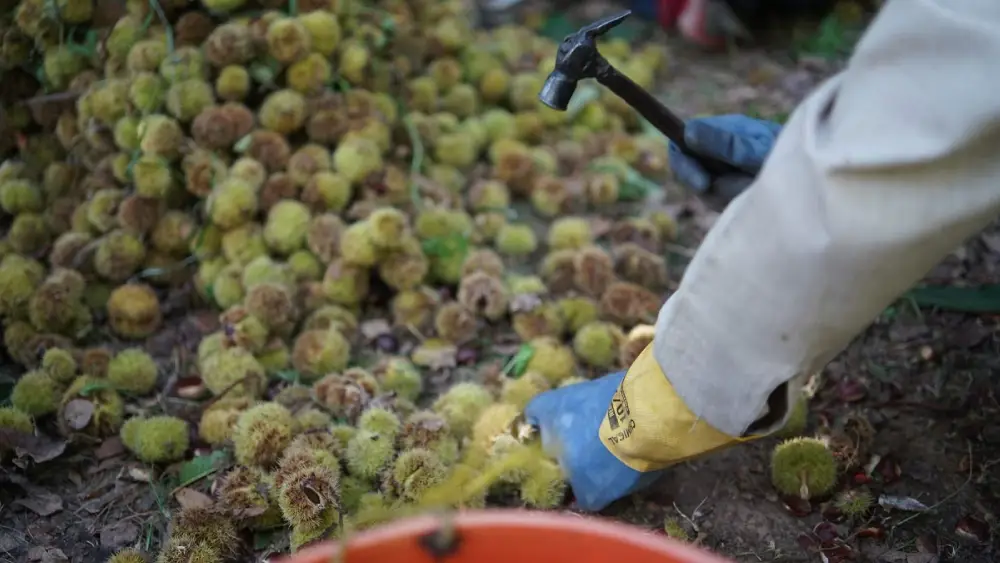
“People do not just buy them for taste, they know chestnuts are good for health. I usually hear from customers that this is good for diabetes and cholesterol,” added Bashir Ahmad, a street vendor in Lal Chowk.
Health experts note that chest nuts are rich in antioxidants and minerals such as magnesium and potassium, which may reduce the risk of cardiovascular diseases. They are also low in fat and high in fibre, which can aid in controlling cholesterol and blood sugar levels. “I personally recommend some patients to include chest nuts in their diet for such conditions,” said Dr Shakir Majeed, a Srinagar-based physician.
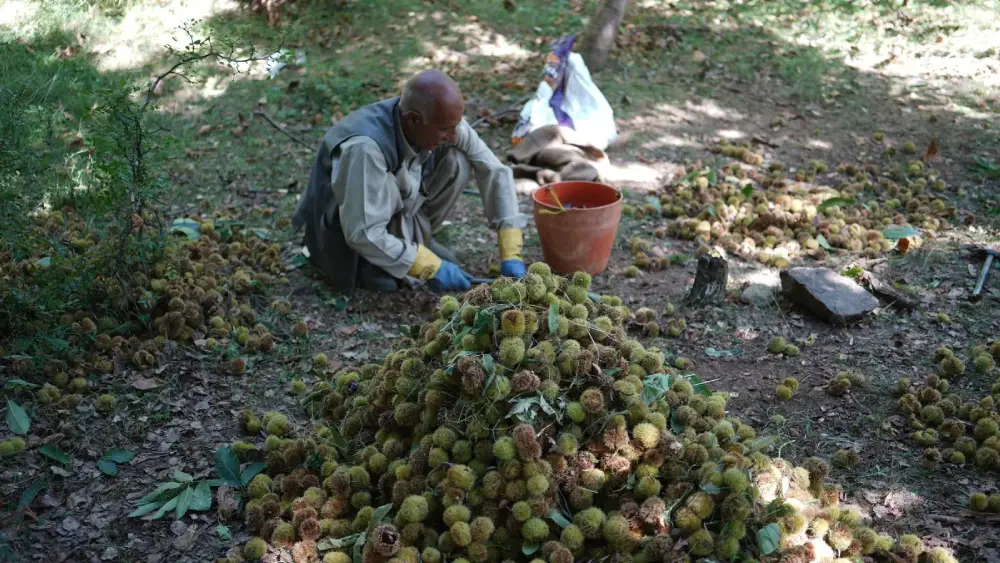
Despite the challenges, the harvest sustains hundreds of families. For daily wage labourers, it provides temporary employment; for traders, a seasonal business opportunity; and for households, a taste that marks the change of season.
“Usually, people assume that due to its name ‘punjaeb gaer’, it is cultivated outside Kashmir and is mainly being sold by non-Kashmiris on the Srinagar streets, said Gulzar Ahmad Chopan, a local trader.
Traders consider this business a “long-term investment” as they say it is bought for Rs 150- 200 per kg from growers and is sold at Rs 1200 per kg in the market.
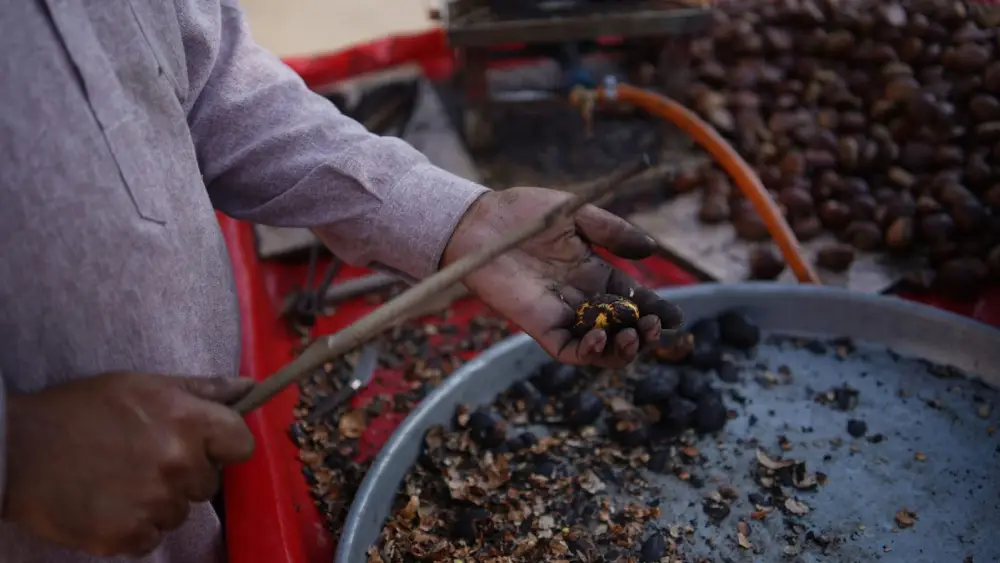
“Imagine how much the profit margin is and how many families are dependent on it. From harvesters who climb up, to the labourers who collect and break their shell to brokers and sellers, various sections are fed by this fruit,” says Chopan.