SRINAGAR: The Environmental Policy Group (EPG) has renewed its call for immediate government intervention to address what it describes as a fast-escalating environmental crisis across the Kashmir Valley, warning that delays in corrective measures could trigger long-term ecological and public health consequences.
Over the past few decades, the Valley’s fragile natural systems — forests, wetlands, rivers and mountains — have undergone steady degradation. Once-dense green cover has thinned, water bodies have shrunk or turned polluted, and large tracts of land have been altered by unregulated construction and resource extraction. According to the group, these cumulative pressures are now visible not just in the landscape but also in everyday life.
In urban centres, particularly Srinagar, foul odours from unmanaged waste and rising air pollution have begun affecting residential neighbourhoods. The Aachen solid waste dumping site has emerged as a symbol of the crisis, with untreated garbage accumulating over years and posing what environmental advocates call a direct public health threat to thousands of residents.
The deterioration is not limited to cities. Wetlands, lakes and rivers — traditionally regarded as Kashmir’s natural buffers against floods and climate fluctuations — are under increasing stress. Conservation efforts, the EPG says, have weakened due to poor planning and resource shortages. In several cases, soil and muck are reportedly being extracted and sold from wetlands to generate maintenance funds, a practice experts argue further destabilises these ecosystems rather than restoring them.
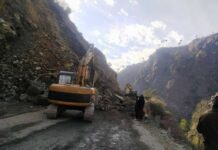
Simultaneously, agricultural lands and forest patches are being converted for commercial and residential use. Illegal encroachments, unplanned urban sprawl, and large-scale mountain cutting have altered the Valley’s natural drainage patterns, increasing vulnerability to landslides, flooding and soil erosion.
Of particular concern is the damage to geologically significant sites. The internationally acknowledged Guryul Ravine — known for its Permian–Triassic fossil record — along with areas such as Khonmoh, Mandakpal, Barus and Pastun in Tral, has witnessed intensive mining activity. Material extracted from these zones is often diverted for construction use. Environmentalists note that instead of being developed as protected fossil parks of scientific and educational value, parts of these sites have been subjected to heavy machinery and excavation.
Institutional constraints have compounded the problem. Departments tasked with environmental protection, including Forest and Wildlife authorities, face manpower shortages. Several field-level posts remain vacant, while a lack of trained personnel and limited budgets restrict monitoring and enforcement capacity.
Against this backdrop, the EPG has urged the government to treat air pollution, water contamination and unmanaged solid waste as a public health emergency, recommending time-bound action plans backed by dedicated funding. The group has also called for increased allocations for conservation of wetlands and rivers, revival of dormant wetland management plans, and specific financial support for the protection and development of the Guryul Ravine fossil zone.
The organisation further cautions that Jammu and Kashmir lies in Seismic Zone-V, the highest risk category under the national seismic hazard map. In such a region, it argues, environmentally degrading or poorly planned projects could intensify disaster risks. Lessons from recent incidents in Uttarakhand, Himachal Pradesh and parts of Ramban, where infrastructure development coincided with landslides and ecological damage, underscore the need for caution.
Among other measures, the group has recommended strengthening the Forest and Wildlife Departments through recruitment and restructuring, halting the sale of wetland soil, preventing illegal land conversions, and enforcing stricter regulation of construction and mountain cutting.
The EPG maintains that coordinated and timely action is essential to restore the Valley’s ecological balance and protect both livelihoods and public health. It has appealed to policymakers, planners and legislators across party lines to prioritise expert-driven environmental safeguards.
As pressures of urbanisation and development continue to mount, the choices made now, environmentalists warn, will determine whether Kashmir’s natural assets can be preserved or whether degradation becomes irreversible.