SRINAGAR: Lotus flowers have reappeared in Wular Lake after nearly three decades, marking the return of a key aquatic crop that had vanished following the 1992 floods. The development follows an ongoing restoration project led by the Wular Lake Management Authority.
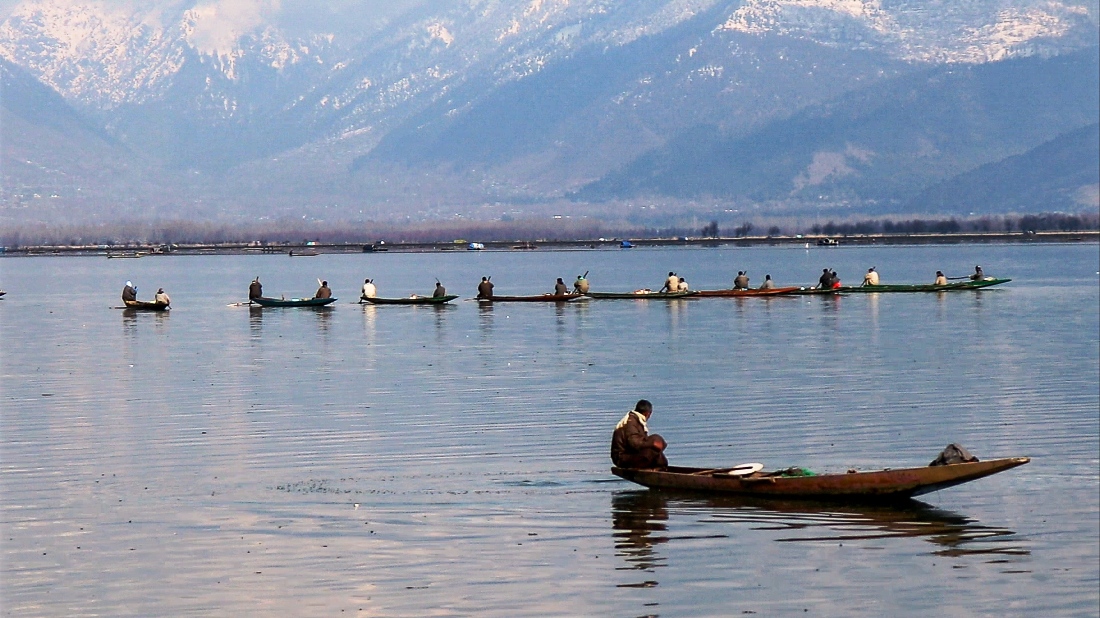
According to officials, the desilting initiative launched in 2020 has removed over 7.9 million cubic metres of silt, enabling the natural regrowth of lotuses and allowing local communities to resume harvesting the stems, known locally as nadru.
The lotus had disappeared after the 1992 flood deposited thick layers of silt in the lakebed, affecting both the ecosystem and local livelihoods. Wular Lake, spread over approximately 200 square kilometres between Bandipora and Sopore, once served as a source of income for hundreds of families dependent on seasonal harvesting of nadru, a common ingredient in local cuisine.
A project official said that although lotus stems were not visible for years, their root systems remained dormant beneath the silt. “Once dredging began in specific zones, lotus started reappearing. This year, seeds were introduced in dredged sections, and the results are visible,” he said.
The official added that the department plans to install retention basins along key tributaries of the Jhelum River to prevent future siltation. Discussions are underway regarding regulation of harvesting, including the possibility of issuing permits or maintaining open access for locals.
Mohammad Yaqoob, a farmer from Watlab, recalled assisting his father in lotus harvesting before the flood. “We thought it was gone forever. Now we are seeing it again,” he said. Zahoor Ahmad of Laharwalpora said locals had tried for years to revive the plant by throwing seeds into the lake, but with no success until desilting efforts began.
The lake’s revival has renewed income opportunities in surrounding villages. Traditionally, harvesting nadru is labour-intensive, requiring workers to enter deep water to retrieve the stems. The activity had continued in other lakes like Dal and Manasbal, but Wular had remained barren since 1992.
Ghulam Hassan Reshi from Lankreshipora said the 1992 flood brought an abrupt end to nadru in the lake. “That year the lotus was blooming. After the flood, we lost it,” he said.
The return of the lotus is being viewed not only as an ecological milestone but also as a boost to economic activity in the region. The Wular Lake Management Authority says further interventions will be guided by scientific inputs and community engagement to ensure long-term sustainability. (With KNO Inputs)