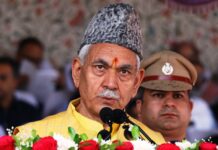
SRINAGAR: Mirwaiz-e-Kashmir Moulvi Muhammad Umar Farooq on Friday described the devastation in Nepal and other parts of the Himalayan region as a warning for Jammu and Kashmir, urging authorities and the public to reconsider development practices that could increase environmental risks in the fragile mountain ecosystem.
Addressing the Friday congregation at the historic Jama Masjid Srinagar, Mirwaiz expressed solidarity with the people of Nepal and prayed for those killed, the safe recovery of those missing and relief for people affected by the disaster.
He said Jammu and Kashmir forms part of the same fragile Himalayan belt and is witnessing increasingly intense rainfall, cloudbursts, flash floods and landslides. While identifying climate change as a major factor, he questioned whether patterns of development in the region were further increasing vulnerability to such disasters.
Mirwaiz said Kashmir’s mountains, lakes and rivers attract tourists and support the livelihoods of a large section of the population, but expressed concern over what he described as the “reckless” exploitation of the region’s ecology in the name of commerce and development.
He said mountain slopes were being cut or blasted for roads, trees felled, hotels and other buildings constructed in ecologically sensitive areas, while natural drainage channels were being disturbed.
“If this continues without proper scientific and environmental safeguards, we are creating conditions for far greater disasters in the future,” he said.
He also raised concerns over encroachment on wetlands, lakes and flood channels, appealing to people not to occupy or construct on such areas. Mirwaiz said wetlands act as natural buffers by absorbing excess water and helping protect human settlements.
Referring specifically to Dal Lake, he said prolonged encroachment, construction and environmental neglect were damaging the water body and claimed that it was “shrinking day by day”.
Quoting the Holy Qur’an, Mirwaiz said: “And do not cause corruption on the earth after it has been set in order.” (7:56)
He said environmental protection was a collective responsibility involving authorities, planners, businesses and citizens, particularly in a fragile Himalayan region where infrastructure and tourism development could have significant consequences.
“The tragedy in Nepal must be seen as a warning close to home. We too live in the Himalayas. If we continue to disturb the natural balance of our mountains, forests, wetlands and waterways, the consequences may one day be irreversible,” he said.
Mirwaiz stressed the need to balance infrastructure and tourism development with ecological preservation, saying environmental protection was ultimately linked to safeguarding lives, homes and future generations.