by Umaima Reshi
Hungarian novelist László Krasznahorkai wins the 2025 Nobel Prize in Literature for his visionary, apocalyptic fiction that reaffirms art’s power to endure amid despair and destruction.
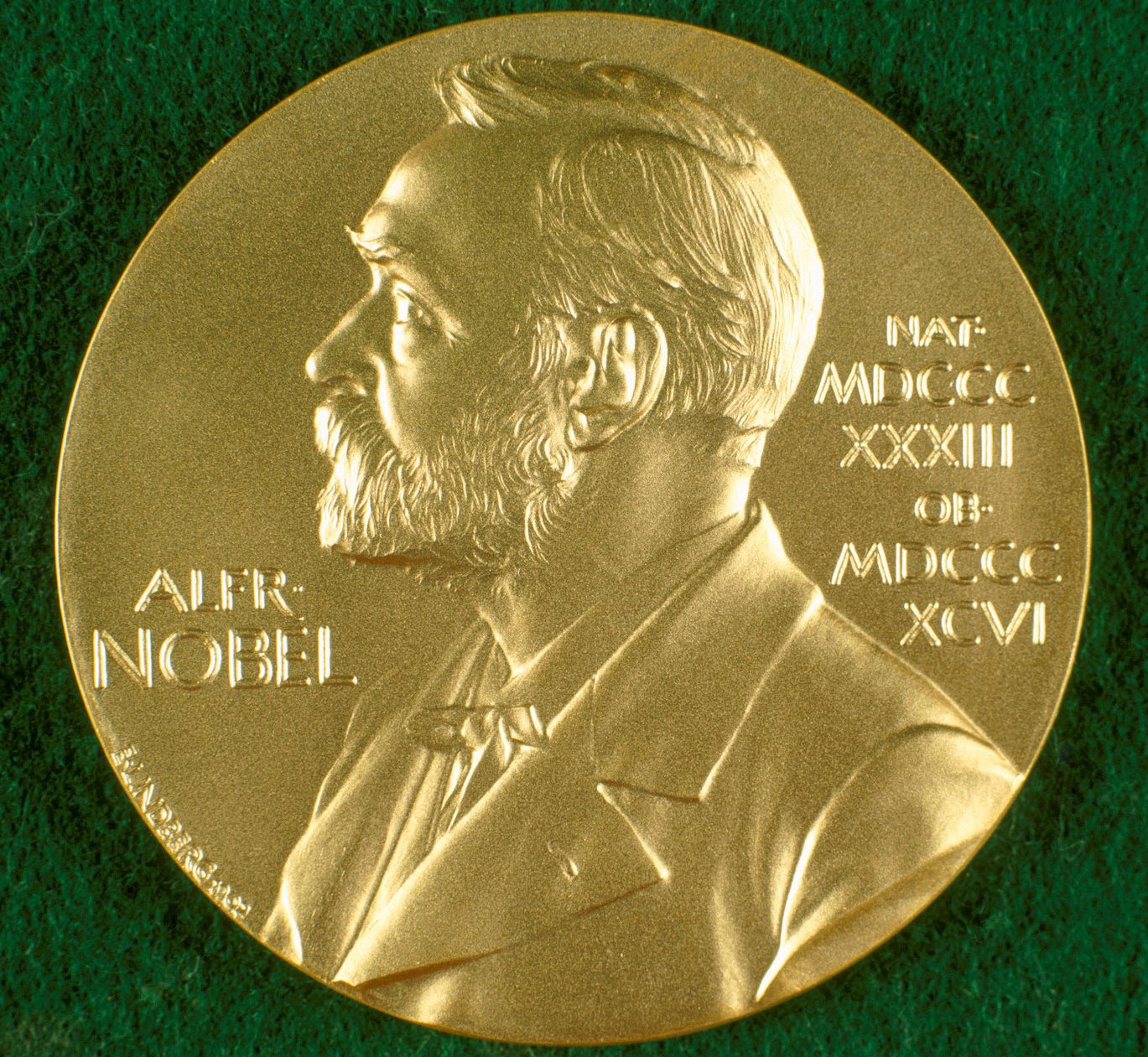
The 2025 Nobel Prize in Literature has been awarded to Hungarian novelist and screenwriter László Krasznahorkai for what the Swedish Academy called his “compelling and visionary oeuvre that, in the midst of apocalyptic terror, reaffirms the power of art.”
The 71-year-old author, known for his intricate prose and long, meandering sentences, joins the pantheon of Central European literary greats such as Kafka and Thomas Bernhard. His fiction, often set against collapsing moral and social orders, has made him one of the most revered and demanding writers of contemporary literature.
Following the announcement, Nobel Committee member Steve Sem-Sandberg described Krasznahorkai’s debut novel Sátántangó as “magnificent” and called the author “a master of apocalyptic vision who insists that art survives even in the face of ruin.”
Life Sketch
Born in 1954 in Gyula, a small town in southeastern Hungary near the Romanian border, Krasznahorkai emerged as a literary force with his 1985 debut novel Sátántangó (Satantango, English translation 2012). Set in a decaying collective farm in rural Hungary, the novel captures a community paralysed by despair and waiting for salvation that never arrives. The story’s haunting sense of expectation and betrayal made it a defining allegory of post-communist disillusionment.
The novel was adapted into a seven-hour film by the acclaimed Hungarian filmmaker Béla Tarr in 1994, cementing both artists’ reputations as visionaries of bleak beauty.
His second novel, The Melancholy of Resistance (1989), described by Susan Sontag as the work of “contemporary literature’s master of apocalypse,” deepened his reputation. In a small Carpathian town, a travelling circus bearing the carcass of a giant whale unleashes chaos and authoritarianism. Critics hailed it as a prophetic meditation on political decay and collective hysteria.
The Epic of Despair and Return
In War & War (1999), Krasznahorkai turned his gaze outward, following an archivist from Budapest to New York in search of meaning and redemption through an ancient manuscript. The novel’s rhythmic, unbroken sentences—his stylistic hallmark—created a trance-like narrative exploring obsession and transcendence.
His later work, Baron Wenckheim’s Homecoming (2016), revisits Hungary through a tragicomic tale of a ruined aristocrat returning home after years in exile. The novel, filled with grotesque humour and Dostoyevskian characters, marked a summation of his apocalyptic vision.
More recently, Herscht 07769 (2021) set in modern-day Thüringen, Germany, merges social realism with spiritual terror. Its themes of violence, beauty, and faith show the novelist’s continued fascination with human frailty and moral collapse.
Turning Eastward
Krasznahorkai’s journeys to China and Japan in the 1990s transformed his style. Works such as A Mountain to the North, a Lake to the South, Paths to the West, a River to the East (2003) and Seiobo There Below (2008) reveal a meditative tone inspired by Eastern aesthetics. The latter, structured in a Fibonacci sequence of 17 stories, examines beauty and artistic creation across cultures and centuries—from Renaissance Italy to modern Kyoto.
In these works, the apocalyptic Hungarian vision gives way to a profound search for transcendence. The snow-white heron in Seiobo There Below, standing motionless in Kyoto’s River Kamo, has become one of modern literature’s most enduring images of artistic solitude.
A Literary World of Collaboration
Krasznahorkai’s decades-long collaboration with Béla Tarr resulted in some of the most acclaimed films in world cinema, including Werckmeister Harmonies (2000) and The Turin Horse (2011). He has also worked with artist Max Neumann and jazz musician Szilveszter Miklós, blending literature with visual and musical art forms.
His global acclaim includes the Man Booker International Prize in 2015, and multiple Best Translated Book Awards for Satantango and Seiobo There Below.
The Solitary Writer of Szentlászló
Known for his reclusive lifestyle, Krasznahorkai lives in the hills of Szentlászló in western Hungary. Educated in law and Hungarian literature, he began his career at a Budapest publishing house before dedicating himself fully to writing. His early influences include Hungarian novelist Sándor Márai and American poet Allen Ginsberg, whom he befriended in New York during the writing of War & War.
Writers such as WG Sebald have compared the universality of his vision to Gogol’s Dead Souls, praising him for transcending “the lesser concerns of contemporary writing.”
Reaffirming the Power of Art
In awarding the Nobel, the Swedish Academy highlighted Krasznahorkai’s ability to find meaning amid despair. His fiction, often set in ruined towns and under collapsing skies, offers not nihilism but endurance—an insistence that art remains a refuge when the world seems beyond repair.
As Sem-Sandberg summed up, “In the face of apocalypse, Krasznahorkai reminds us that art alone testifies that humanity still exists.”