SRINAGAR: In a groundbreaking discovery that sheds light on the transition from nomadic to urban lifestyles in ancient Arabia, archaeologists have uncovered a 4,000-year-old fortified town, Al-Natah, hidden within the oasis of Khaybar in northwest Saudi Arabia.
This remarkable find, led by Dr Guillaume Charloux of the French National Centre for Scientific Research (CNRS) and Dr Munirah AlMushawh of the Royal Commission for AlUla (RCU), was announced at a press conference in Riyadh and published in the scientific journal PLOS ONE, reports appearing in international media said.
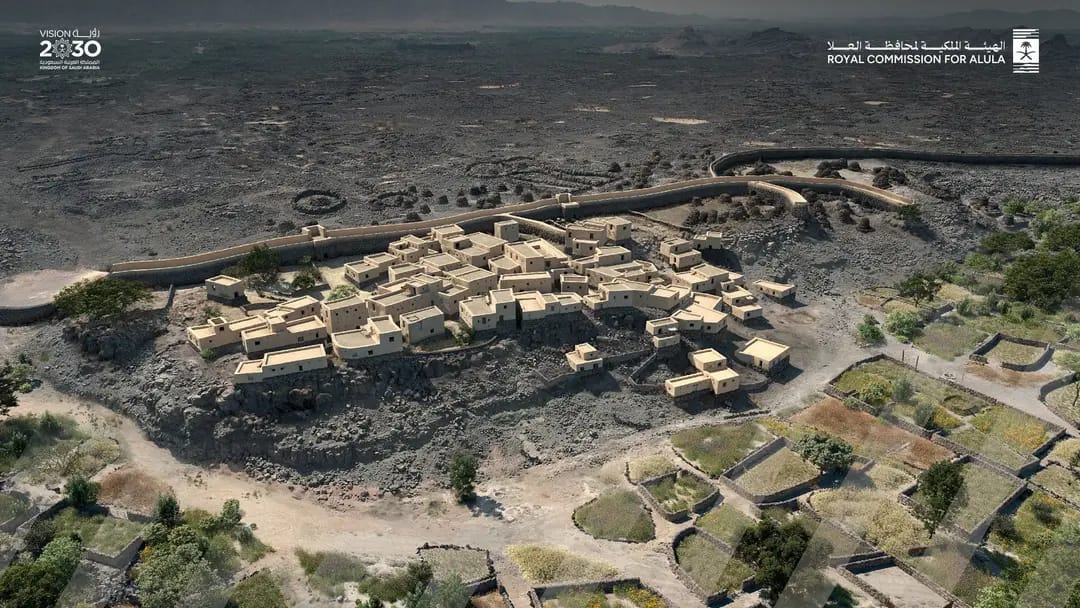
The town, dating back to around 2400–2000 BCE, reveals the presence of an organised settlement in an era previously believed to be dominated by nomadic pastoral societies. Enclosed by a 14.5-kilometre wall and occupying a 2.6-hectare area, Al-Natah housed up to 500 residents who lived in multi-story dwellings. The discovery forms part of the Khaybar Longue Durée Archaeological Project and reflects the broader goals of Saudi Arabia’s Vision 2030, which seeks to promote and preserve the Kingdom’s rich cultural heritage.
The discovery of Al-Natah challenges long-held perceptions of the socio-economic landscape in northwestern Arabia during the early to middle Bronze Age. Rather than relying solely on pastoral and nomadic lifestyles, the town’s inhabitants adopted a settled, community-based existence. Archaeologists have found that the town was likely a centre for agricultural production and trade, sustaining a cooperative society in the otherwise arid environment.
“Preliminary archaeological surveys and soundings have revealed a fortified 2.6-hectare town built around 2400–2000 BCE, lasting until at least 1500 BCE, possibly 1300 BCE, though potentially with interruptions,” the study authors stated. The town was divided into distinct residential and funerary zones, indicating an early form of urban planning and a social structure that valued both security and community cohesion.
Residents of Al-Natah lived in rectangular dwellings, constructed from materials such as stone and mudbrick, with narrow paths connecting the various structures. The ground floors of these homes were used for storage, while upper floors served as living quarters. Archaeologists uncovered a range of artefacts, including pottery, grindstones, metal tools, and bead ornaments, revealing that the community engaged in skilled craftsmanship, trade, and a diet based on mutton, lamb, and grains.
The town’s layout included burial sites, with some graves and tiered towers marking higher social status. This combination of residential and funerary zones reflects the complex social fabric of Al-Natah, where daily life was deeply interconnected with reverence for the dead.
Located on the edge of the Harrat Khaybar volcanic field and at the junction of three valleys, Khaybar’s strategic position made it a vital hub for both agriculture and trade. Al-Natah’s residents had access to a network of wells, ensuring water supply amid the harsh desert landscape. The oasis setting, coupled with the surrounding wall, offered protection and allowed for stable agricultural production, which likely attracted both settled and nomadic communities for trade.
The Khaybar oasis was part of a network of walled oases that connected settlements throughout the region, including the fortified city of Tayma to the north. The town’s design and infrastructure suggest that its residents understood the principles of urban resilience and sustainable resource management—a sophisticated approach that would lay the foundations for future Arabian societies.
The discovery of Al-Natah is part of one of the largest archaeological research programmes in the world, managed by RCU’s Department of Archaeology, Collections, and Conservation in collaboration with the French Agency for the Development of AlUla (AFALULA) and CNRS. Since 2018, this programme has uncovered a wealth of ancient sites in AlUla and Khaybar, including stone traps, funerary roads, and massive stone structures called mustatils, which further illustrate the historical complexity of the region.
This research underscores Saudi Arabia’s commitment to preserving and promoting its cultural heritage in line with Vision 2030’s goals. The RCU aims to foster international partnerships and showcase the Kingdom’s rich archaeological treasures to the world, paving the way for a deeper understanding of the Arabian Peninsula’s ancient past.
The ancient town of Al-Natah stands as a testament to the resilience, adaptability, and innovation of its residents. From its meticulously planned water sources to its fortified walls and organised housing, Al-Natah offers a glimpse into a society that valued community, security, and cooperation. As researchers continue to uncover more details, the town provides not only an archaeological marvel but a window into humanity’s enduring drive for community and progress.
The RCU and its partners plan further excavations at the site, hoping to reveal additional insights into the daily lives, cultural practices, and trade networks of Al-Natah’s inhabitants. This discovery not only redefines the early history of the Arabian Peninsula but also enriches our understanding of how ancient societies adapted to their environments, laying the foundations for civilisation in one of the world’s most challenging landscapes.