SRINAGAR: A new flashpoint has emerged in Jammu and Kashmir’s delicate power-sharing structure after Lieutenant Governor Manoj Sinha publicly said that his authority is limited to the police, while all development-related matters fall under the jurisdiction of the elected government. The remark has triggered sharp political reactions, reviving the long-running debate over “dual control” governance in the Union Territory.
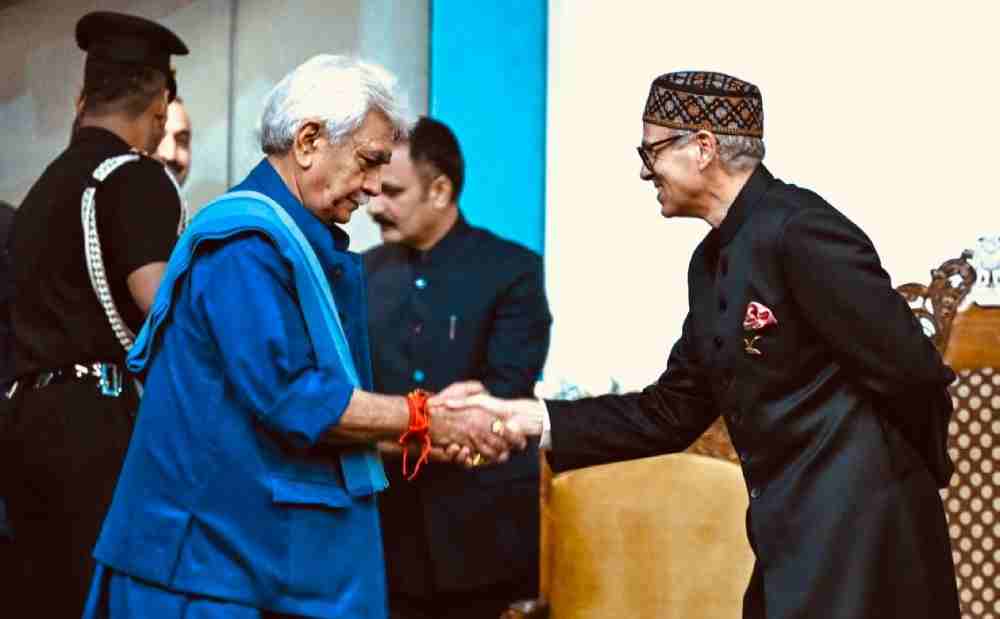
Speaking at the Viksit Krishi Sankalp Abhiyan event in Kulgam on Saturday, Sinha responded to cabinet minister Sakina Itoo’s appeal for public welfare measures by stating:
“The only thing I can give you is the police personnel. Roads, water, power, agriculture – those are the government’s domain. I will not object to any development work initiated by the elected government.”
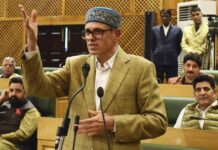
The statement swiftly provoked criticism from the ruling National Conference. Party spokesperson and legislator Tanvir Sadiq questioned the consistency of the LG’s stand and accused him of overstepping his role in governance.
“If he has only police under his authority, how is he giving job relaxations under SRO norms, which fall under the state government’s remit?” Sadiq asked, referring to the LG’s action earlier in the day when he handed over an appointment letter to the widow of Syed Adil Hussain, a civilian killed in the April 22 terror attack on tourists in Pahalgam. The LG’s move was portrayed as discretionary, invoking Clause 2A of the J&K Rehabilitation Assistance Scheme, 2022.
A statement later issued by the Department of Information and Public Relations (DIPR) confirmed that the LG had used his special powers to relax qualification rules for the appointment of Gulnaz Akhter, the victim’s widow. It clarified that the authority to make such discretionary appointments “solely lies with the Hon’ble Lieutenant Governor.”
But Tanvir Sadiq rejected the claim, asserting that the Fisheries Department, where the appointment was made, falls under the elected government’s minister, Javed Dar. “We didn’t let egos interfere. The appointment letter was prepared by the elected government as part of our commitment to the victim’s family,” he posted on X.
This latest face-off adds to the series of tensions between Raj Bhawan and the elected government since the latter was sworn in last October. The first confrontation erupted over delays in approving the cabinet-drafted business rules. Another controversy followed when the LG’s office allegedly intervened in the transfer of JKAS officers, considered to be within the elected government’s administrative domain.
Analysts say the faultline lies in the Jammu and Kashmir Reorganisation Act, 2020 – a product of the region’s political restructuring after the abrogation of Article 370 on August 5, 2019. The law places control over police, public order, and top bureaucracy in the hands of the Lieutenant Governor, while devolving development and legislative responsibilities to the elected government.
With the state still awaiting restoration of full statehood, this uneasy division of power continues to fuel institutional friction and public confusion. “There cannot be two centres of power,” said a senior National Conference leader, “especially when people have already given their mandate.”