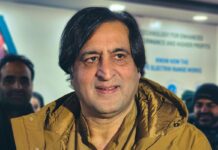
NEW DELHI: Satya Pal Malik, the former Governor of Jammu and Kashmir who presided over one of the most consequential constitutional decisions in India’s post-independence history, the abrogation of Article 370, passed away on Tuesday, August 5, at the age of 79.
His death came on the sixth anniversary of the day the special status of the erstwhile state was revoked, and it was bifurcated into two Union Territories. Malik breathed his last at around 1 pm at Ram Manohar Lohia Hospital in New Delhi, where he had been under treatment for a prolonged illness.
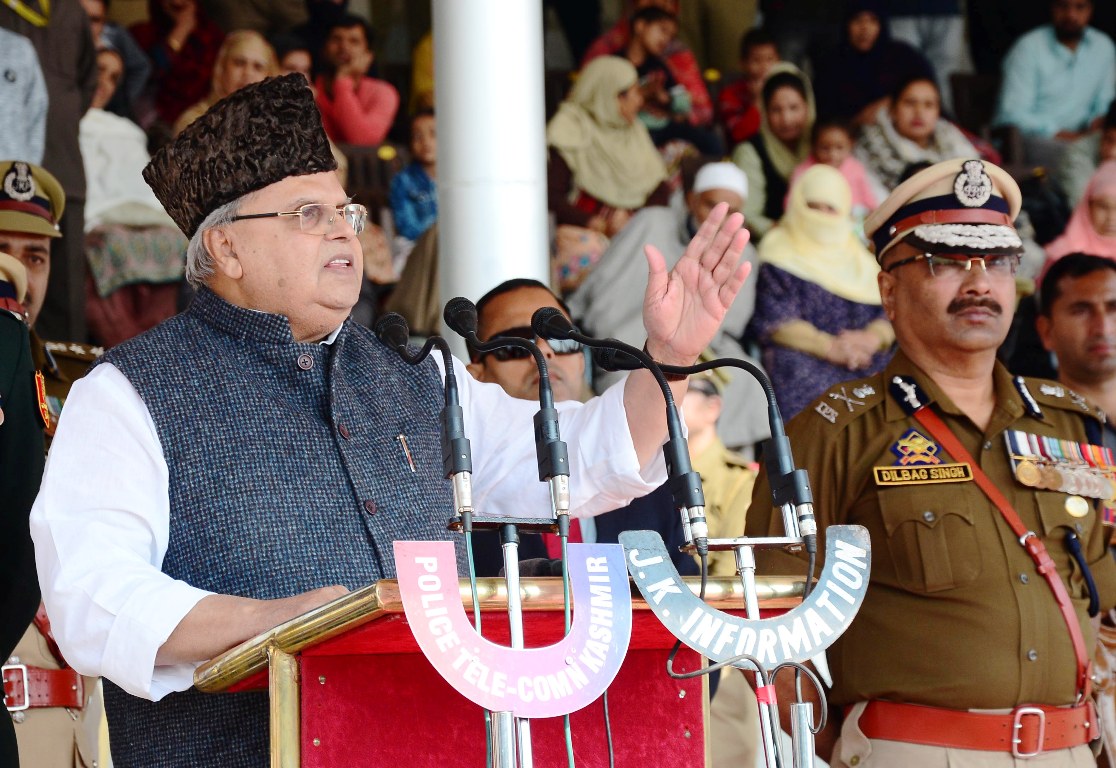
Malik’s death marks the end of a long, eventful political life spanning more than five decades. Born on July 24, 1946, in Uttar Pradesh, Malik began his public life as a member of the Uttar Pradesh Legislative Assembly in the 1970s. He went on to serve two terms in the Rajya Sabha and was elected to the Lok Sabha from Aligarh in 1989 as a Janata Dal MP. A man of shifting affiliations but steady ambition, Malik held key positions under different governments and remained known for his forthrightness and sharp commentary on national affairs, even after holding gubernatorial posts.
He was appointed the 10th and last Governor of the state of Jammu and Kashmir in August 2018. Barely a year into his tenure, the state witnessed a tectonic political shift. On August 5, 2019, the Narendra Modi government announced the abrogation of Article 370 and 35A, ending the state’s special constitutional status. Malik remained Governor until October 2019, overseeing the transition as the state was reorganised into the Union Territories of Jammu and Kashmir and Ladakh.
Following his stint in Jammu and Kashmir, Malik served as the Governor of Goa and later as the Governor of Meghalaya until his retirement from gubernatorial office in October 2022. Despite the ceremonial nature of the post, Malik frequently drew attention for his outspoken views—at times critical of the central government—on issues ranging from farmers’ protests to national security.
In his final years, Malik remained politically vocal, often seen aligning himself with farmer groups and making overtures to his Jat base in western Uttar Pradesh. While he never formally returned to electoral politics, speculation about his political ambitions persisted.
Condolences poured in from across the political spectrum following the news of his death. Leaders acknowledged his decades-long public service, his role in key national decisions, and his distinct ability to navigate India’s shifting political landscape while maintaining his individuality.
Details of his funeral are awaited. Malik is survived by his family, though no immediate statement has been released by them.
His death, coinciding with the very date on which Article 370 was struck down six years ago, marks a poignant full circle for a man who stood at the centre of that “historic” moment.