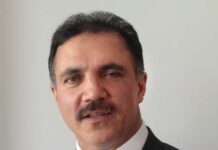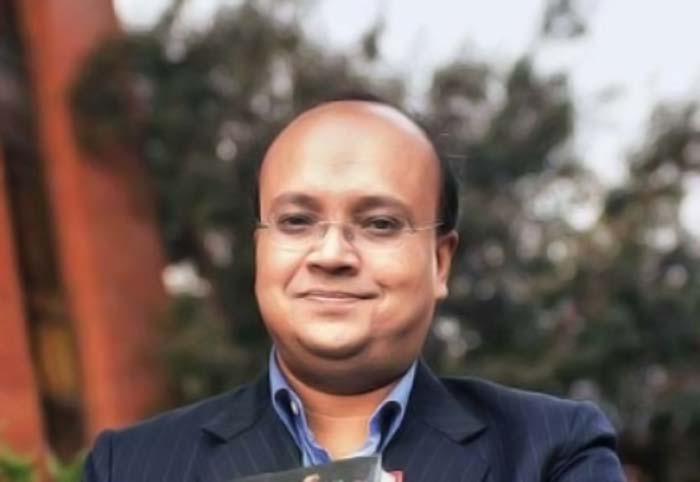
Professor of International and Comparative Politics at the London School of Economics, Sumantra Bose is a ‘specialist’ studying and analysing ethnic and national conflicts and their management. However, his point of focus remains on the Indian subcontinent and Kashmir.
He is the writer of six books that focus particularly on the conflicts. His publications include States, Nations, Sovereignty: Sri Lanka, India and the Tamil Eelam Movement (Sage, 1994), Bosnia after Dayton: Nationalist Partition and International Intervention (Oxford University Press, 2002), Kashmir: The Roots of Conflict, Paths to Peace (Harvard University Press, 2003) and Contested Lands: War and Peace in Israel-Palestine, Kashmir, Bosnia, Cyprus and Sri Lanka (Harvard University Press, 2007).
In his book on Kashmir, The Roots of Conflict, Paths to Peace, he reveals that this conflict is more complicated than other comparable clashes of sovereignties.
In the book, he also proposes some plausible policy measures to achieve an acceptable form of peace, according to various reviews of the book.
He has argued in the book that the LOC has held firm through subsequent clashes between the two (now nuclear) powers largely because the complex ethnic and linguistic groupings on each side of the line have learned to live with each other, a review reads.
Bose has made a point that the way to peaceful politics in India and Pakistan would be granting autonomy and democracy to the respective sides of Kashmir, divided by the LoC.
Son of a paediatrician, Bose had received his basic education in India. He did his MA, M.Phil and Ph.D. (1998) degrees in political science at Columbia University, New York, USA. Bose joined the London School of Economics and Political Science in 1999 as a professor.
Bose hit headlines in Kashmir on May 4 after his interaction with students in Srinagar.
Around 70 to 90 per cent of people from Indian-administered Kashmir wanted independence, he was quoted as saying, whereas 50 per cent people of Pakistan-administered Kashmir (PaK) also wanted independence.
He had said there are different shades of opinion regarding the issue, “with some people supporting India or Pakistan, while the rest demanding independence,” while lecturing students and faculty of the Centre of International Relations (CIR) and the Department of Journalism and Mass Communication (DJMC), Islamic University of Science and Technology (IUST), Awantipora.
While comparing the Kashmir conflict with that of Northern Ireland, he was quoted as saying that power sharing between the two parties solved the conflict in Northern Ireland.
“Like Northern Ireland, Kashmir too holds two opposite policies in coalition government, which can prove fruitful only if the power is shared in good faith. But if that does not happen, then it is useless to have such a government,” Bose told students.
Brother of Sarmila Bose, an American journalist and academic of Indian origin, his comments come at a time when Kashmir is in deep crisis.
– Aakash Hassan