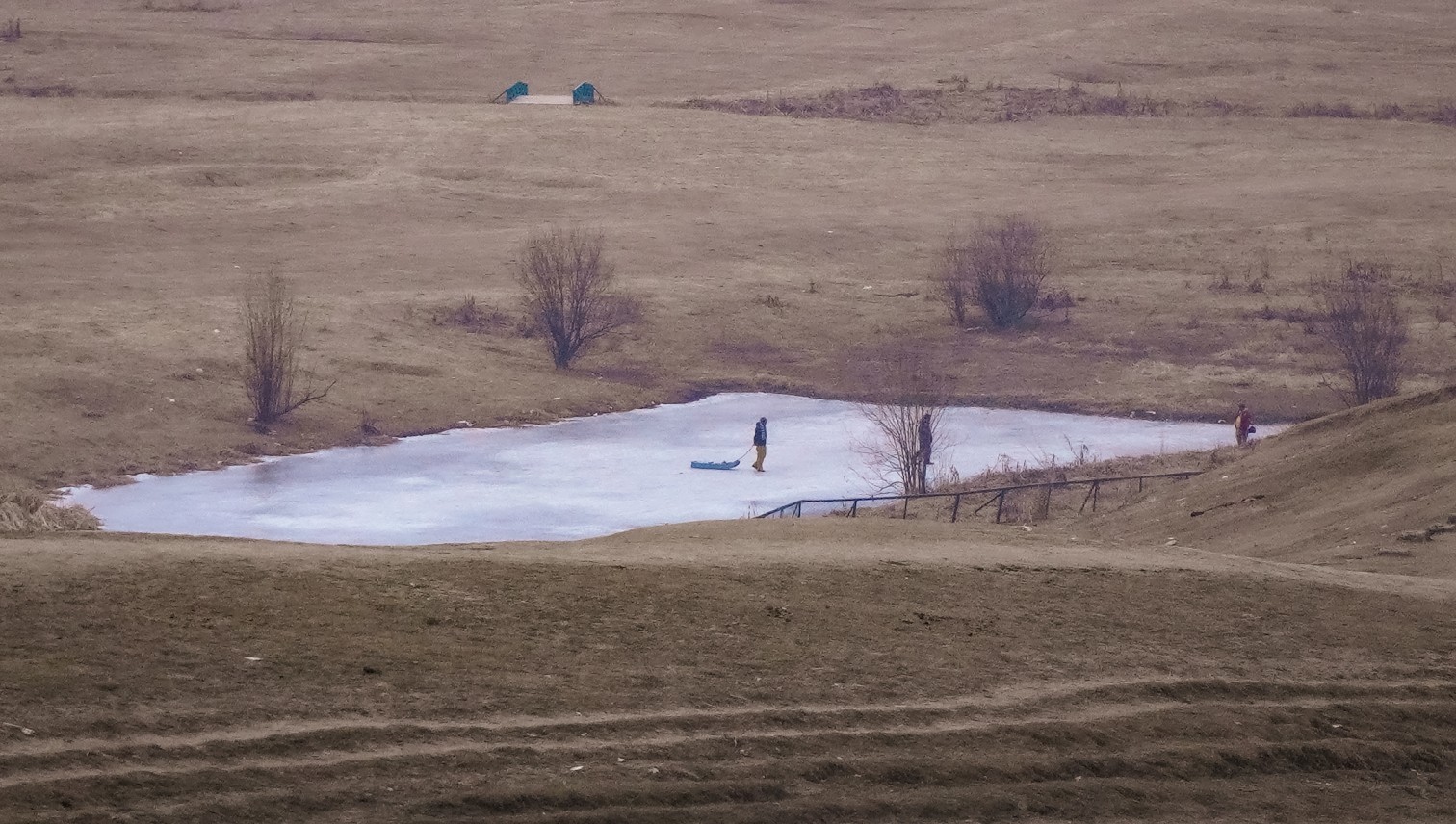
SRINAGAR: Kashmir is witnessing an unusual winter this year, with the Chilai Kalan, its harshest phase, nearing completion without significant snowfall. While minimum temperatures remain below freezing in many parts of the region, the prolonged dry spell has sparked concerns about a challenging summer ahead, marked by low water flow and the risk of early snowmelt.
For most of the winter, major passes like Zoji La, connecting Kashmir with Ladakh, Sadhna Pass, linking Kashmir to Karnah, and Razdan Pass, which connects Srinagar with Gurez, have remained largely open. These routes, typically snow-blocked during winter, reflect the extent of this season’s dry conditions.
In the Kashmir region, Srinagar recorded a minimum temperature of -4.3°C, while Qazigund and Kupwara both touched -4.1°C. Pahalgam registered -6.6°C, and Gulmarg reported -5.0°C. Among other areas, Khudwani recorded -6.4°C, Pulwama -5.6°C, and Larnoo -5.9°C. Budgam and Shopian saw temperatures of -5.1°C each, while Kokernag reported a comparatively milder -1.6°C. Baramulla and Ganderbal recorded -3.4°C and -3.1°C, respectively, while data for Anantnag remained unavailable.
In the Jammu region, milder conditions prevailed. Jammu recorded 7.0°C, with Banihal registering a slightly higher 8.0°C. Bhaderwah, at 1.7°C, was among the colder spots, while Samba reported 1.6°C. Padder experienced a significant drop, recording -2.7°C, while Kishtwar registered 5.4°C. Other areas like Kathua and Udhampur recorded 6.8°C and 2.6°C, respectively.
In Ladakh, temperatures plummeted, with Leh recording -11.0°C, Kargil -13.3°C, and Drass, one of the coldest inhabited places in the world, registering a bone-chilling -22.2°C.
The lack of snow, coupled with the unusually accessible mountain passes, underscores the severity of the dry winter. With water resources dependent on snowmelt, the prospect of a harsh summer looms large over the region.