SRINAGAR: Efforts to build on last week’s interim agreement between the United States and Iran faced immediate turbulence on Sunday as negotiations in Switzerland were overshadowed by sharp exchanges between President Donald Trump and Iranian leaders over Lebanon, the Strait of Hormuz and Tehran’s nuclear programme.
The first round of high-level talks, dubbed the “Lake Lucerne Summit”, brought together US Vice President JD Vance, special envoy Steve Witkoff and senior Iranian officials, including Parliament Speaker Mohammad Bagher Qalibaf and Foreign Minister Abbas Araghchi, with mediation by Pakistan and Qatar.
Opening the talks, Vance described the negotiations as a rare opportunity to reset relations between Washington and Tehran.
“The question before us now is how much more can we accomplish together? Can we turn over a new leaf?” Vance said. “Can we change relations in the Middle East permanently, or do we go back to doing things the old way, which is not our preference, but is certainly very much something that can happen.”
According to AP, Vance said the United States was seeking not only progress on Iran’s nuclear programme and the reopening of the Strait of Hormuz, but also a broader transformation in regional relations.
The negotiations are intended to flesh out the details of the interim agreement reached last week, which halted direct hostilities and reopened diplomatic engagement between the two countries. The agreement allows Iran to resume unrestricted oil exports and gain access to billions of dollars in frozen assets. At the same time, both sides negotiate longer-term arrangements regarding Tehran’s nuclear activities and regional security.
However, the talks quickly encountered difficulties after Trump issued a series of warnings from the United States.
In a post on Truth Social, Trump demanded that Iran halt support for Hezbollah militants in Lebanon.
“Iran must immediately stop their highly paid PROXIES in Lebanon from causing trouble. If they don’t, we’ll hit Iran very hard again, just like we did last week, only harder!!!”
According to Fox News, Trump also warned Iran against any attempt to close the Strait of Hormuz.
“We may take over the Strait, if we have to,” Trump said. “If they don’t make a deal, we’ll collect tolls.”
He further directed criticism at Iranian President Masoud Pezeshkian after Tehran reiterated its insistence on retaining uranium enrichment capabilities.
“He better shape up or we’ll take over the rest of the country,” Trump said in remarks carried by Fox News.
Iran reacted sharply to the comments. State media reported that Tehran’s negotiating team considered Trump’s remarks a violation of the memorandum of understanding signed between the two sides last week.
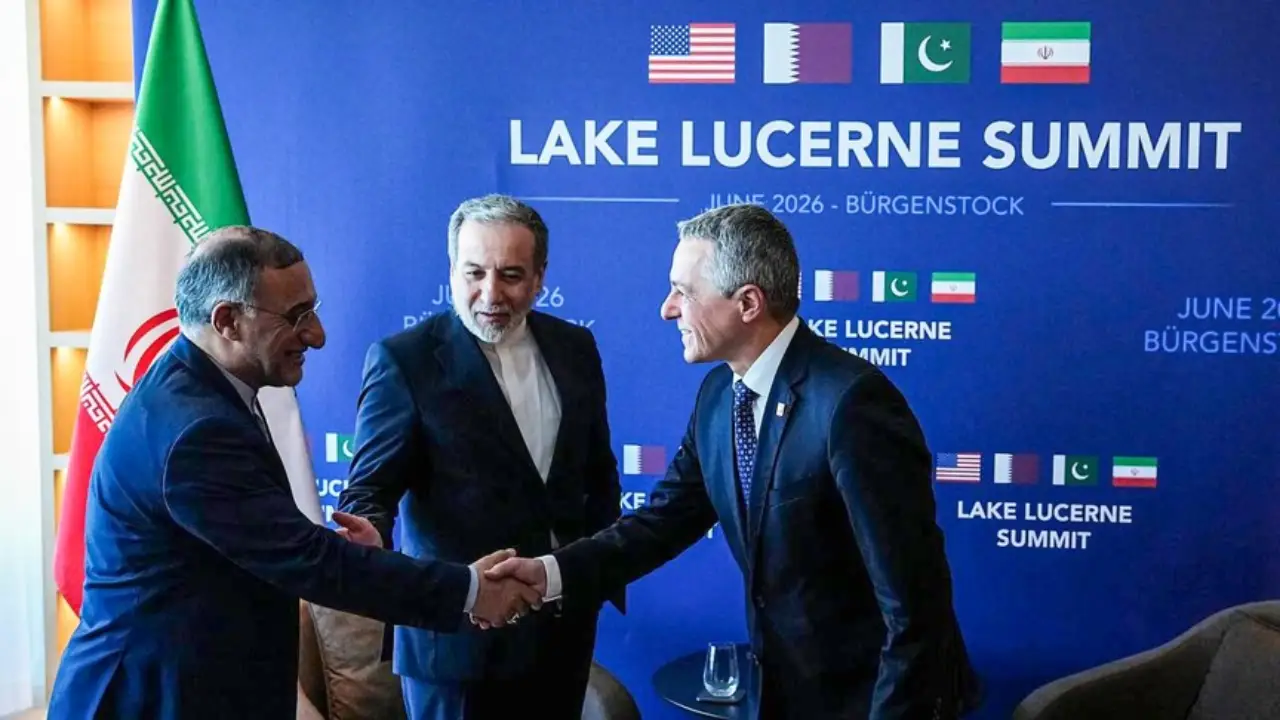
According to Iran’s Tasnim News Agency, Iranian negotiators argued that the agreement’s first article required both sides to refrain from issuing threats during negotiations.
The Iranian delegation reportedly left the negotiating venue temporarily after Trump’s comments. However, subsequent reports from Axios and AP indicated that Tehran remained engaged in the talks through mediators and had not formally withdrawn.
Qalibaf responded publicly to Trump’s remarks, warning Washington against further escalation.
“We do not take American threats seriously,” Qalibaf wrote on X. “They would do well to be careful about their statements. Our armed forces are prepared to respond to them in a different manner. The more they talk, the more we will act.”
The negotiations are taking place against the backdrop of continuing instability in Lebanon, where clashes between Israel and the Iranian-backed Hezbollah movement have repeatedly threatened regional stability. Although a renewed ceasefire announced on Saturday appeared to be holding, both Israel and Hezbollah remain outside the framework of the US-Iran agreement.
Iranian officials made clear that their immediate concerns extend beyond the nuclear issue.
Iranian Foreign Ministry spokesman Esmail Baghaei told state media that Tehran intended to focus heavily on developments in Lebanon and Israeli military actions there, viewing them as directly linked to regional security.
At the same time, Iranian leaders maintained their long-standing position that uranium enrichment remains a sovereign right.
President Pezeshkian reiterated that stance on Sunday.
“What is certain is that we will never back down from the right to enrich uranium, and the other side is also forced to accept it,” he said, according to Iranian state media.
According to Axios, Washington hopes the first phase of negotiations will produce an invitation from Tehran for United Nations inspectors to visit nuclear facilities damaged during previous US and Israeli strikes. In return, the United States is reportedly considering releasing some frozen Iranian funds, beginning with approximately $6 billion held in Qatar for humanitarian purchases.
Pakistani Prime Minister Shehbaz Sharif, whose government is co-mediating the talks alongside Qatar, struck a notably optimistic tone.
“They genuinely mean promoting peace in the region,” Sharif said of the Iranian leadership. “So is President Trump. I have no second thought about the fact that he is the man of peace.”
Sharif added that both sides appeared committed to reducing tensions and preventing a wider regional conflict.
The first session of the four-party negotiations concluded on Sunday evening, though no timetable for the next round was immediately announced.
Diplomats cautioned that the coming weeks would be critical. While the interim agreement has temporarily eased fears of a broader regional war and stabilised global energy markets, major disagreements remain over Iran’s nuclear programme, the future of the Strait of Hormuz and the continuing conflict involving Hezbollah and Israel.
With roughly one-fifth of global oil trade passing through the Strait of Hormuz, the outcome of the 60-day negotiating process is being closely watched by governments, investors and energy markets around the world.