by Dr Mehak Majeed and Mehrosh Yousuf
Jammu and Kashmir’s unemployment largely reflects a deep structural skill mismatch, shaped by historical state-led employment expectations, outdated education patterns, and limited alignment with evolving labour market needs
 Skill mismatch, in essence, is a structural labour market problem. It is a situation where education and training imparted to the labour force do not match the ensuing demands of ever-evolving contemporary employers and labour markets.
On the face of it, it looks like unemployment is the major economic problem faced by the contemporary Jammu and Kashmir economy. However, it is, in fact, the unaddressed skill mismatch which, in essence, tops the list and disguises itself as unemployment.
On the very eve of Indian independence, the merger of the princely state of Jammu and Kashmir happened with the Indian union under a certain clause. Under the said clause, the region’s decentralised government was more prevalent than the rest of the Indian states in a devolved manner. As such, the state was headed by the then Prime Minister of Jammu and Kashmir, Sheikh Mohammad Abdullah.
It was then that the grounds for the planned development of the region were set. The model implemented, in essence, was a state-led socialist planned development model. Under the aegis of this model, the means and process of production were placed under the public sector.
Under the same schematic affairs, the government designated the public sector as the main employment provider for the local populace. Pertinent here is the fact that it was a time immediately before and around which communication between the government and the people was strong. There were frequent rallies, and masses in large numbers would participate. Political writings circulated, and people read them with keen interest. The content was discussed in regular social gatherings.
As a result, people at the time were convinced that it was, in fact, the government of Jammu and Kashmir which was going to employ everyone.
Two simultaneous developments also occurred at the onset. First, education was made compulsory and (almost) free. For women, the Naya Kashmir Manifesto (NKM) recognised education as a basic right. Women’s education was promoted for multiple reasons, the primary one being the elimination of superstitions at the household level. Underlying this was the aim of the government to enhance and increase female labour force participation in the future.
Second, education was understood to serve as a market signal. The basic minimum requirement to secure a job was a certain level of education. During the first few decades after the 1950s, people in large numbers did, in fact, get government jobs. The idea of the government at the time was to initiate and institutionalise a system backed by progressive nationalism. The requirements and priorities of the period placed importance on social sciences and educational endeavours in the arts and humanities. Accordingly, course designs reflected this emphasis, and enrolments in these streams were larger than in other, more technical courses.
In collective societal perception, it was considered both lucrative and respectable to be a government employee. Although a strong hierarchy existed and continues to exist within the government sector, government employment of all kinds was regarded as important.
With multiple political shocks occurring consecutively, beginning in the 1950s, communication between the government and the people weakened. The government’s focus shifted from development- and employment-centric endeavours towards the restoration and maintenance of peace. The public sector institutions established during the 1950s gradually lost their central place in the priority framework of successive governments. With each passing year, the government’s capacity to generate employment declined, reaching an all-time low in recent periods.

Information asymmetry resulted in some of the worst possible outcomes. Households continued investing in education. The literacy rate in Jammu and Kashmir in 1961 was only 13 per cent (GoJ&K, 2025). By 2021, it had risen to 82 per cent and is expected to reach 100 per cent by 2030. While an increase in literacy is a positive indicator of development, in isolation from other correlated parameters, little can be achieved through this increase alone. In the case of Jammu and Kashmir, rising literacy levels were compounded by a significant increase in college- and university-level degrees.
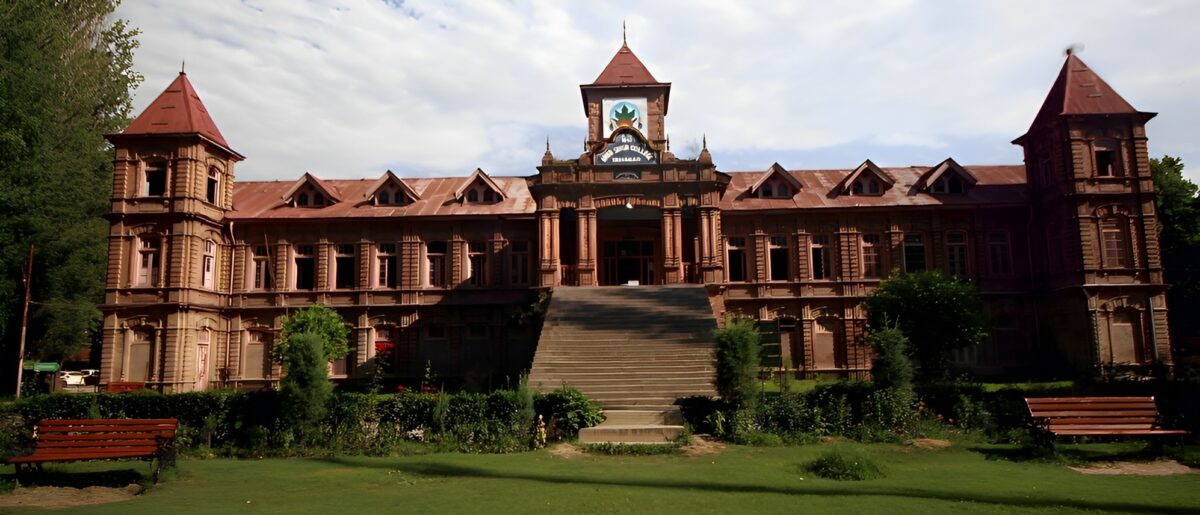
A total of 1,391 schools were functional in the 1970s, contributing to a literacy rate of 13 per cent. Special focus and attention were given to primary education in the region to enhance literacy levels and, eventually, employment prospects. The number of colleges in J&K during the early 1950s was seven, with a total student enrolment of 2,669. By 2025, the number of colleges had increased to 460, of which 142 are government colleges, while the rest are private or semi-government institutions. Enrolments increased simultaneously. In 2024, overall student enrolment across all levels stood at 2,654,012, of which 213,213 were enrolled in colleges.
With no significant deviation from the trends established in the 1950s, subject-wise enrolment patterns in Jammu and Kashmir remain largely unchanged. In 2024, undergraduate enrolment in arts courses stood at 32.7 per cent. This was followed by bachelor’s degrees in science at 16 per cent. Commerce enrolments accounted for 14.9 per cent, followed by engineering at just 12.6 per cent. ITI enrolments remain the lowest, ranging between 3 per cent and 5 per cent.
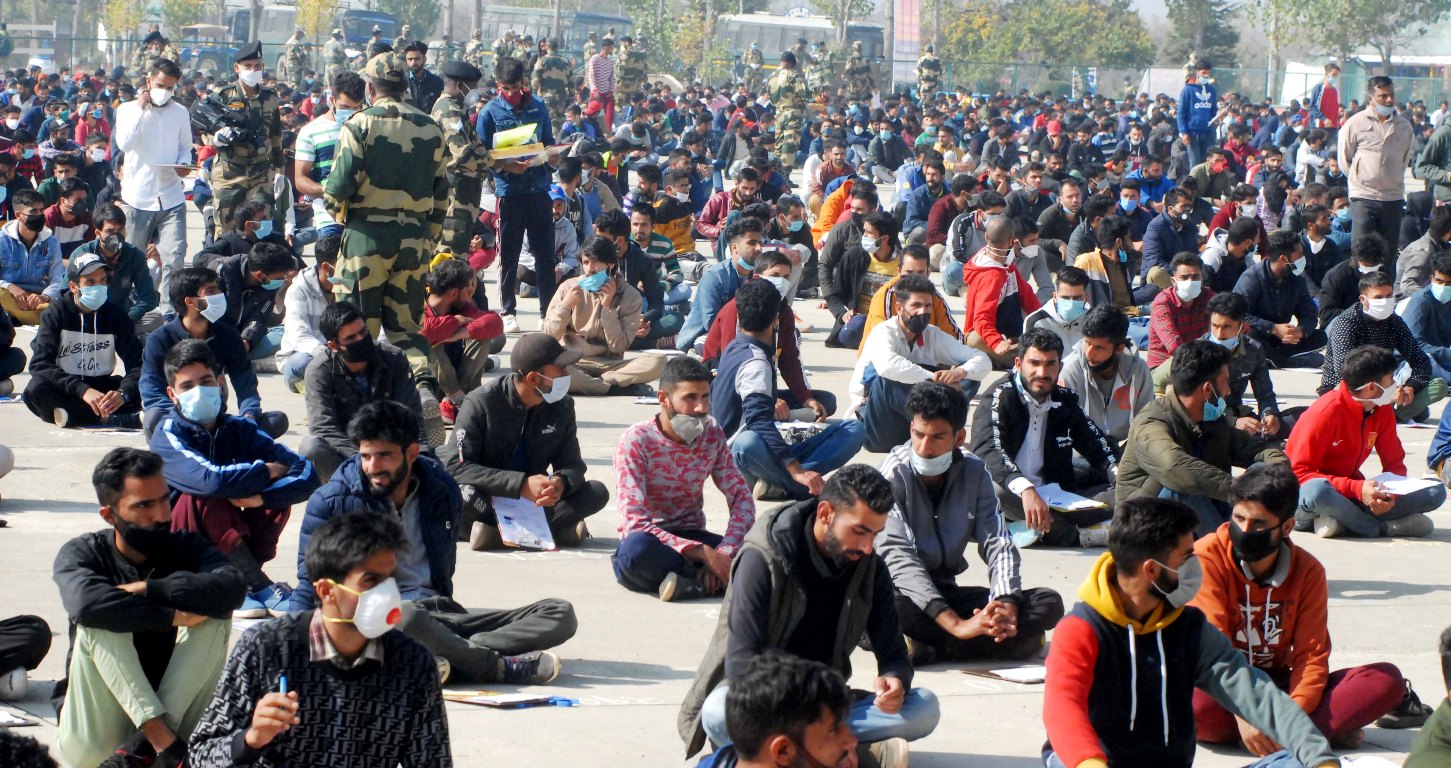
After graduating from colleges and universities, large numbers of people across genders continue to seek government jobs, as was historically ingrained. With the number of government jobs steadily declining, competition has intensified. Data from 1980 show that 3,028 formal and substantive public sector jobs were created that year. This number has steadily declined since. Government jobs in sectors such as education and administration are advertised only after gaps of seven to ten years.
With expectations centred on public sector white-collar employment, many individuals over decades have been unable to look beyond this narrow horizon. Many young people identify as unemployed solely because they have not secured a government job despite holding university-level qualifications. This form of unemployment is not the result of exhaustive job searches across sectors but rather the inability to enter government service.
Entrepreneurship has historically been viewed unfavourably in Jammu and Kashmir. With government jobs portrayed as the most stable and desirable form of employment, failure to secure one has been associated with personal failure. Thinking beyond government employment has not been widely encouraged. Individuals running successful businesses are often labelled as “unemployed” rather than recognised as gainfully employed, despite earning substantial incomes.
In 2025, 69 per cent of Jammu and Kashmir’s population is below the age of 35. The next two decades will be critical in shaping the region’s future. Beyond numbers, mindset transformation is essential to initiate economically viable and desirable change. Government data indicate that approximately 1,984 MSME units are functional across Jammu and Kashmir in 2025, employing around 63,710 people. Schemes such as Mission Youth, the Prime Minister’s Employment Generation Programme, the Rural Employment Generation Programme, and others have been introduced.
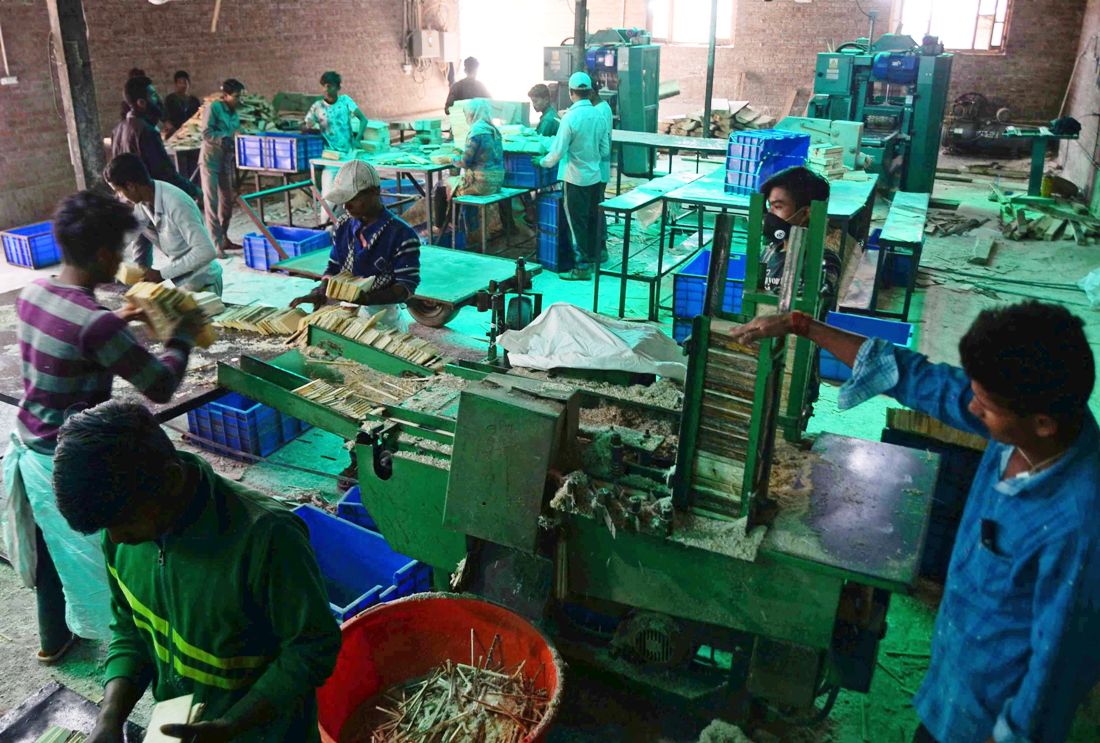
However, these employment opportunities are largely informal in nature. Wages are compromised, job security is weak, additional benefits are absent, and paid leave is not provided.
The employment landscape of Jammu and Kashmir is, therefore, in a state of acute distress.
Solutions?
Based on a detailed analysis of the contemporary characteristics of the Jammu and Kashmir economy and the education and skill profile of its labour force, a clear mismatch is evident. It is the skill mismatch, rather than a uniform wave of unemployment, that constitutes the core problem.
Theoretically, Gary Becker (1964) pioneered the idea that the primary objective of education is to increase productivity. Education begins with literacy but must culminate in the acquisition of relevant knowledge and time-bound skills. Human capital formation occurs only when the education system delivers market-relevant skills in a structured manner. When educational institutions fail to update themselves in line with economic restructuring, labour becomes obsolete, and human capital formation stagnates. Despite rising qualifications, as seen in Jammu and Kashmir, employment levels continue to decline.
Picking up from where the first government left off, information dissemination at the most disaggregated and grassroots levels is critical to preventing further deterioration. Political historians, economists, statisticians, and computer scientists must work collectively. Multi-level evaluations are required. Household aspirations must be mapped quantitatively, and the government’s existing and future resource capacities must be calculated precisely.
Michael Sattinger (1993), through assignment theory, highlights the importance of continued public sector investment in skill upgradation. For productivity to increase, workers must be assigned tasks aligned with their education, skills, and abilities. In Jammu and Kashmir, where these principles have not been systematically applied, structural skill mismatch has emerged as an inevitable outcome.


Accordingly, a 20-year differentiated strategy should be formulated across age cohorts. Children at the primary and upper-primary levels must be trained in marketable skills aligned with the current demands of a tri-sectoral economy. Curricula require a comprehensive redesign. Definitions of employment and gainful employment must be revisited. Instead of producing individuals fluent only in theory and poetry, the system must nurture practitioners skilled in crafts, arts, innovation, and applied knowledge.
For cohorts closer to the median age, skilling and orientation programmes must be expanded, with emphasis on innovation at both micro and macro levels. Communication between contemporary governments and citizens across all age groups must be restored. Timely information dissemination, sensitisation, and upskilling must be prioritised. The entire process requires coordinated effort among political historians, economists, statisticians, and computer scientists.
(Dr Mehak is an Assistant Professor of Economics, and Mehrosh Yousuf is a PhD Scholar. Views are personal.)