by Adil Mustafaie
Kashmir’s Sufi tradition blends spirituality, ethics, and knowledge, exemplified by Hazrat Faqeer Ali Muhammad Gilkar, whose teachings emphasise inner purification, balance, and devotion.
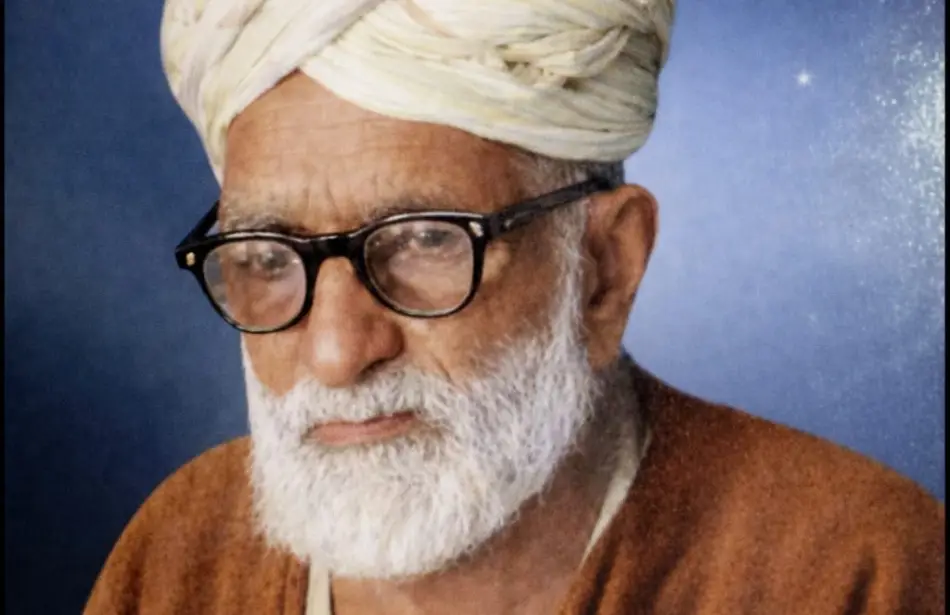
In today’s spiritually enriching discourse, we turn to the great spiritual, intellectual, and cultural tradition of the Kashmir Valley, which for centuries has conveyed a message of love, sincerity, tolerance, and divine awareness. This is a land where not only were the lamps of knowledge and wisdom lit, but where radiant centres of spirituality emerged, whose light continues to illuminate hearts and enliven the inner life of people even today.
If the Valley of Kashmir is described as the “Land of Saints,” it is no exaggeration. This sacred region has been home to Sufi masters, saints, scholars, Rishis, and spiritual elders who dedicated their lives to the welfare of humanity, moral refinement, and the propagation of divine consciousness. These personalities rose above sectarian divisions, striving instead to connect humanity with itself, spread love, and instil the remembrance of Allah in hearts. In doing so, they shaped a society rooted in spiritual values.
The Sufi tradition of Kashmir represents a comprehensive intellectual and spiritual system that integrates spirituality, ethics, social conduct, and intellectual balance. It is not limited to Sufi lodges but permeates all layers of society, creating a civilisation grounded in love, tolerance, and mutual respect. Its influence remains clearly visible in the social fabric even today.
Among the eminent figures of this tradition stands Hazrat Faqeer Ali Muhammad Gilkar, a highly respected and spiritually accomplished Sufi master. Throughout his life, he clarified the essence of Sufism and demonstrated its practical application, offering a complete model of spiritual excellence.
The era in which he lived was marked by the presence of several distinguished Sufi figures, including Faqeer Janab Abdul Ahad Zargar Sahib, Faqeer Abdul Samad Mir Sahib, and Faqeer Mirak Shah Kashani Sahib. Their collective presence strengthened the spiritual environment of the time.
Traditions suggest that Faqeer Mirak Shah Kashani Sahib and Hazrat Faqeer Ali Muhammad Gilkar spent time in the company of Janab Ghulam Sahib Andrabi, where they received spiritual training, advanced through stages of the Sufi path, and gained inner spiritual blessings. This reflects an interconnected and continuous spiritual tradition rather than an isolated one.
Hazrat Gilkar embodied a comprehensive personality, maintaining balance between outward law and inward spirituality, knowledge and practice, external form and inner reality, and speech and action. His life demonstrated that when a person fills their inner being with the love of Allah, every action becomes worship, every moment becomes remembrance, and life aligns with divine will.
It is essential to understand that Sufism is not a separate religion but an integral dimension of Islam. It focuses on purifying the heart, refining intentions, and elevating the soul toward sincerity, God-consciousness, and excellence. While outward law governs actions, Sufism refines inner states, and together they complete the religion.
Just as Islamic scholarship includes disciplines such as the study of the Qur’an, exegesis, Hadith, jurisprudence, theology, and linguistics, the science of Sufism holds an equally vital role by completing the inner dimension of these fields.
Each discipline contributes to a unified understanding: the Qur’an introduces divine revelation, exegesis explains it, Hadith connects to the Prophetic tradition, jurisprudence organises life, theology strengthens belief, and Sufism purifies the inner self and elevates it toward sincerity and excellence.
Together, these disciplines form a complete way of life that harmonises outward and inward dimensions. Sufism completes this harmony and guides individuals toward closeness to Allah.
This balance is evident in the teachings of Hazrat Gilkar, who emphasised that religion should not be reduced to rituals but lived as a meaningful and dynamic reality. His gatherings focused on remembrance of Allah, reflection on the Hereafter, self-purification, and love for the Prophet Muhammad. His simple yet profound speech transformed hearts and encouraged deep reflection.
He also supervised the compilation of a work titled Kaleed-e-Ladunni for his disciples. This text, written in symbolic and allegorical language, reflects his experiences of divine love, spiritual states, and inner realisation. It represents a spiritual journey rather than a conventional text and requires insight to fully comprehend.
The work contains expressions of deep spiritual experience, including symbolic language, allegory, metaphors, and subtle insights. It reflects experiential knowledge rather than purely formal learning, indicating a depth that transcends ordinary expression.
It is important to recognise that the people of Kashmir hold such saints in the highest regard. Their teachings and legacy form an essential part of the region’s cultural and spiritual heritage. Any disrespect toward them not only hurts sentiments but also harms the broader tradition of harmony.
Disrespect, whether direct or indirect, toward revered figures such as Hazrat Ali Muhammad Gilkar is unacceptable and socially harmful, with potential legal consequences.

The true aim of Sufism is not the pursuit of miracles but the purification of the self, inner reform, and closeness to Allah. Hazrat Gilkar’s teachings consistently emphasised this purpose.
Some discussions among followers suggest he advised listening only to the poetry of seven Sufi saints; however, close disciples clarify that the number refers symbolically to seven spiritual stages rather than individuals.
Hazrat Faqeer Ali Muhammad Gilkar passed away on Tuesday, June 29, 1976, in Srinagar. His shrine is located in Jubgari Malik Shah, Nowhatta, in downtown Srinagar, where his death anniversary is commemorated annually with great reverence.
(The author is a researcher, writer, Naat-reciter, and poet. Ideas are personal.)