by Sri Varshith Kumar Reddy E
India’s nearly $300 billion annual merchandise trade deficit has pushed the rupee below 90, hurting students, regional tourism economies, and import-dependent businesses far more than it benefits exporters, underscoring the failure of fiscal policy to curb structural import dependence through targeted substitution.
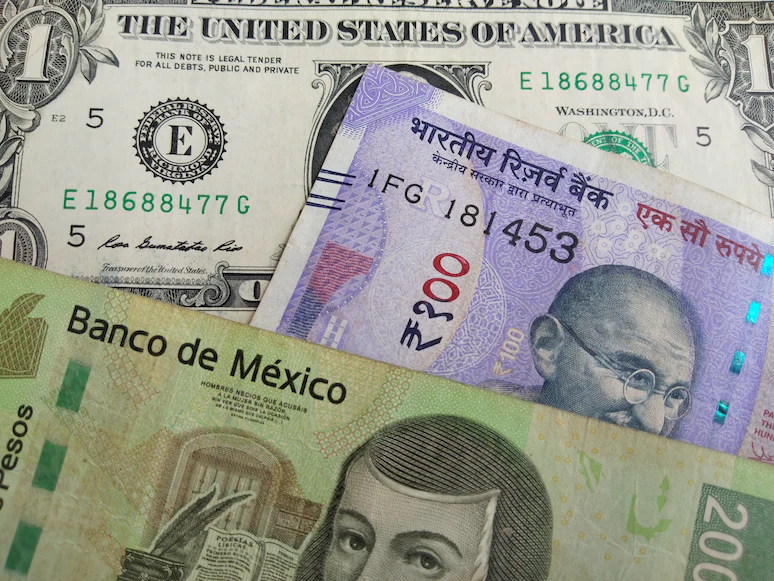
The Indian rupee breached Rs 90 per US dollar in early December 2025. By January 2026, trading at Rs 90.25, the currency has depreciated nearly five per cent during the year. This depreciation warrants assessment through its distributional consequences, as revealed through headline macroeconomic aggregates that obscure who bears the costs and who captures the gains.
The Reserve Bank’s 125 basis point rate reduction since February 2025 to date, reducing repo to 5.25 per cent, accompanies this currency weakness. The simultaneity of monetary accommodation alongside currency depreciation illuminates a discomfiting reality that rupee deterioration reflects merchandise trade deficit expansion originating from import dynamism overwhelming export resilience, a phenomenon that monetary policy alone cannot ameliorate.
The Trade Deficit Architecture
India’s merchandise trade deficit has attained a historically unprecedented magnitude. October 2025 registered a monthly gap of $41.68 billion. Through November, the April-to-November period accumulated a deficit of $223.14 billion, implying annual deficits exceeding $300 billion.
The composition bears an undercurrent pathology. Merchandise exports contracted 11.8 per cent year-on-year in October to US $34.4 billion, whilst imports expanded 16.6 per cent to a record US $76.1 billion. Petroleum comprises eighty-five per cent of India’s petroleum consumption. Gold imports attained US $14.7 billion in October alone. Electronics imports driven by industrial capital formation persist on their ascending trajectory. This divergence between import expansion and export contraction generates inexorable dollar demand, propelling rupee depreciation.
The Unequal Distribution of Burden
Currency depreciation distributes consequences asymmetrically. The IT sector garners principal advantage, with a 25-30 basis points margin enhancement per percentage point depreciation accruing to shareholders instead of being distributed to workers proportionally.
Indian pharma exporters commanding $30 billion in annual revenues encounter bifurcated outcomes. Export realisations improve whilst input cost inflation for imported pharmaceutical ingredients offsets gains.
Auto ancillaries benefit selectively, with Bharat Forge and Bajaj Auto deriving substantial overseas revenue shares whilst smaller domestic suppliers experience margin deterioration.
Oil marketing companies face severe margin compression. Crude procurement transpires in dollars, whilst product sales materialise in rupees. Four-to-six-week pass-through lags allow companies to absorb cost pressures before transmitting to consumers through fuel price elevation.
Aviation’s dollar-denominated operating costs, spanning aircraft leases, fuel, and maintenance services, rise directly with depreciation. Competitive dynamics preclude ticket price transmission.
The Distributional Reality
Families financing overseas education encounter a substantially amplified financial burden. Between 2021 and 2025, tuition fees increased by thirty-five to forty per cent across premier destinations. A master’s programme priced at $40,000 annually translates into Rs 36.22 lakhs at contemporary rates, compared with Rs 28 lakhs five years prior. This represents a cumulative thirty-per cent increase in rupee terms. Outward remittances contracted seventeen-point-seven per cent in August 2025, with education-related remittances declining twenty-two per cent year-on-year.
Currency depreciation functions as a regressive mechanism, circumscribing global educational access for middle-class households whilst restricting such opportunities to India’s wealthiest. The consequence involves systematic stratification wherein premier international education becomes accessible exclusively to the top income deciles.
Jammu and Kashmir’s Cascading Vulnerabilities
The Union Territory of Jammu & Kashmir confronts predicaments of singular salience. The regional economy rests upon horticulture, tourism, and handicrafts, each demonstrating acute sensitivity to currency movements through distinct mechanisms.
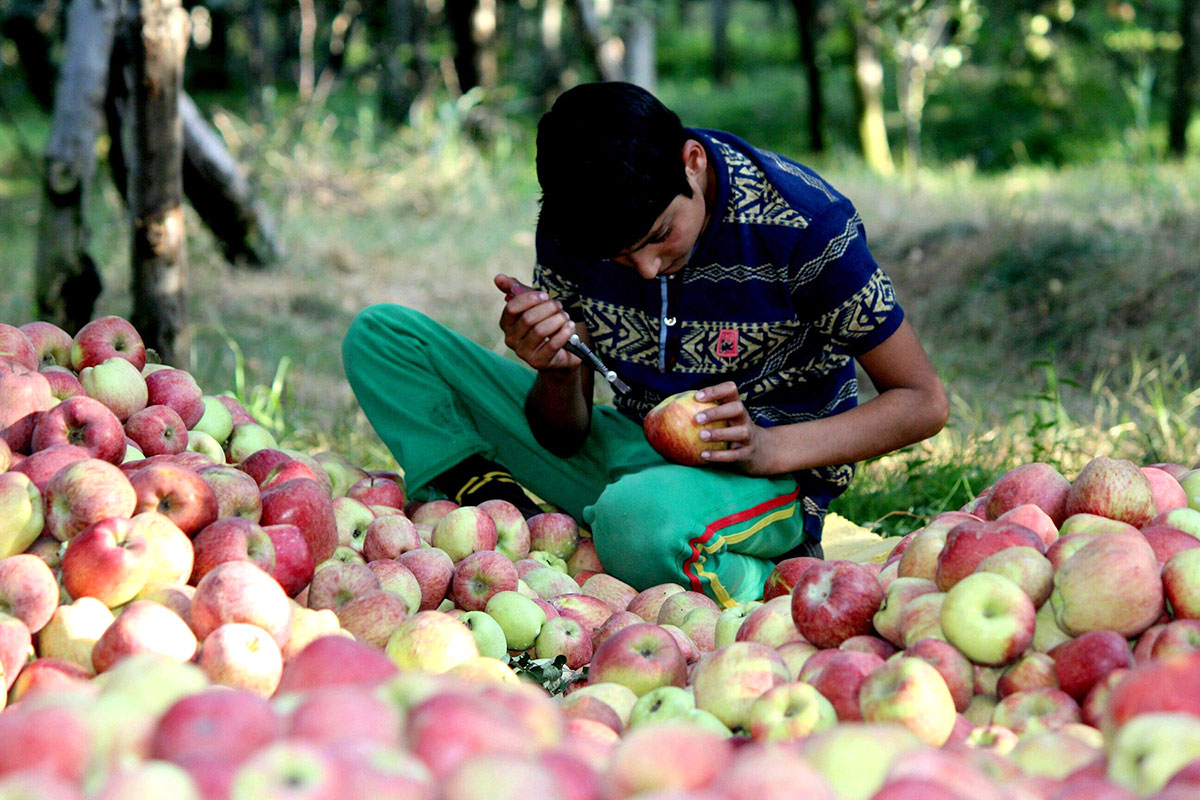
Horticulture’s Input Cost Trap: Kashmir’s total apple output for 2025 attained 2.215 million tons, with 1.4 million tons exported. Apple cultivation employs 3.5 lakh families, with seven lakh families depending on horticulture for livelihood.
Rupee depreciation theoretically augments farmgate incomes from dollar-linked export contracts. Empirically, small orchard proprietors remain squeezed between escalating import-dependent input costs and volatile procurement prices. Cold storage, grading machinery, fertilisers, and pesticides all carry imported components. As the rupee depreciates, these costs escalate more rapidly than local procurement prices adjust, eroding margins for marginal producers. The currency windfall concentrates among exporters and commission agents. Walnut exports, commanding approximately $10 million annually, encounter identical pressures.
This input-cost trap produces perverse consequences with currency depreciation, theoretically benefits exporters, yet practically harms producers through cost escalation velocity exceeding price adjustment capacity.
Tourism’s Multiple Collapses: J&K received 95.9 lakh domestic tourists and 19,570 foreign visitors between January and June 2025. The Pahalgam massacre in April precipitated a collapse. Valley arrivals descended from 179,342 in April to 6,951 by mid-May. Hotel occupancy contracted below twenty per cent.
For foreign tourists, rupee depreciation theoretically reduces destination pricing. Safety perception dominates travel decisions far more substantially than currency arbitrage. For domestic tourists, rupee depreciation generates inflationary consequences through elevated fuel costs, costlier airfares, and expensive hotel operational inputs. The tourism sector experiences demand collapse from multiple directions simultaneously within a region where approximately ninety per cent of industrial employment is linked to seasonal tourism MSMEs.
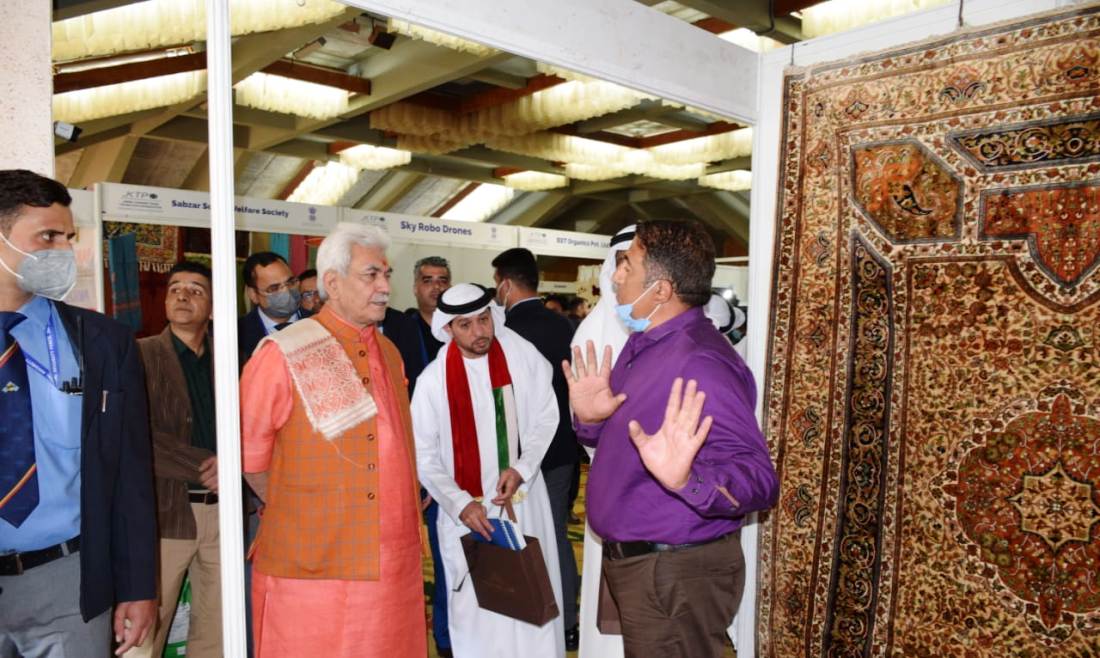
Handicraft Sector’s Asymmetric Performance Handicraft exports achieved a felicitous trajectory, with first-quarter exports surging 243 per cent to Rs 309.62 crore. Kani and Sozni shawls generated Rs 1,105 crore in exports over three years, whilst hand-knotted carpets contributed Rs 728 crore. A 10-per cent export subsidy scheme provides incentives for registered exporters.
This sector represents the one arena wherein currency depreciation demonstrably elevates export realisations. Global geopolitical tensions, artisan skill attrition, and logistics bottlenecks constrain whether currency gains materialise as durable employment creation.
Taxi proprietors who financed vehicles in 2023-2024, anticipating bumper tourist seasons, confront occupancy collapse alongside elevated fuel costs. Houseboat operators, guides, vendors, and handicraft artisans operate with negligible financial buffers. For these constituencies, rupee depreciation compounds living costs whilst reducing visitor inflows and working capital access.
The Fiscal Consolidation Puzzle
Official communications indicate the FY27 fiscal deficit target shall fall between 4.1 and 4.3 per cent of GDP, representing marginal compression from the FY26 target of 4.4 per cent. The medium-term objective comprises the achievement of a fifty-per cent debt-to-GDP ratio by FY31.
Fiscal consolidation addresses investor confidence in government solvency, thereby potentially attracting capital inflows that provide countervailing depreciation pressures. Analysts project that India’s actual FY27 fiscal deficit could attain 4.6 per cent despite stated targets. Such variance from announced targets would transmit fiscal stress signals to international investors, accelerating capital withdrawal.
Conventional fiscal consolidation addresses capital flow stabilisation through confidence mechanisms, providing no direct remedy for merchandise trade deficit expansion. India requires simultaneous fiscal discipline for external confidence and structural import substitution for trade balance improvement. The current policy architecture addresses one requirement whilst neglecting the other.
Essential Policy Actions
The Reserve Bank’s currency management stance reflects a deliberate choice to permit rupee equilibration whilst constraining excess volatility, rather than pursuing aggressive appreciation through excessive intervention. This approach acknowledges that fundamental depreciation drivers demand fiscal and structural policies.
The Union Budget 2026-27 must crystallise a comprehensive external sector strategy.
Rupee Internationalisation: The Reserve Bank has authorised SRVA (Special Rupee Vostro Accounts) balances for deployment toward corporate bonds and commercial paper investments, enhancing rupee attractiveness for foreign trading entities. Approximately ninety per cent of India’s exports to South Asia flow to Bhutan, Nepal, and Sri Lanka. The budget should mandate establishing transparent reference rates for South Asian currencies, removing pricing opaquity that discourages rupee utilisation. This reduces aggregate dollar demand through decreased intermediation necessity.
Import Substitution Through Sectoral Incentivisation: India’s Semiconductor Mission, underpinned by a Rs 76,000 crore incentive architecture, aspires to establish the nation as a trusted semiconductor hub. The budget should implement enhanced fiscal support reaching fifty per cent of capital expenditure for all technology nodes, with GST exemptions for ten-year periods and accelerated depreciation allowances. Enhanced incentives for domestic solar photovoltaic ingot and wafer production would similarly diminish dollar demand for renewable energy capital goods.
Export Resilience Amidst Tariff Pressures: The Union Budget should establish an Export Resilience Fund providing temporary fiscal support to export-oriented MSMEs confronting tariff-driven demand collapse. The Fund should provide accelerated depreciation allowances for export-focused capital expenditures, interest subsidies on export credit financing, and insurance mechanisms protecting against geopolitical tariff escalations.
Regional Economic Stabilisation: The budget should incorporate J&K-specific provisions addressing tourism MSME vulnerabilities through emergency credit lines for taxi proprietors and houseboat operators, artisan skill development programmes for handicraft sectors, integrated cold chain infrastructure investment for horticultural export value enhancement ensuring currency windfalls reach producer households as opposed to concentrating among commission agents, and targeted incentives attracting domestic tourist spending through government facility enhancement in Kashmir Valley.
The rupee’s descent below Rs 90 per dollar signals structural external imbalances demanding fiscal and sectoral policy response. The depreciation reflects merchandise trade deficit expansion originating from import dynamism exceeding export resilience. Monetary adjustments can moderate these pressures to a limited effect.

When fiscal consolidation coalesces with deliberate import substitution through semiconductor and renewable energy incentivisation, alongside strategic rupee internationalisation and explicit attention to regional vulnerabilities, currency stabilisation becomes achievable. The current policy configuration permits monetary accommodation to substitute for structural reform, a trajectory that protects financial sector interests whilst transferring adjustment costs to households dependent on imports and regions whose growth models rest upon fragile foundations.
The upcoming Union Budget 2026-27 represents the institutional moment wherein India’s policymakers demonstrate analytical sophistication and political courage to articulate a vision of external sector resilience grounded in import intensity reduction, rupee internationalisation expansion, and attention to distributional consequences across households and regions. Absent deliberate import substitution and regional stabilisation measures, the rupee’s weakness shall persist as a symptom of structural imbalance, transferring costs downward through the economic hierarchy to those possessed of fewest resources with which to absorb them.
(The author is a pracademic working on government policy and public institutions. Ideas are personal.)