SRINAGAR: In a significant stride toward wildlife conservation, Wildlife SOS has embarked on an innovative research project to study the Himalayan brown bears (Ursus arctos isabellinus) under the aegis of the Jammu and Kashmir Wildlife Protection Department. This pioneering initiative aims to address critical concerns surrounding human-bear conflicts in the Sonmarg region, a key habitat for these majestic creatures.
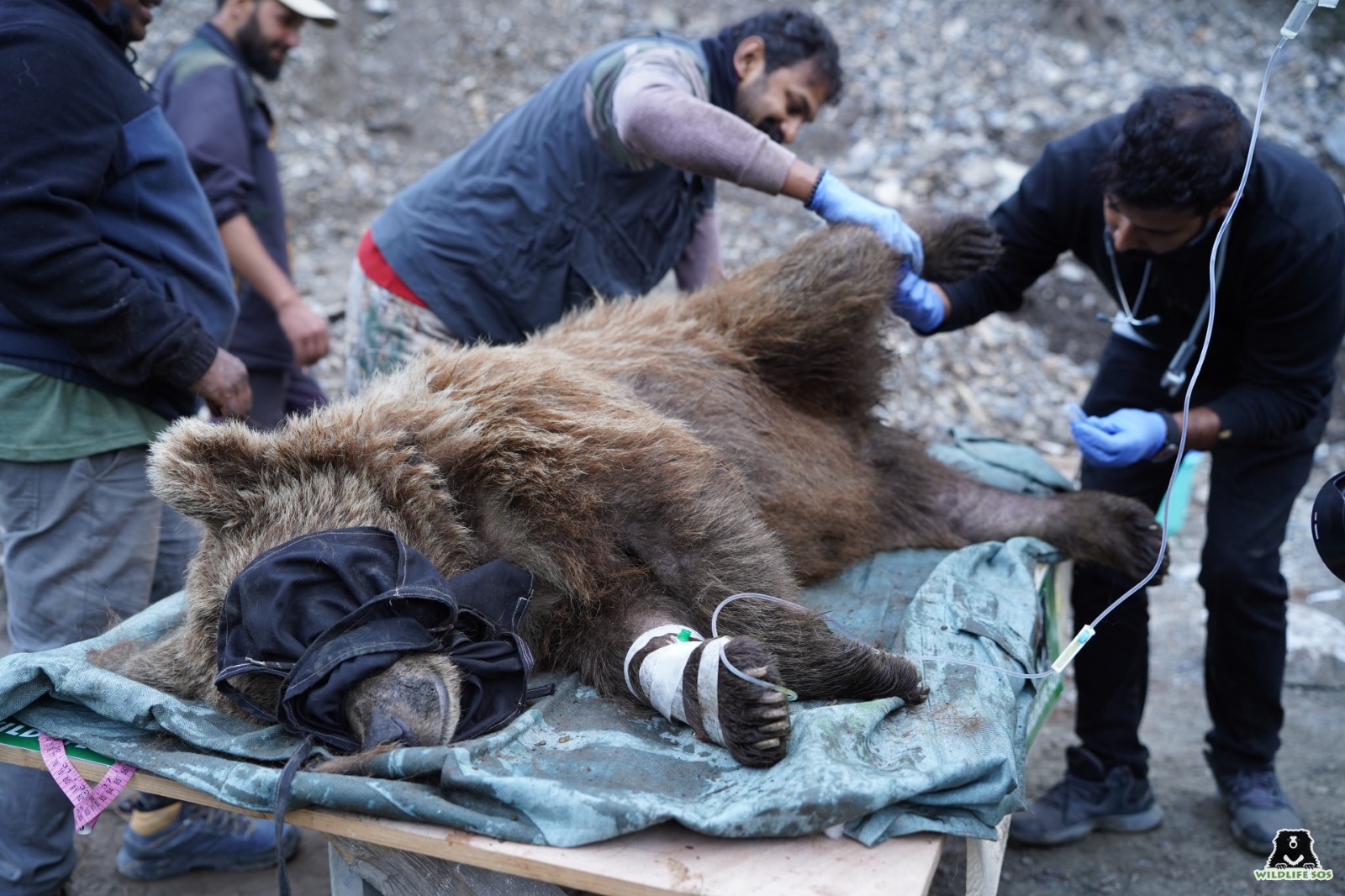
The project, centered in the Central Wildlife Division of Kashmir, involves tagging brown bears with GPS radio collars to closely monitor their habitat use, foraging behaviour, and movement patterns. By understanding these aspects, the team hopes to identify specific factors contributing to the increasing human-bear conflicts in the area.
Sonmarg’s scenic landscapes, a refuge for brown bears, face a pressing issue of unplanned waste disposal and treatment. A preliminary field study by Wildlife SOS in 2021 revealed alarming findings: 75% of the diet of bears frequenting human-made garbage dumps consisted of plastic, chocolates, and organic food waste. This discovery underscored the urgency for intervention, leading to the initiation of the radio-collaring project.
In the project’s first phase, the field team successfully radio-collared six brown bears, including four males and two females. The primary objectives of the study are to understand the bears’ habitat utilization, movement patterns, activity levels, and hibernation periods. This data is crucial for formulating effective conservation strategies.
Aaliya Mir, Program Head for Jammu & Kashmir at Wildlife SOS, emphasized the significance of the research: “Animal range use enables us to understand the habitat they use, corridors, and to know the areas which overlap with human habitation. Thus, ranging studies are essential to understand the fundamental ecology of the species and implement better conservation practices.”
Kartick Satyanarayan, Co-founder and CEO of Wildlife SOS, highlighted the welfare perspective of the project: “For this project, we opted for an animal welfare perspective to examine the impact of living in a human-dominated environment on the welfare of brown bears. Our team used animal welfare and behavioral tendency metrics to predict human-brown bear conflict.”
Rashid Y Naqash, Regional Wildlife Warden at the J&K Wildlife Protection Department, noted the department’s role in launching the project: “The Wildlife Protection Department has played its part in launching the project and the first phase is already over. We want to see the difference between bears that are socialized in the Thajwas landscape with those that are completely wild, without any human imprint.”
Swaminathan S, Senior Biologist at Wildlife SOS, explained the technical aspects of the study: “The field team used radio collars which provide information on the movement of brown bears using a satellite tracking system. Further, these animals can be tracked on foot using Very High Frequency (VHF) antennae in the field. The GPS and real-time monitoring of these collared bears is still ongoing, and the results will be compiled after the completion of the first year.”
The Himalayan brown bear, one of the largest carnivore species in India, has a restricted distribution in the alpine meadows of the Himalayas. Despite its significance, little is known about its ecology and behaviour in India. The bear population in Kashmir faces severe threats and fragmentation due to tourism, construction activities, livestock grazing, agriculture, settlements, highways, railroad, tunneling, and poaching.
As the project progresses, Wildlife SOS and the Jammu & Kashmir Wildlife Protection Department remain committed to unravelling the mysteries of the Himalayan brown bear and developing strategies to mitigate human-bear conflicts, ensuring the survival and well-being of this iconic species in its natural habitat.