SRINAGAR: Architects, urban planners, conservationists, engineers and former policymakers on Tuesday called for a more climate-responsive, structurally safe and identity-conscious approach to construction as Jammu and Kashmir undergoes rapid urban transformation.
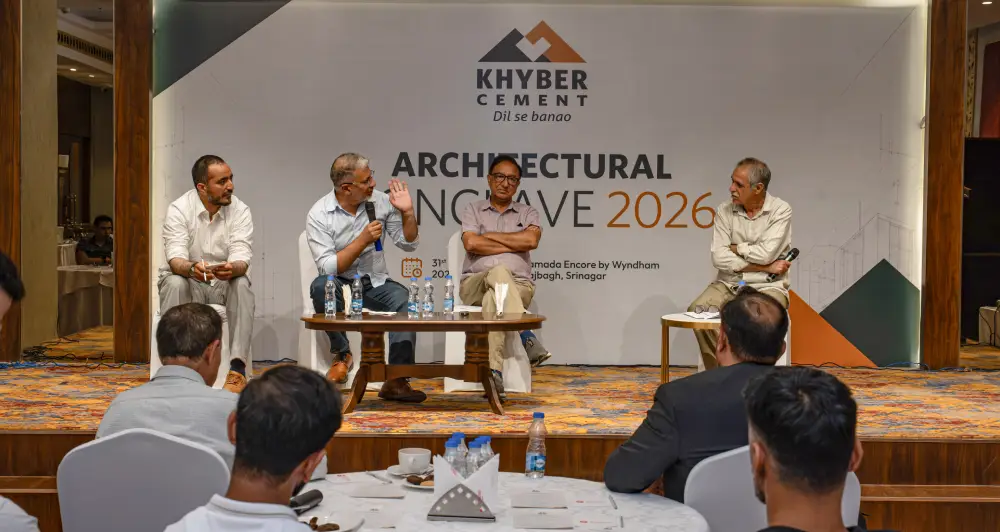
The observations came at the inaugural Khyber Cement Architectural Conclave (KCAC) 2026, organised by Khyber Cement at Ramada Encore, Raj Bagh, where professionals from across the built-environment sector discussed the challenges facing the region’s cities and construction industry.
The conclave focused on questions that are increasingly central to Jammu and Kashmir’s urban future: whether vertical development can address the expansion of Srinagar, how construction can respond to the region’s seismic vulnerability and climatic conditions, and how traditional architectural character and cultural identity can be retained amid rapid urbanisation.
A panel discussion on Sustainability and Responsible Construction brought together architect and urban design academic Umar Farooq, architectural historian and conservation architect Dr Sameer Hamdani, and heritage conservationist M Saleem Beg. The discussion was moderated by journalist Masood Hussain.
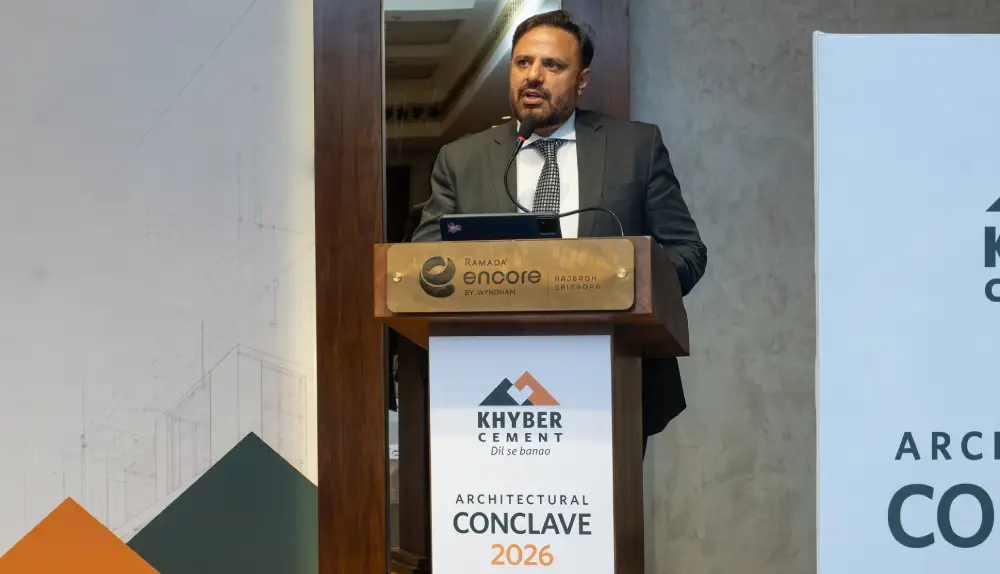
The panel examined structural resilience, climate-responsive design, urban planning and heritage conservation, while stressing the need to ensure that development does not come at the cost of Jammu and Kashmir’s distinctive architectural character.
Wrapping up the discussion, Hussain said the conclave sought to create a platform where all stakeholders could deliberate on what he described as a highly valued common concern, the built environment.
He said the initiative should be expanded in its next edition with participation from stakeholders representing the entire spectrum of Jammu and Kashmir’s building and architectural sector.
Umar Tramboo, Director Corporate and Strategy, Khyber Cement, said the company wanted to contribute not merely to stronger buildings but to a stronger future for Jammu and Kashmir.
“That means bringing together the people who shape our built environment, encouraging meaningful dialogue, and supporting ideas that balance safety, sustainability and identity,” he said.
Wasim Ahmed Khan, Chief of Sales and Customer Relations, Khyber Cement, said the construction industry routinely faced difficult choices between speed and safety, cost and quality, and short-term solutions and long-term sustainability.
He said the conclave was intended to provide a platform for such issues to be discussed openly and constructively, adding that it would evolve into an annual forum in response to the changing needs of the industry.
The inaugural KCAC comes at a time when Jammu and Kashmir is witnessing significant changes in its urban landscape, with expanding cities, growing construction activity and increasing pressure on land and infrastructure.
The discussions highlighted that the region’s built future will depend not only on construction materials and engineering solutions but also on planning that takes into account seismic risk, climate, heritage, local building traditions and the changing needs of its population.
Khyber Cement said the conclave forms part of its broader engagement with Jammu and Kashmir, alongside its initiatives involving sports, youth and community development.
The company said future editions of the conclave would seek to bring together a wider cross-section of architects, engineers, planners, developers, policymakers and other stakeholders involved in shaping the region’s built environment.