SRINAGAR: Two people with the same monthly salary can apply for the same Personal Loan and receive quite different offers. One may be offered a higher amount at a lower interest rate, while the other receives a smaller sanction. The difference lies in the details a lender reviews closely: your repayment history, the share of income already committed to EMIs and how steady that income has been over time. You can strengthen each of these details with planning and the results show up in the offers you receive.
What is Personal Loan Eligibility?
Personal Loan eligibility is a lender’s assessment of whether you qualify for a loan and for how much. Banks and non-banking financial companies (NBFCs) look at your credit score, income, existing EMIs, work stability and age. Together, these decide the loan amount, interest rate and tenure a lender can offer you.
1. Build a Good Credit Score
Your credit score is a three-digit number between 300 and 900. It sums up how you have repaid loans and credit card bills in the past. Many lenders prefer a score of 750 or above and a higher score can also help you get a better interest rate.
Here are some ways to build your score:
- Pay every EMI and credit card bill in full by the due date.
- Use 30% or less of your total credit card limit each month.
- Keep your older credit cards active, since a longer credit history strengthens your profile.
- Check your credit report from bureaus such as CIBIL, Experian, Equifax or CRIF High Mark. You can get one free report a year from each bureau. If any detail needs correction, raise a request with the bureau.
2. Keep Your EMIs Within a Comfortable Share of Income
Lenders measure your repayment capacity through the fixed obligations to income ratio (FOIR). This is the share of your monthly income that goes towards EMIs, including the EMI on the new loan. Many lenders prefer a FOIR between 40% and 50%.
The table below shows how closing a small loan changes this ratio.
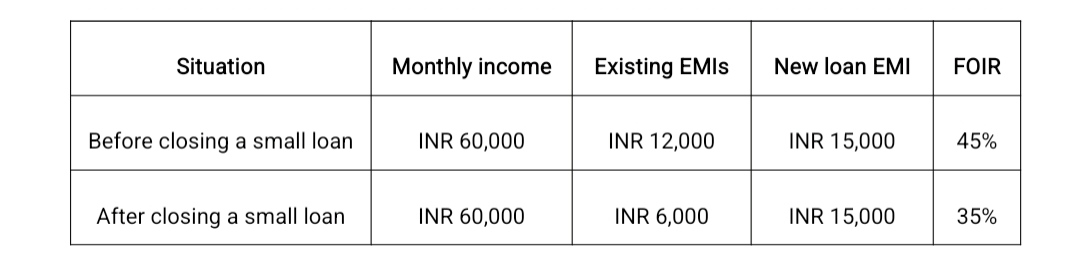 Clearing a small loan or a credit card balance before you apply creates more room for the new EMI.
3. Show a Regular Source of Income
Lenders look for income that arrives regularly and can be verified. The proof you share depends on how you earn:
- Salaried applicants: monthly salary credits in a bank account, along with recent salary slips.
- Self-employed applicants: income tax returns (ITRs), audited financial statements and bank statements.
Minimum income requirements vary by lender and by city. If you earn additional regular income, such as rent from a property, include it in your application where the lender accepts it. This can raise the amount you qualify for.
4. Stay Steady in Your Job or Business
Work stability tells a lender that your income is likely to continue through the loan tenure. Lenders assess it differently for each type of applicant.
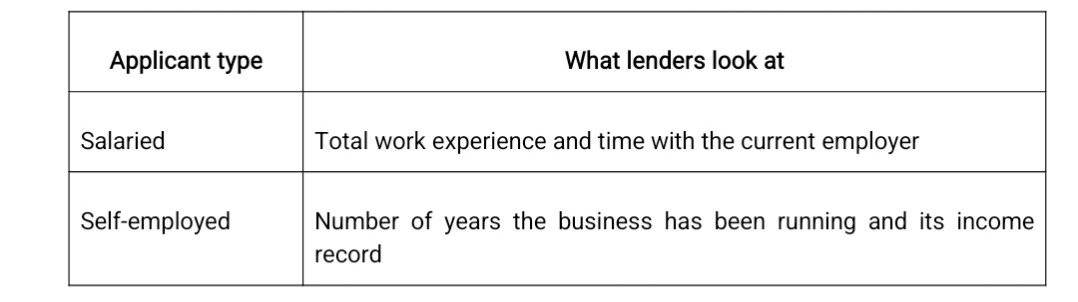
Many lenders ask salaried applicants for a minimum period with their current employer. If you have recently changed jobs, completing a few months in the new role before applying can help. Some lenders also offer preferred terms to employees of listed companies, government bodies and public sector undertakings.
5. Choose a Loan Amount and Tenure That Match Your Income
The loan amount and tenure together decide your EMI. A longer tenure spreads repayment over more months, lowering the EMI and keeping your FOIR within the lender’s preferred range.
Here is how tenure changes the EMI on a loan of INR 4,00,000 at 12% per annum.
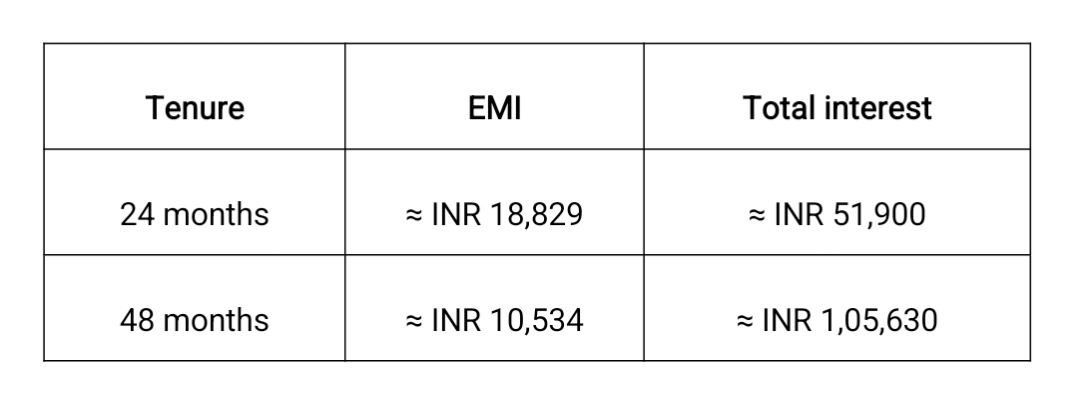
The longer tenure lowers the EMI by about INR 8,300 a month, while the total interest paid rises. Borrow the amount you need, over a tenure that balances EMI with total cost, for a stronger application.
6. Apply With a Co-Applicant
Some lenders allow a co-applicant on a Personal Loan, such as a spouse or parent with a regular income. The lender then considers both applicants’ combined income, which can increase the loan amount you qualify for.
The co-applicant shares responsibility for repayment and the loan appears on both credit reports. Choosing a co-applicant with a good credit record adds the most value to your application.
7. Check Your Eligibility Before You Apply
Each formal loan application leads to a hard enquiry, which is recorded on your credit report. Lenders take note of several hard enquiries within a short period, so spacing out your applications helps keep your credit profile steady.
A soft enquiry is a preliminary check that has no effect on your credit score. This lets you apply to lenders whose criteria match your profile. The JioFinance app, for example, uses a soft enquiry to assess eligibility and shows Personal Loan offers from partner banks and NBFCs in one place, so you can compare them before submitting an application.
Before you apply, make sure your name and date of birth match across your PAN, Aadhaar and bank records. This helps the verification process move smoothly.
Conclusion
A lender builds a view of your profile from details collected over months and years, so improving your Personal Loan eligibility is a gradual, steady process. Timely repayments, a balanced FOIR, steady income and a well-chosen loan amount and tenure all work well together.
Comparing offers on the JioFinance before applying can help you choose a lender whose lending criteria best match your profile and repayment plans.