SRINAGAR: The Amar Singh Club in Srinagar organised an interactive session titled “Common Interest Conversations” to address the growing issue of smartphone and internet addiction, particularly among children and adolescents. The event brought together notable experts and professionals, including Prof S A Romshoo, Vice Chancellor of the Islamic University of Science and Technology, and eminent advocate Zaffer A Shah, who presided over the session.
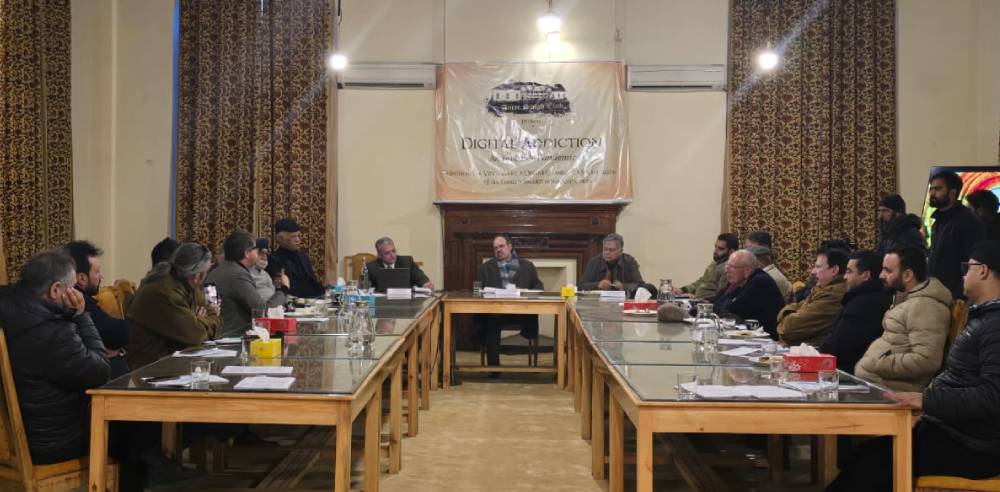
The discussion featured contributions from Dr Majid Shafi, Consultant Psychiatry and in charge of the Mental Health & Addiction Treatment Programme at the Directorate of Health Services, along with other prominent participants like Dr Tejinder Singh Sethi, Dr Najeeb Drabu, former Chief Information Commissioner G R Sofi, and several respected academicians and civil society members. The Managing Committee of the Amar Singh Club, represented by Secretary Nasir H Khan and members Rauf A Punjabi, Er M S Sethi, and P Fazili, hosted the event.
Nasir H Khan, in his opening remarks, emphasised the alarming consequences of digital addiction on the younger generation. He highlighted studies linking excessive use of technology to structural brain changes in children, resulting in diminished creativity and purpose. Drawing attention to the addictive nature of social media, he compared smartphones to “modern-day hypodermic needles,” which deliver digital dopamine hits, keeping users emotionally reactive and detached from critical thinking.
Professor Romshoo congratulated the organisers for addressing such a pressing issue. He warned that excessive use of digital devices suppresses creativity and encourages rote learning among students. Stressing the need for a holistic approach to education, he urged parents and institutions to focus on skill-building activities such as robotics, drone technology, and astronomy, while promoting cultural and environmental awareness.
Zaffer Shah pointed out the sedentary lifestyle fostered by digital overuse and criticised the reliance on technology for even basic tasks, which hampers cognitive development. He urged parents to limit their children’s screen time and prioritise outdoor activities. Shah also highlighted the lack of playgrounds due to rampant urbanisation and called on the government to create spaces conducive to children’s physical and social development.
Dr Majid Shafi shared alarming statistics on digital addiction, placing it alongside tobacco and drug addiction as one of Kashmir’s leading public health concerns. He offered practical solutions, such as reducing notifications, using monochrome phone displays, and ensuring screen-free family mealtimes. He also drew attention to the dangers of early exposure to digital devices, likening their impact to substance abuse.
Other participants echoed these concerns, identifying digital addiction as a growing epidemic that affects mental health, social interaction, and academic performance. The session concluded with a commitment to organise follow-up discussions to develop actionable strategies at the individual, family, community, and governmental levels.
The “Common Interest Conversations” series by Amar Singh Club continues to shed light on significant societal challenges, fostering dialogue and actionable solutions for a healthier, more balanced future.
Read more https://kashmirlife.net/will-digital-addiction-define-the-next-generations-future-380650/