Uneven Stakes in the Jammu and Kashmir Political Landscape
The regions of Jammu and Kashmir, although administratively unified, remain deeply distinct in their geography, culture, demography, and, in recent years, in their political articulation. This divergence has only sharpened since the reorganisation of the erstwhile state in 2019 and the finalisation of the delimitation exercise in May 2022.
Under the new delimitation order, six additional Assembly seats were allocated to Jammu, and only one to Kashmir, raising Jammu’s tally to 43 and Kashmir’s to 47. This numerical rebalancing has reignited the long-standing perception in Jammu that Kashmir has been politically sidelined. While this grievance has frequently been discussed in the region’s political discourse, it has not been conclusively proven by any official commission of inquiry or study. Jammu has remained a smaller demography compared to the Valley.
Are Reservations in Jammu and Kashmir A Political Instrument Rather Than A Social Engineering Tool?
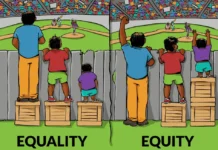
More revealing, however, are the patterns of reservation and representation. A recent analysis by Kashmiri economist and erstwhile state’s last finance minister Haseeb A Drabu underscores the significant asymmetry in the distribution of reservation benefits. For every 10 people in Jammu, there is one reservation beneficiary, while in Kashmir, the ratio is one in 84. All Scheduled Caste reservation beneficiaries hail from Jammu, and 92.3 per cent of those under the Economically Weaker Section category also belong to Jammu. This disparity may not be the result of discrimination, but it certainly reflects a skewed structure of access and entitlement that merits deeper scrutiny.
On the electoral front, the contrast is sharper. Jammu, particularly its Hindu-majority areas, has voted overwhelmingly for the Bharatiya Janata Party (BJP), with the party holding 29 seats in the last legislative assembly, all from this region. The Valley, on the other hand, continues to reflect a fragmented political landscape, with the vote divided among the National Conference, Peoples Democratic Party, Congress, CPI(M), Peoples Conference and a range of smaller players and recent entrants. In 2024, people voted more for JKNC, but this is unlikely to be a future pattern.
This fragmentation has been widely interpreted as more than just the natural evolution of politics. Many believe it to be the outcome of a deliberate design to divide the Valley’s political voice and dilute its bargaining strength. The mushrooming of political parties, many formed by leaders with CM ambitions, further weakens the possibility of a unified regional mandate.
What remains essential now is a fair, transparent political process that does not exploit regional divides but instead fosters genuine democratic parity. Jammu and Kashmir may be one entity on paper, but the future of its unity lies in equitable representation, not arithmetic advantage.