Kashmiri students pursuing professional degrees outside the Valley face recurring institutional lapses, weak oversight, and punitive responses that jeopardise careers.
Every year, thousands of students leave Kashmir with borrowed savings, bank loans and family sacrifices, seeking professional education across the country. They travel with modest means but large expectations: to qualify, return and serve their communities. Too often, however, their journeys are disrupted not by academic failure but by administrative negligence and institutional apathy.
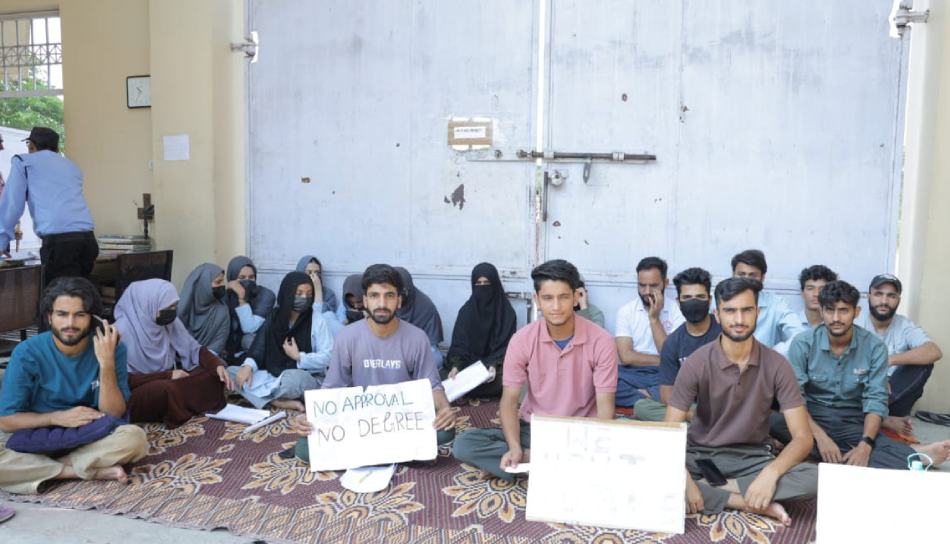
The latest instance at Mewar University in Chittorgarh, Rajasthan, exposes a troubling pattern. Thirty-three nursing students, most of them from Kashmir, were suspended after protesting the absence of mandatory approvals for their BSc Nursing course from the Rajasthan Nursing Council and the Indian Nursing Council. More than 50 students are reportedly enrolled in a programme whose recognition remains uncertain, placing their degrees, registration and employability at risk.
This is not a technical lapse. Professional courses such as nursing depend entirely on statutory accreditation. Without it, years of study become meaningless paper. Students say they were repeatedly assured that approvals were “under process”. Instead of clarity or timelines, they received suspensions when they demanded answers. Punishment replaced accountability.
The numbers tell a harsher story. Final-year students, with examinations approaching, face the prospect of invalid qualifications. Families who invested lakhs of rupees now confront the possibility that those investments may yield nothing. For many from remote or economically fragile backgrounds, there is no second chance.
The deeper concern is systemic. Private institutions continue to admit students before securing clearances, gambling with young futures. Regulatory oversight appears reactive rather than preventive. And when students organise peacefully to protect their interests, they are treated as troublemakers.
This approach reverses responsibility. If approvals are pending, admissions should be halted. If recognition is delayed, transfers must be arranged. Students cannot be collateral damage in bureaucratic processes.
Education is not merely a transaction; it is a trust. When institutions fail that trust, the consequences extend beyond one campus. They erode faith among entire communities that already feel vulnerable, sending their children far from home.
The solution is straightforward: enforce accreditation before enrolment, mandate transparent disclosure, and protect students through automatic relocation or compensation when institutions default. Until then, each academic season will produce another cohort stranded between hope and uncertainty, paying the price for failures that were never theirs.