Kashmir’s vanishing lakes expose decades of institutional failure, a crisis demanding urgent legal, political, and ecological intervention now
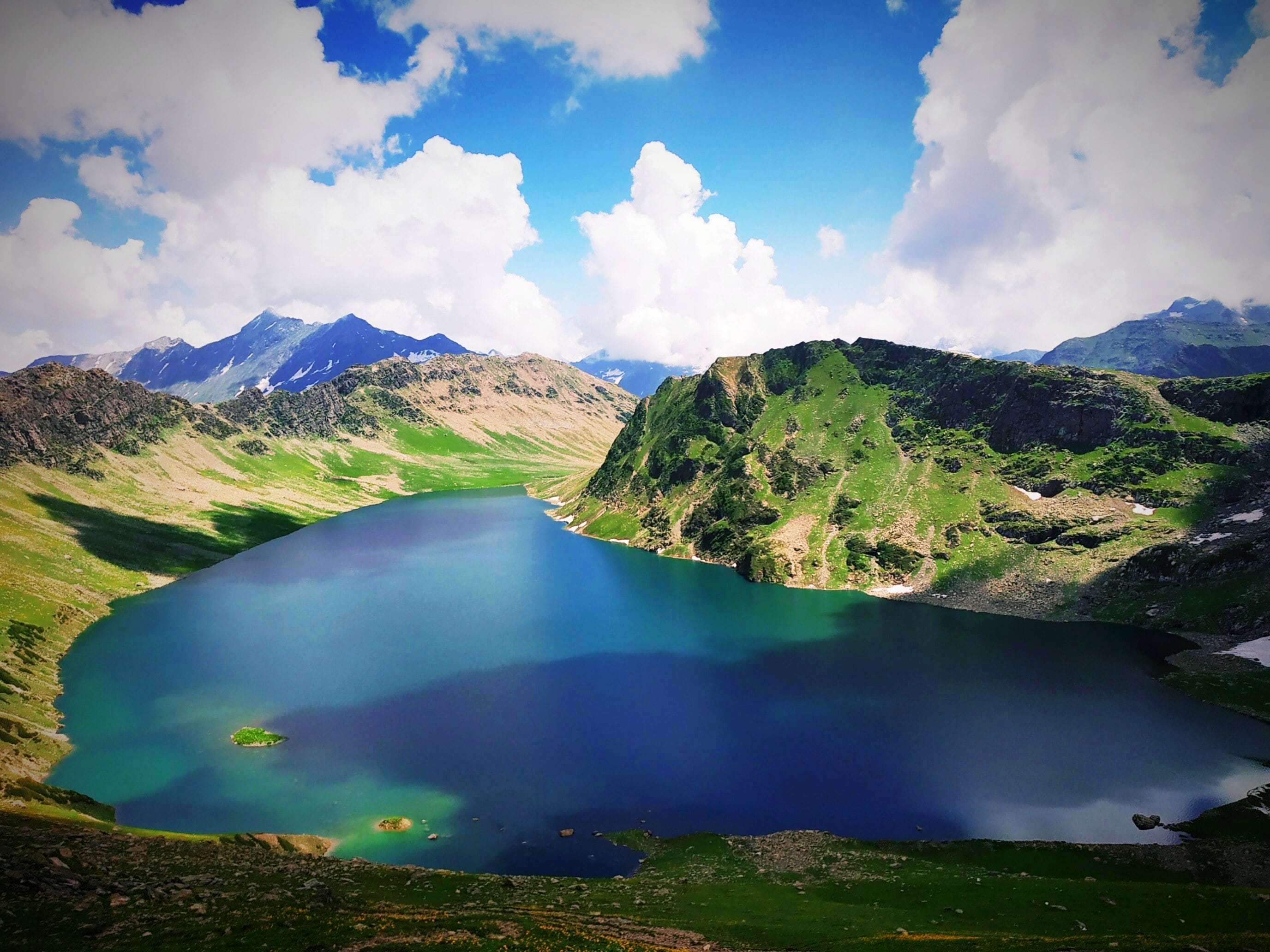
There is a particular cruelty in losses that happen slowly. No single moment of rupture, no photograph that captures the before and after, just a steady, quiet retreat until one day what was water becomes a field, or a construction site, or simply a dry hollow that children run across without knowing what it once held. This is how Jammu and Kashmir has been losing its lakes. And this is why a recent audit finding, that 518 of the region’s 697 catalogued water bodies have either vanished or severely shrunk, carries the weight it does. It is not a projection. It is an accounting of what has already gone.
The Comptroller and Auditor General’s findings make one thing unmistakably clear: this is not a story of nature taking its course. It is a story of institutional failure, sustained and layered across decades. Of 697 lakes surveyed, 315 have been erased, 45 per cent gone, not degraded, not diminished, but erased. Conservation plans exist for only six. A single percentage point of capital expenditure was devoted to these water bodies over five years. Five departments hold overlapping mandates over the same lakes, and none has been willing to claim primary responsibility for what happened to them. The result is a governance vacuum dressed up as shared stewardship.
The consequences have not stayed abstract. The catastrophic 2014 floods, which killed nearly 300 people and caused damage estimated at Rs 1,00,000 crore to Srinagar alone, did not arrive without context. Lakes, when intact, absorb surge. They slow the floodwaters. They protect settlements. When those buffers are gone, the water has nowhere to go but through. Whether more intact water bodies might have softened that disaster cannot be proven with certainty, but the logic is not easily dismissed, and the National Green Tribunal has acknowledged it directly.
The NGT’s suo motu intervention is welcome and overdue. The bench has impleaded a formidable range of agencies, central ministries, UT departments, regulatory bodies, and disaster management authorities, and identified prima facie violations of at least four foundational environmental statutes. That is a signal that the Tribunal intends to hold the line. It has done so before, with tangible results. Court-monitored restoration, directed funding, and enforceable accountability mechanisms have followed such interventions in the past.
But courts cannot substitute for political will. India does not lack environmental law. It lacks the last mile, the distance between legislation and enforcement, between a filed reply and a cleaned lake. The next hearing is on May 15, 2026. What matters is not merely what is said in that courtroom, but whether the departments summoned arrive with plans rather than deferrals.
Kashmir’s lakes are not scenic amenities. They are the region’s flood defence, its agricultural lifeline, its biodiversity reservoir, and the livelihood of thousands of fishing communities. Their loss is not a peripheral footnote to development; it is a warning that development built on their disappearance is building on sand. The clock is running. The lakes are not waiting.