SRINAGAR: Dharmendra, one of the most beloved and enduring stars of Indian cinema and a personality who dominated generations of filmgoers, passed away in Mumbai on Monday, November 24. He was 89. The veteran actor, affectionately known as the “He-Man of Bollywood,” had recently returned home from Mumbai’s Breach Candy Hospital after treatment for respiratory complications.
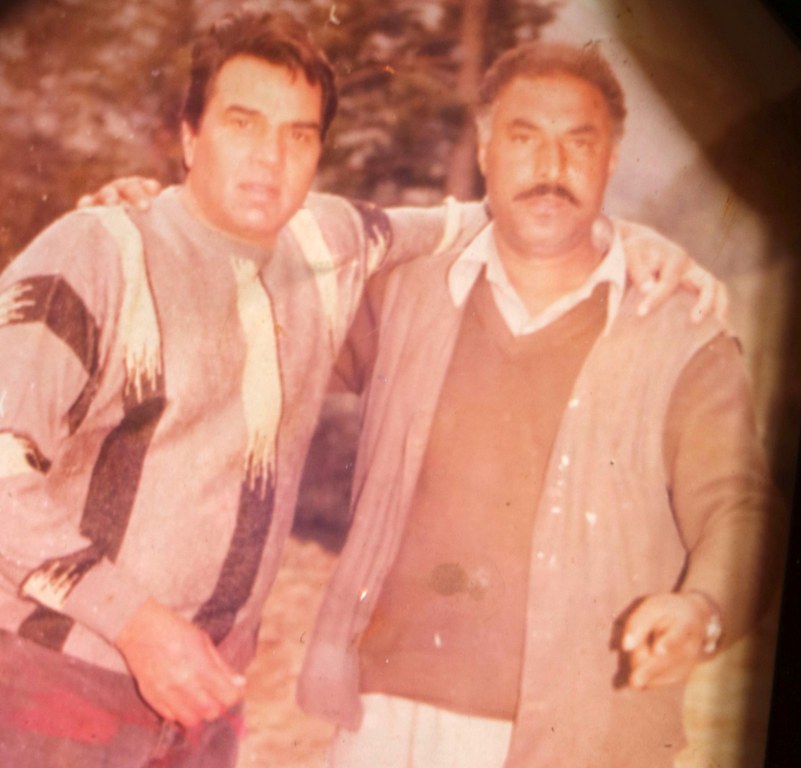
His death sparked an outpouring of grief from across the film industry and among millions of admirers. Amitabh Bachchan, Dharmendra’s co-star from Sholay, arrived at the Vile Parle crematorium with his son Abhishek Bachchan to pay his last respects. Aamir Khan was seen at the actor’s Juhu residence, and members of the Deol family, including Sunny Deol, Esha Deol and Hema Malini, reached the cremation ground shortly after an ambulance was spotted leaving the house.
For a man who ruled Hindi cinema from the 1960s onward, Dharmendra’s passing marks the end of an era. He appeared in more than 300 films, delivered unprecedented strings of box-office hits—eight consecutive successes in 1973 and nine more in 1987—and carved out a persona that earned him multiple monikers: the He-Man, the Action King, and above all, a superstar with unmatched popularity.
Born Dharmendra Kewal Krishan Deol in Punjab’s Ludhiana district in 1935, he moved to Mumbai with dreams of cinema and debuted in 1960. Over the next six decades, he built a body of work that defined Hindi popular culture—Sholay, Yaadon Ki Baaraat, Dharam Veer, Chupke Chupke, Mera Gaon Mera Desh, The Burning Train, Pratigya, Seeta Aur Geeta, Ghazab and dozens more that shaped the golden age of mainstream films. His final film, Ikkis, directed by Sriram Raghavan and starring Agastya Nanda, is due for release on December 25.
As news of his demise spread, tributes poured in. Filmmaker Karan Johar wrote, “There will always be the one and only Dharamji… we will miss you so much… the heavens are blessed today.” Sharmila Tagore, who worked with him extensively, recalled a man who was “a patriarch… someone everyone called papaji,” and whose warmth drew people to him. “He was a wonderful person,” she told NDTV, remembering their celebrated collaboration in Chupke Chupke.
Dharmendra had been hospitalised earlier this month, and though his condition improved enough for him to be discharged on November 12, he continued to receive treatment at home. His family had recently condemned false rumours of his death circulating on social media, adding to the distress of his illness.
At the cremation ground on Monday afternoon, an emotional Isha Deol arrived with her family, dressed simply and keeping to herself, standing beside her sister Esha through the rites. The ceremony remained private, attended by close relatives and a handful of colleagues. Images of the family from the venue prompted a wave of condolences online, with fans sharing memories, songs and scenes that had defined their own growing-up years.
Many remembered his evergreen songs—Rafi’s “O Meri Mehbooba” from Dharam Veer, Kishore Kumar and Manna Dey’s iconic friendship anthem “Yeh Dosti” from Sholay, the playful “Jatt Yamla Pagla Deewana” from Pratigya, and the haunting “Aaj Mausam Bada Beimaan Hai” from Loafer. These tracks, like his films, remain etched in public memory.
Dharmendra is survived by his wives Prakash Kaur and Hema Malini, and his children Sunny Deol, Bobby Deol, Vijeta, Ajeeta, Esha Deol and Ahana Deol. He served as a Member of Parliament and was awarded the Padma Bhushan in 2012.
For the industry, his death is not merely a personal loss but a cultural rupture. Dharmendra belonged to a generation of icons who carried Hindi cinema into national consciousness, who bridged eras and tastes, and who remained beloved long after trends changed. His charm, humour, physicality and instinctive acting created a screen presence that remains unmatched.
As the pyre was lit and the family stood in silence, fans online summed up the sentiment of a grieving nation: a superstar has gone, and with him, a piece of Indian cinema’s heart.