RS PORA
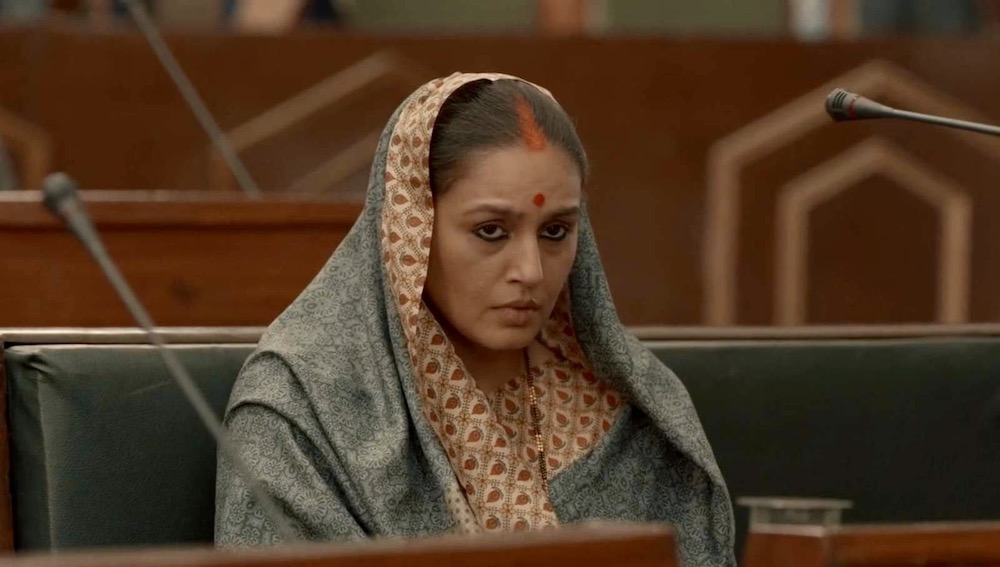
During her visit to the Indo-Pak border near Jammu, actor Huma Qureshi made an emotional appeal for peace and unity, urging people to visit Jammu and Kashmir as “travellers and go back as believers.” Speaking at a cultural event at Octroi Post, organised by the tourism department and BSF, she lauded the bravery of the Indian Army and BSF during Operation Sindoor. Qureshi engaged with border guards, including women personnel, and praised their role in protecting India. Emphasising her connection to the region, her mother hails from the Valley, Qureshi described Jammu and Kashmir as the backbone of India, rich in beauty and faith, with destinations like Vaishno Devi, Shiv Khori, Patni Top and Bhaderwah. She called on people not to let fear or hate define the region, but instead recognise its spirit of hope, courage, and harmony.
Jammu and Kashmir will receive 200 additional electric buses by June 2025, with 100 each for Jammu and Srinagar, to enhance public transport coverage.
CANNES

A decade after Masaan, Neeraj Ghaywan returned to Cannes with Homebound, a poignant film inspired by Basharat Peer’s New York Times article Taking Amrit Home. The film, which premiered in the Un Certain Regard section and received a 9-minute standing ovation, is based on the real-life story of two friends – Mohammed Shoaib Ali, a Muslim, and Chandan Kumar, a Dalit – who journeyed on foot from Gujarat to Uttar Pradesh during India’s 2020 COVID-19 lockdown. Their friendship, marked by solidarity and resilience amid caste and religious divisions, moved Peer to investigate their story himself. Ghaywan, drawing from his Dalit background, preserved the emotional truth of Peer’s reportage while deepening the characters’ arcs for the screen. The film stars Ishaan Khatter, Vishal Jethwa, and Janhvi Kapoor, with Martin Scorsese attached as executive producer. Homebound explores caste, class, and the invisibility of migrant workers with cinematic intimacy, notably through Pratik Shah’s haunting visuals. Avoiding didacticism, the script lets lived experience speak for itself. Kapoor’s Ambedkarite character adds depth to the narrative. Critics praised the film’s emotional clarity and performances, especially Jethwa’s. For Peer, the film was a faithful, moving adaptation that honoured the story’s human essence, making Homebound both an artistic and political triumph.
MOSCOW

Dr Shabir Hassan, a biotechnology researcher at Khalifa University in the UAE, has been awarded the BRICS International Award 2025 for Excellence in Research and Promoting Education Across Borders and Cultures. Presented at the World Trade Centre in Moscow under the BRICS Culture Media Forum, the honour celebrates Dr Hassan’s groundbreaking work in biomedical science and academic diplomacy. From pioneering cancer research and 3D bioprinting to developing low-cost mini-microscopes, Dr Hassan’s career reflects a commitment to global collaboration. With over 55 high-impact publications and accolades from Harvard, Australia, and Switzerland, he has also fostered educational linkages between the Gulf and BRICS nations. Born in Kashmir, his journey has taken him to institutions such as Harvard Medical School and Brigham and Women’s Hospital. A passionate science communicator and editor, he advocates equitable access to education and research. At the ceremony, he dedicated the award to collaborative science, calling it a “universal language of peace.” Cultural performances and remarks from global dignitaries marked the event, which also honoured Russian composer Igor Evard. In the words of a BRICS official, Dr Hassan is a “living symbol” of cross-cultural excellence and innovation — a testament to science’s power to unify in a divided world.
KASHMIR
In a determined push to revive Kashmir’s beleaguered tourism sector after the April 22 Pahalgam massacre, Chief Minister Omar Abdullah chaired back-to-back high-level meetings at Pahalgam and Gulmarg, two of Kashmir’s iconic tourist destinations. His symbolic presence at these sites, including cycling in Pahalgam and taking the Gulmarg Gondola to Kongdori, was aimed at sending a clear message of resilience and reopening.
Appealing for an end to the ‘boycott Kashmir’ campaign, Omar underlined that punishing ordinary Kashmiris, who had unequivocally condemned the attack, was unjust and counterproductive. Stressing the need for Centre-State-LG coordination to rebuild confidence, he urged the Education Department to resume school trips to tourist spots and called on the Centre to hold official meetings in J&K to reinforce normalcy. At Kongdori, he engaged warmly with tourists from Gujarat and Mumbai, lauding their courage and urging them to promote the Valley’s safety. Quoting Faiz Ahmad Faiz, Omar emphasised that despite darkness, hope must endure. With the peak summer season approaching, his back-to-back outreach efforts reflect a larger political and emotional campaign to reassure both visitors and locals that Kashmir is ready and safe for tourism once again.
KHANYAR
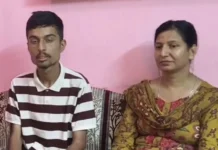
Around 7 am on April 26, police arrived at the Srinagar home of 80-year-old Abdul Waheed Bhat with a “Notice to Leave India”. Bedridden and paralysed, Bhat had lived in Kashmir since 1980 after returning from a 15-year stay on the other side of the LoC, where he had been stranded since 1965 due to war. Despite his family’s repeated appeals and medical documents proving his immobility, police insisted on deporting him under central orders issued after a deadly terror attack in Pahalgam. On April 29, Bhat was put on a bus with other deportees and sent to the Attari border, alone and unattended. A day later, he died inside the bus, reportedly of dehydration. For over a day, his family had no idea where he was or what had happened to him. Bhat had crossed into Pakistan as a child under the 1948 permit system. When he tried to return years later, hardened borders and suspicion forced him to get a Pakistani passport. Though acquitted of overstaying charges in India, he remained caught in the grey zone between the two nations. His death at the border, like his life, lay buried under unresolved questions of identity and justice.
JAMMU KASHMIR
A violent spell of lightning, windstorm, and hailstorm battered several parts of Jammu and Kashmir, killing a woman in Tral and nearly 100 sheep in Rajouri. The victim, Saleema, died instantly after a lightning-struck tree fell on her. In Rajouri’s Targain village, lightning wiped out entire herds, damaging property and devastating nomadic families. Strong winds uprooted trees and electric poles, snapped power lines in Rajouri and Poonch, and blocked the Mughal Road. In Srinagar, heavy rains led to severe waterlogging, while hailstorms caused widespread damage to orchards. Authorities have assured compensation and relief, even as further weather disturbances are forecast.
MUBARAK MANDI
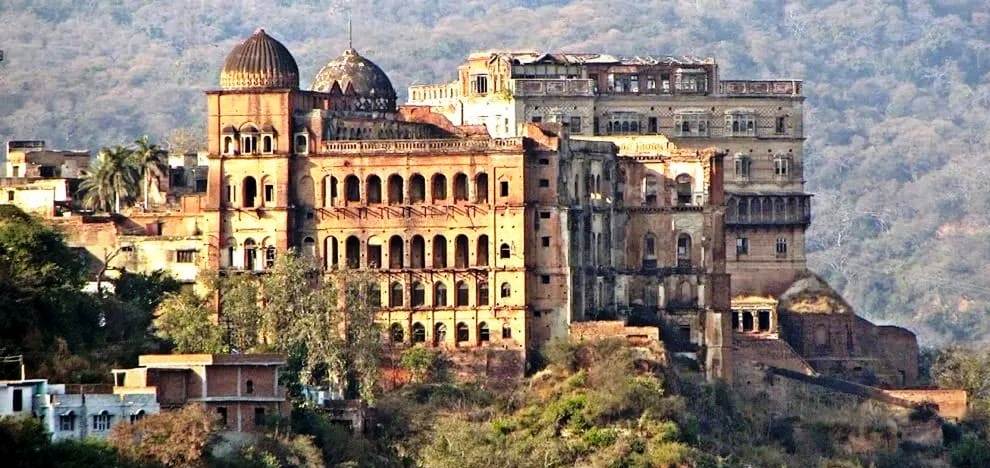
After remaining sealed for over 18 years, the historic Toshkhana within the Mubarak Mandi Complex was reopened for verification and assessment of royal artefacts. This marks a crucial step towards its formal transfer from the Directorate of Hospitality and Protocol to the Department of Archives, Archaeology and Museums. Experts, including metallurgists and police officials, are evaluating the artefacts, with the process being videographed for transparency. Verification of existing inventories is underway, beginning with items in the single lock section. However, no timeline has yet been set for inspecting the more extensive collection stored at the Civil Secretariat following the 2006 fire.
RIYADH
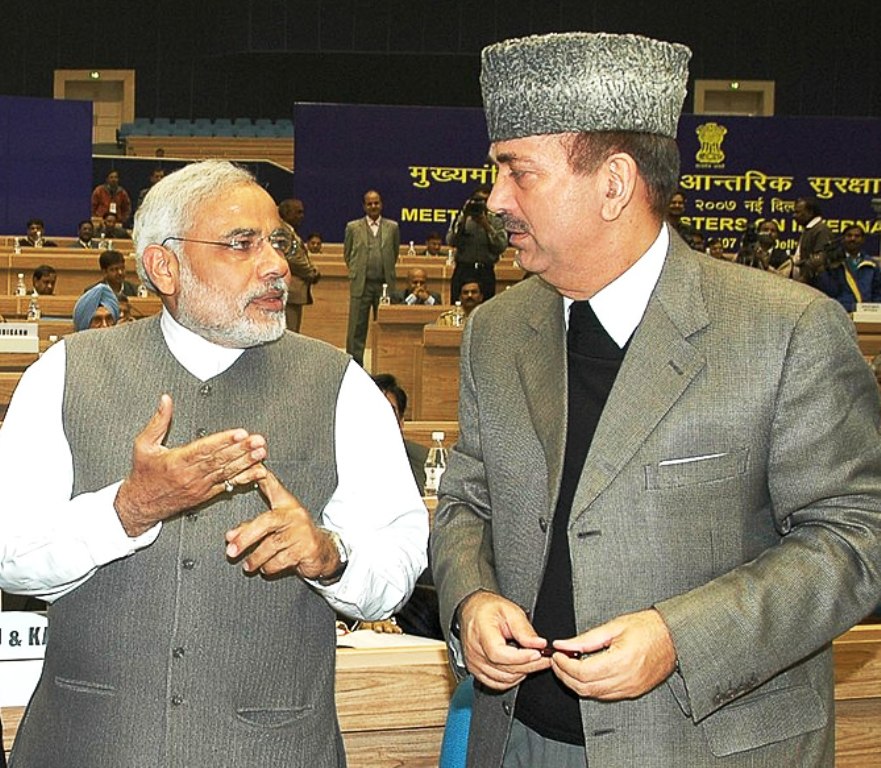
Former Jammu and Kashmir Chief Minister and Democratic Progressive Azad Party (DPAP) chairman, Ghulam Nabi Azad, was hospitalised in Kuwait during an all-party diplomatic mission. The delegation, led by BJP MP Baijayant Panda, was touring Gulf and North African nations – Bahrain, Kuwait, Saudi Arabia, and Algeria – as part of Operation Sindoor, India’s outreach to counter Pakistan’s terrorism narrative following a military flare-up after the April 22 Pahalgam attack. Azad fell ill midway due to Kuwait’s intense heat and was admitted to Royale Hayat Hospital. He was reported to be stable and under medical supervision. Prime Minister Narendra Modi personally called him to wish him a speedy recovery. Azad, expressing disappointment at being bedridden, confirmed he was recovering well. He will miss the Saudi Arabia and Algeria leg of the mission, which continues under Panda’s leadership.
AKHNOOR

During Operation Sindoor, women personnel of the Border Security Force (BSF) played a pivotal role in retaliating against a Pakistani attack along the International Border in Jammu. Assistant Commandant Neha Bhandari, a third-generation officer from Uttarakhand, led her troops at a forward post in the Akhnoor sector, silencing three hostile Pakistani posts through intense retaliation. Her leadership and courage exemplified the strength of women in combat roles. Neha was the only BSF woman officer to command a forward outpost during the operation. Alongside her, six women constables, including Shankari Das, Swapna Rath, Anita, Sumi, Milkeet Kour, and Manjeet Kour, manned gun positions and engaged enemy posts. Inspector General Shashank Anand praised the women’s bravery and decision to remain at forward posts, despite the option to withdraw. Their contribution was part of a broader BSF counteroffensive that targeted 76 Pakistani posts and foiled infiltration attempts under heavy shelling.
KOTA
Just days after the Supreme Court questioned Rajasthan over rising student suicides in Kota, 18-year-old Zeeshan from Jammu and Kashmir was found dead in her hostel room. She had alerted a relative before the incident. Her room lacked an anti-hanging device. This marks Kota’s 15th student suicide this year.
DUBAI

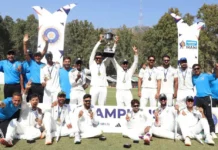
In Akad village of South Kashmir, joy erupted as 30-year-old Hilal Ahmad Wani, who is deaf and mute, led India to victory in the World Deaf Cricket League in Dubai. Scoring 70 off 29 balls and taking three wickets in the final, Hilal was named Player of the Match and Tournament. Deaf since age three due to illness, he overcame stigma, lack of special education, and setbacks, including being dropped from J&K’s Ranji squad, to rise in deaf cricket. His journey from silence to stardom is inspiring a new generation in Kashmir, proving that disability cannot define one’s potential or dreams.
POONCH

During his visit to Poonch on May 24, Congress MP Rahul Gandhi met victims of Pakistan’s cross-border shelling, calling it a “big tragedy” and vowing to raise their issues nationally. Gandhi interacted with bereaved families, students, and local institutions, including the kin of ex-serviceman Amarjeet Singh and cleric Maulana Iqbal, both killed in the shelling. He condemned the targeting of civilians and misinformation labelling victims as terrorists. Gandhi praised the children’s bravery at Christ School and assured justice to the affected. The shelling followed India’s Operation Sindoor, leading to 28 deaths and over 70 injuries across Jammu & Kashmir between May 7 and 10.