by Sri Varshith Kumar Reddy E
Robert Hall and Michael Woodford showed that expectations steer economies. A Union Territory whose income arrives in lumps and whose calendar is hostage to weather and security needs an expectations strategy of its own.
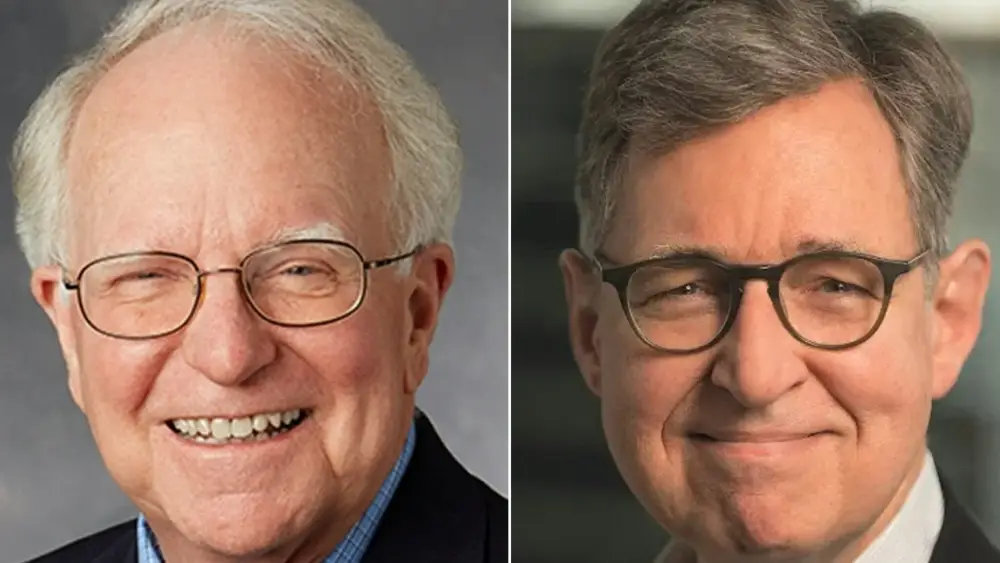
The Royal Swedish Academy has honoured two economists who spent careers asking how a household decides to spend a rupee today. Robert E Hall of Stanford and Michael Woodford of Columbia won the 2026 prize on October 12, for microeconomic foundations of macroeconomic stabilisation. The 12 million kronor purse is shared equally. Jammu and Kashmir may seem far from Stockholm’s committee rooms. The Valley went through a year in 2025 that reads like a stress test designed by their models.
A Prize About Expectations
The laureates rebuilt stabilisation models on the choices of households and firms, after the older statistical links between inflation, output and consumption broke down in the oil shocks of the 1970s. A central feature of the new models is that households and businesses look forward when they decide on savings or prices. Governments and central banks that communicate their plans can therefore shape that view of the future. In a recession the prescription is lower interest rates and a larger budget deficit, with the reverse in a boom.
Hall’s 1978 paper showed that consumer spending decisions reflect expectations about future income. A family that believes a bad spell is temporary will borrow, draw down savings and keep spending. A family that believes the spell is permanent will cut back sharply, and its neighbours will follow. Woodford’s landmark 2003 book linked business pricing decisions to inflation and monetary policy. His framework also explained how forward guidance and asset purchases can support an economy once interest rates sit near zero. What authorities promise about tomorrow shapes what people do today.

Kashmir’s Calendar of Shocks
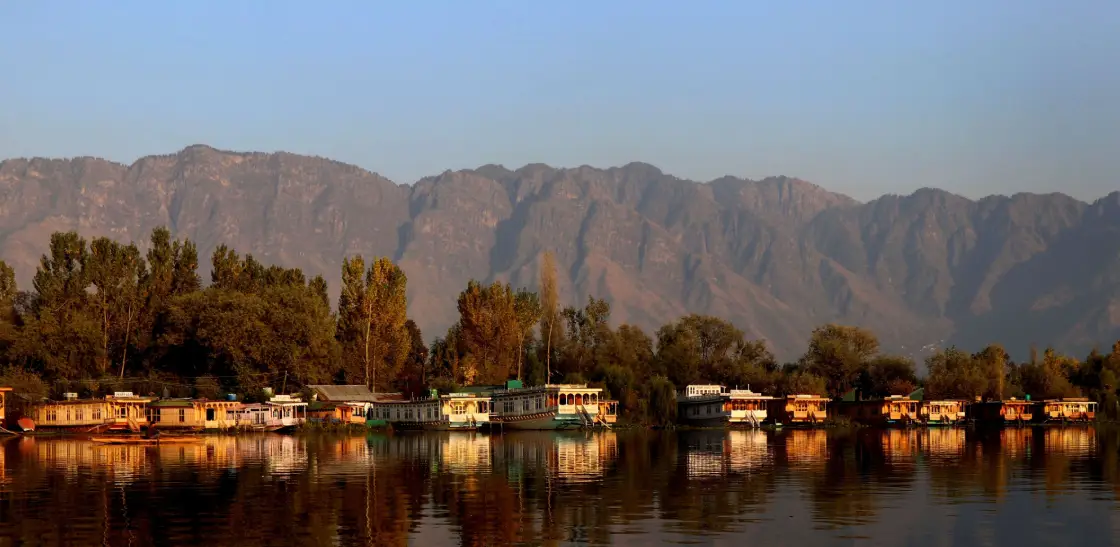
Consider 2025. On April 22, militants killed 26 people in Pahalgam, and authorities shut 48 of the region’s 87 tourist sites in the following weeks. Official estimates put arrivals in the Union Territory at 2.36 crore in 2024 and about 1.78 crore in 2025, a fall of roughly a quarter. Pahalgam itself recorded about 259,000 visitors between January and mid-April 2026, against more than 469,000 in the same period before the attack. As much as 80 per cent of its hotel rooms sat unoccupied a year on. The head of the town’s hotel association had targeted about Rs 2 crore in earnings last year and made Rs 15 lakh.
The monsoon delivered a second blow. The Srinagar-Jammu highway stayed shut for nine consecutive days in the first spell of rain and six more days in the next. Between 1,200 and 1,500 fruit trucks stood stranded near Qazigund . A political leader from Shopian reported that buyers were offering rates nearly 60 per cent below the usual. The Fruit Growers Association Kashmir estimated grower losses near Rs 500 crore. The Chief Minister reported damage to 330 bridges and 1,500 kilometres of road across the Union Territory.
The floods hit Jammu division hardest in human terms. Its Divisional Commissioner reported 150 deaths, more than 4,200 fully damaged homes and over 8,600 partially damaged ones, with Kishtwar recording the highest casualties. Kashmir division reported more than 12,500 hectares of agricultural land affected.
Aggregates look calm beside these episodes. Real GSDP is estimated to have grown 5.8 per cent in 2025-26, on a nominal economy of Rs 2.88 lakh crore. Growth averaged 4.47 per cent a year between 2019-20 and 2024-25. The hotelier in Pahalgam and the orchardist in Shopian live in a particular season, and the average erases both.
What Households and Firms Teach Us
Hall’s lens asks one question of every shock. Does the affected family believe the loss is temporary? A yes keeps spending alive. A no pulls local demand down for months.
The labour market gives the question teeth. The Union Territory’s unemployment rate for those aged 15 and above reached 6.7 per cent in 2024-25, nearly double the national 3.5 per cent, and it has risen from 4.4 per cent in 2022-23. The government’s Mission YUVA survey found 4.73 lakh people, out of 64.8 lakh aged 18 to 60, who were not working but willing to work. That pool carries the sharpest uncertainty about future earnings. A graduate who expects a vacancy next year keeps searching and keeps spending. A graduate who sees no prospect migrates or withdraws.
Tourism families make the same point from another angle. About 5,000 new hotels and guest houses and more than 20,000 tourist vehicles joined the sector over six years. Each was financed against an expected calendar of arrivals. When the calendar broke, repayment capacity broke with it. A credible promise of timely relief would have kept some of those households spending, and a vague one pushed them to cut back.
Woodford’s firms set prices by looking ahead, and Kashmir’s firms do the same. Their prices are room rates, freight charges and mandi bids. Each responds to what the seller expects about road access, security and demand over the coming season.
The highway episode shows how fragile that forward view is. High-density apples last no more than a fortnight, and the road stayed shut for 15 days. Traders who bid 60 per cent below the usual rate were pricing the risk of rot along with current supply. A single credible assurance on the corridor could have narrowed that discount. Examples include a published protocol for priority passage of perishables, a guaranteed alternate route and rail rakes on standby.
Credit follows the same logic. Lenders price loans on their reading of regional risk. A clear, rule-based relief window for borrowers hit by disasters lets them price with less caution. Discretionary and delayed relief makes every lender build a larger cushion into the rate.
A Stabilisation Compact for the Valley
A Union Territory has no monetary lever, so its main instrument is the budget, and the budget is tight. Grants from the Centre make up 65 per cent of revenue receipts, and committed spending on salaries, pensions and interest absorbs 59 per cent of them. The Union Territory raises only 35 per cent of its revenue itself, so every lost tourist season shrinks the revenue that would fund relief. Outstanding liabilities stood at 48 per cent of GSDP at the end of 2024-25, and off-budget borrowings lift that to 56.8 per cent.
The shock year then brought a wider deficit and thinner investment together. In 2025-26 the fiscal deficit was revised to 4.9 per cent of GSDP against 3 per cent budgeted, while capital outlay was revised 10 per cent below budget. Capital outlay for 2026-27 is proposed at Rs 25,236 crore, 4 per cent above the revised estimate. Four steps follow from the laureates’ work.
First, build a Shock Stabilisation Fund seeded in good years, with published triggers tied to visitor arrivals, highway closure days and mandi price collapses. Release rules that everyone can read turn relief into an expectation, and that expectation steadies spending.
Second, make the new weather-based insurance work. The 2026-27 budget extends the Restructured Weather Based Insurance Scheme to apple, in both traditional and high-density varieties, and to saffron, with a total sum insured of Rs 6,595 crore. Growers had long been left outside crop insurance. Payouts linked to measurable events such as days of highway closure should reach orchardists within weeks, and a parallel product should cover guides, ponywallas and houseboat owners.
Third, publish a three-year capital expenditure path with a ring-fenced share for climate-resilient roads, bridges and slope protection. A firm that sees a dated commitment to the Mughal Road or a rail freight link can plan hiring and inventory around it.
Fourth, create a high-frequency dashboard that tracks hotel occupancy, truck movement, card spending and credit growth by district. Hall chaired the committee that dates US recessions for 46 years. A territory that wants to stabilise needs the equivalent discipline, so that it recognises a downturn early.
None of this requires fresh theory. It requires institutions that make the future legible.
The Wider Lesson

Woodford, asked about the global outlook, pointed to the Middle East conflict and its disruption of energy markets, with price effects far beyond the region. Kashmir meets such currents through fuel, fertiliser and freight. Distant shocks reach the Valley through the same channel as local ones, namely expectations about cost and access.
The Valley’s strengths are real. Its horticulture is world class, its landscapes draw visitors, and its young population is educated and eager. Tourist numbers have begun to recover elsewhere in the Valley even as Pahalgam lags. What the Valley lacks is a settled expectation that a bad season will be cushioned and a good season built upon. Supplying that expectation costs far less than the tourism and fruit losses of a single year.
Stockholm has rewarded the idea that economies move on what people believe about tomorrow. Srinagar and Jammu can put that idea to work before the next shock arrives, and the first step is a published promise that everyone can hold the government to.
(The author is a pracademic working on government policy and public institutions. Ideas are personal.)