by Dr Farooq A. Lone
The SWM Rules, 2026 mandate segregation and accountability, but in Jammu and Kashmir, weak municipal capacity and fragile institutions threaten effective implementation and environmental protection.
The Solid Waste Management Rules, 2026, notified by the Ministry of Environment, Forest and Climate Change, mark a significant shift from disposal-centric waste handling to a segregation-driven, accountability-based and circular economy-oriented framework. These rules replace the SWM Rules, 2016, with effect from April 2026.
A key feature of the 2026 Rules is mandatory four-stream segregation at source, wet waste, dry waste, sanitary waste, and special care waste, strengthening the foundation of scientific waste processing. The rules place a greater onus on bulk waste generators such as large housing societies, commercial establishments, institutions, and government offices, mandating on-site processing of biodegradable waste or certified outsourcing.
The Rules explicitly operationalise the “polluter pays” principle, introducing environmental compensation for non-compliance, false reporting, and improper disposal. To enhance transparency and monitoring, a centralised digital portal has been introduced for real-time tracking of waste generation, processing, and disposal.
Another major thrust is on resource recovery and the circular economy, encouraging recycling, reuse, composting, and the use of non-recyclable waste as Refuse Derived Fuel (RDF). Landfills are now to be used only for inert and non-recoverable waste, with higher charges imposed for dumping unsegregated waste, thereby discouraging landfill dependence.
The Solid Waste Management (SWM) Rules, 2026, are being projected as a decisive reform, one that finally moves India away from indiscriminate dumping towards segregation, accountability and circular economy practices. On paper, the framework is sound. On the ground, particularly in places like Jammu and Kashmir, its success hinges on an important question: Is solid waste management as envisaged under the new regulations possible without serious capacity building of Urban Local Bodies and Panchayats?
Kashmir’s waste problem is not merely a byproduct of urbanisation; it is the outcome of weak institutions operating in a fragile ecological setting. Municipal bodies across the Valley struggle with staff shortages, limited technical expertise, inadequate finances and poor enforcement capacity. They are more known for the wrong reasons than for waste management. Panchayats, tasked with decentralised governance, often lack even basic infrastructure or clarity about their statutory role in waste management.
The SWM Rules, 2026, assume a level of institutional maturity that simply does not exist. Four-stream segregation at source, monitoring of bulk waste generators, digital reporting, imposition of environmental compensation, and scientific processing all demand trained manpower, administrative authority and sustained funding. Without these, compliance becomes symbolic and enforcement selective.
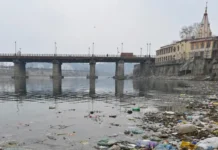
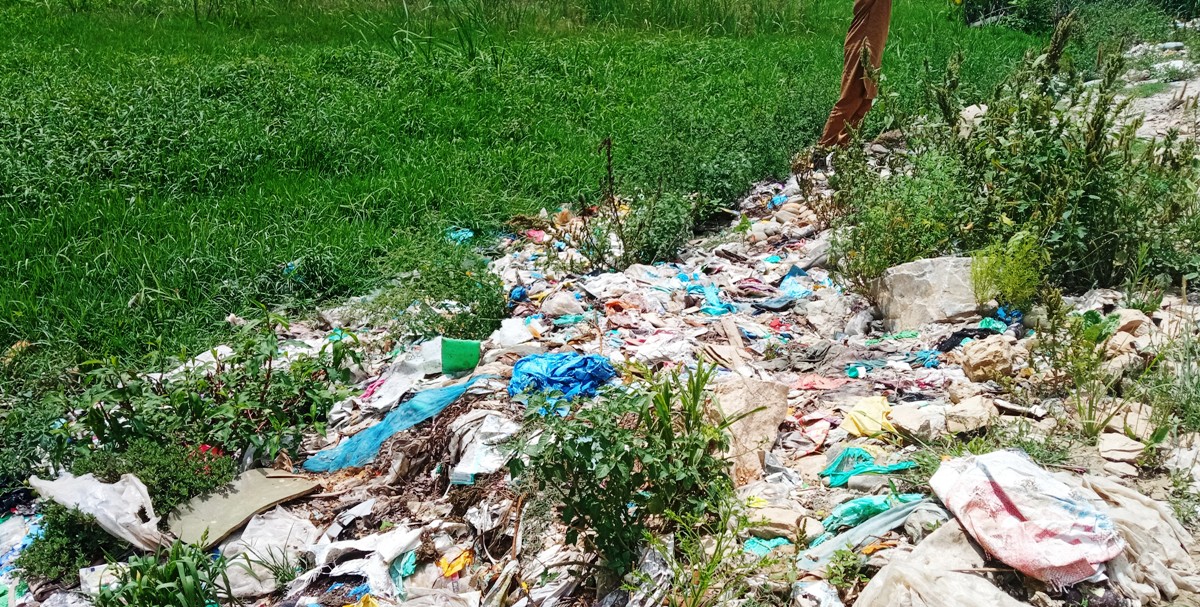
This mismatch is particularly visible in urban Jammu and Kashmir. Municipalities barely manage door-to-door collection, while waste continues to find its way into rivers, wetlands and open dumps. Expecting these same bodies to enforce segregation norms, penalise violators and manage processing facilities without strengthening them first is unrealistic. Rules alone cannot substitute for institutional capacity.
Tourism adds another layer of complexity. Hotels, houseboats, hospitals and large commercial establishments fall squarely under the bulk waste generator category. Holding them accountable is essential, but enforcement requires empowered local bodies with legal backing and political support. In the absence of such capacity, responsibility quietly shifts back to sanitation workers and landfill sites, defeating the very purpose of reform.
The challenge is even more acute in rural Kashmir. Panchayats are expected to adopt decentralised waste management models, yet most lack technical know-how, composting facilities or reliable funding. Awareness campaigns, while important, cannot compensate for the absence of trained personnel and infrastructure. Waste segregation and processing are systems, not slogans.
Capacity building, therefore, is not a supporting activity; it is the foundation of successful solid waste management. This means investing in municipal human resources trained specifically in waste management, strengthening financial and procurement systems, ensuring predictable funding, and providing continuous technical support to Panchayats. It also requires integrating informal waste workers, who already perform much of the Valley’s solid waste collection but remain invisible in official planning.
Kashmir’s ecological sensitivity makes institutional failure especially costly. Unscientific dumping contaminates water sources, degrades wetlands, and poses serious public health risks. The SWM Rules, 2026, offer an opportunity to reverse this trajectory, but only if governance realities are acknowledged.
Ultimately, solid waste management is not just an environmental challenge; it is a test of local governance. Without empowered and accountable urban local bodies and Panchayats, even the most progressive rules will remain aspirational. For Kashmir, the sequence is clear: build institutions first, enforce rules next, and only then expect sustainable outcomes.
Anything else risks repeating a familiar pattern: ambitious policies undermined by weak implementation, and a fragile environment paying the price.
(An IAS officer, the author retired as Chairman of Jammu and Kashmir Public Service Commission (JKPSC). Ideas are personal.)