As the world watches conflict spread across the Middle East, great power rivalries sharpen, and the global economy shudders, a quiet hunger has returned, the hunger to understand. People are reaching back for frameworks. And few frameworks shaped the modern world’s understanding of itself more decisively than the one Francis Fukuyama offered at the precise moment the Cold War ended.
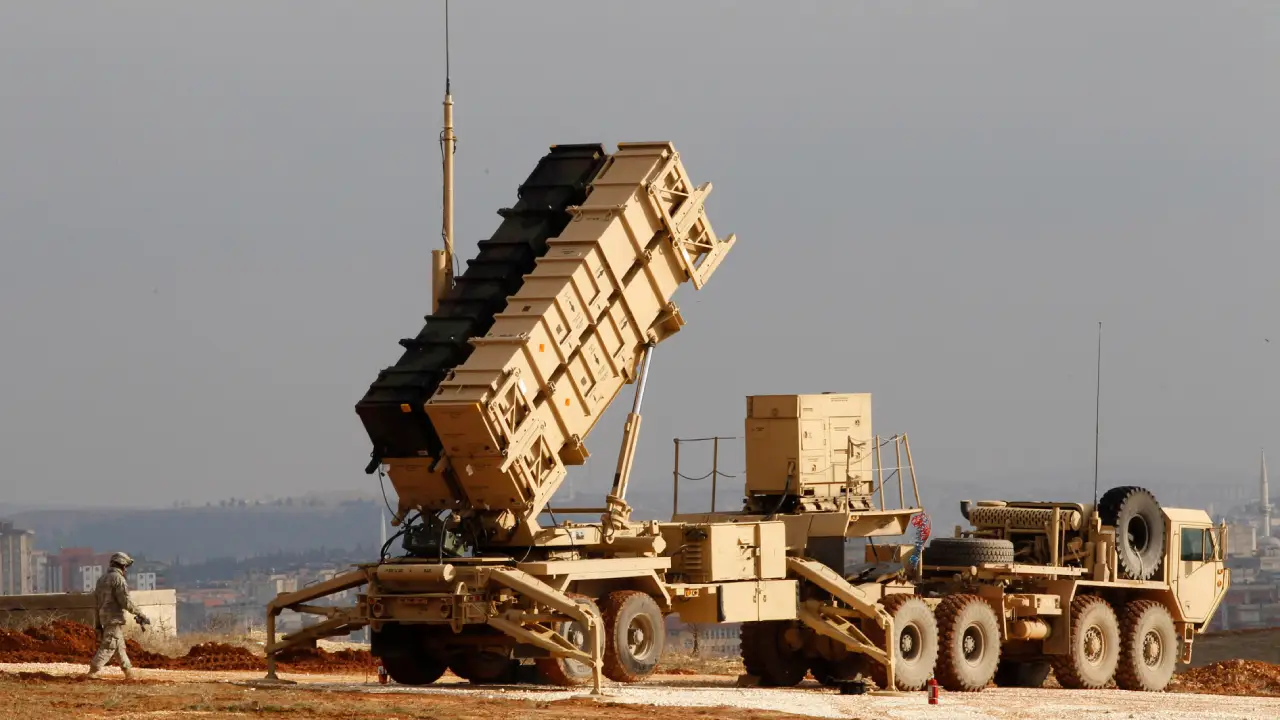
US surface-to-air Patriot missile system
There are moments in history when the pace of events outruns the ability of existing ideas to explain them. The fall of the Berlin Wall in 1989 was one such moment. Within months, the ideological architecture that had organised world politics for nearly half a century had collapsed. The Soviet Union was dissolving. Eastern European governments were falling like dominoes. The maps were being redrawn.

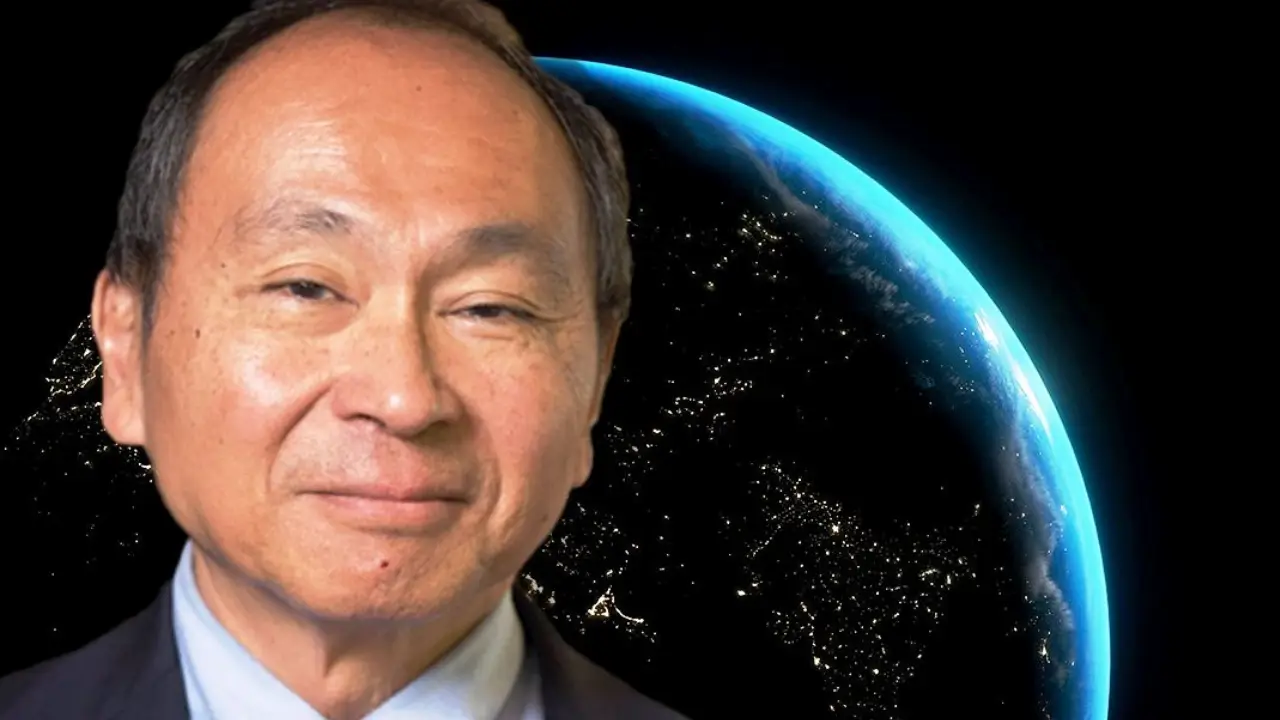
Francis Fukuyama, who authored, The End of History’
And the intellectuals, the diplomats, the journalists, and the policymakers who had spent their careers navigating a bipolar world were left with a disorienting question: what comes next? What does this mean? Is there even a framework large enough to hold what just happened?
Every age of upheaval produces thinkers who attempt to give it a name. The quest to impose intellectual order on historical chaos is as old as civilisation itself, from Thucydides writing about the Peloponnesian War while it was still being fought, to Marx mapping the logic of industrial capitalism as factory smoke was still rising over Victorian England.
What drives such thinkers is not merely academic ambition. It is the urgent, almost moral need to understand what is happening before it happens again, or worse, before it is too late to respond.
Today, as missiles fall on Tehran and Gaza simultaneously, as the Houthis disrupt global shipping lanes, as the United States finds itself stretched across multiple theatres of confrontation, and as economists quietly warn that the global financial system is absorbing shocks it was not designed to absorb, that same hunger for understanding has returned.
People are pulling books off shelves. Old essays are being re-circulated. The questions that seemed settled are unsettled again. And among the thinkers being revisited most urgently is a man who, in the summer of 1989, sat down and attempted to explain not just what was ending, but what it meant for everything that would follow.
His name was Francis Fukuyama. And his answer remains one of the most consequential intellectual interventions of the modern era.
The Man behind the Thesis
Francis Fukuyama was born in Chicago in 1952, the grandson of a Japanese immigrant who had fled the West Coast internment camps. He grew up in New York, studied classics at Cornell, spent time in Paris absorbing French post-structuralism under Jacques Derrida and Roland Barthes, and eventually landed at Harvard, where he earned his doctorate in political science under Samuel Huntington, the very man who would become one of his most formidable intellectual opponents.
His formation was unusually wide. He was trained as a philosopher of ideas but pulled toward the real world of power. In the 1980s, he joined the RAND Corporation and later served on the US State Department’s Policy Planning Staff, the division charged with thinking about the long arc of American foreign policy. He read Hegel and Plato in the evenings and analysed Soviet behaviour during the day. He was, in the truest sense, a thinker shaped equally by the library and the briefing room.
This dual formation matters enormously. Many academics who write about geopolitics have never sat inside the machinery of a state. Many practitioners who shape foreign policy have little patience for philosophical depth. Fukuyama was rare in being genuinely both, which is precisely why, when the moment came and the world demanded an explanation, he had something serious to offer.
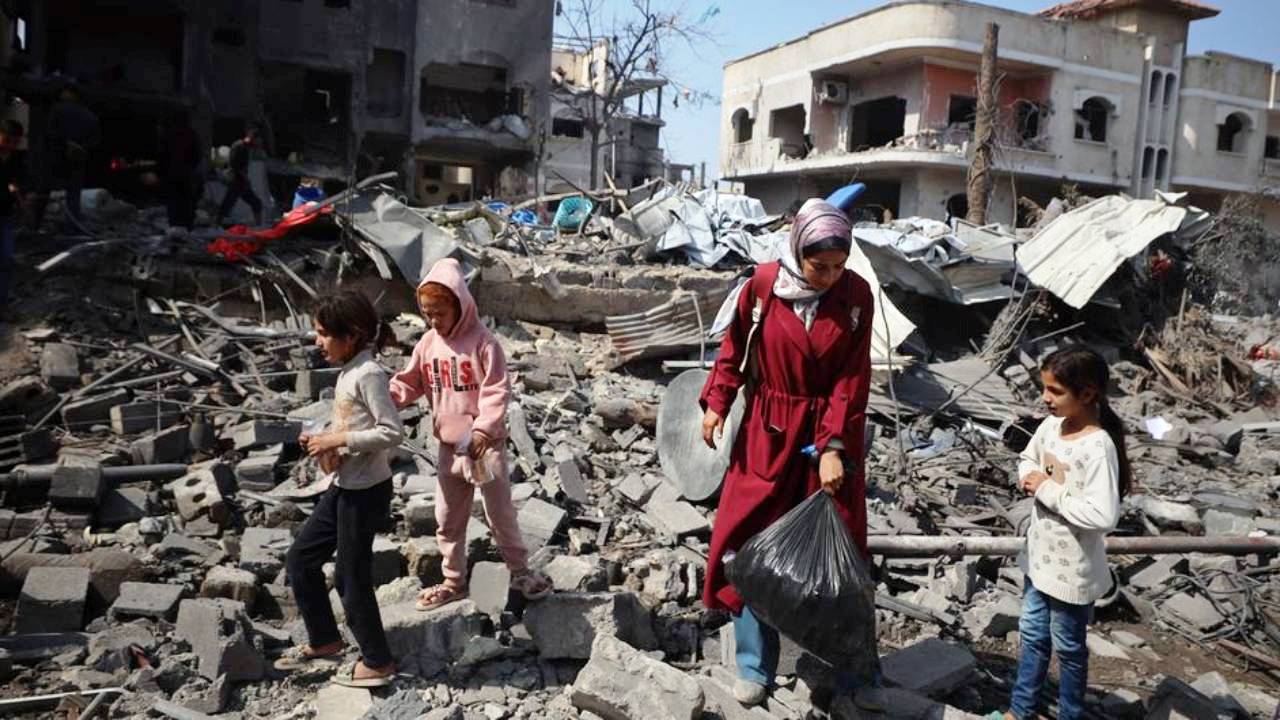
A UNFPA photograph shows a family in Gaza looking through the rubble of a destroyed building.
The Essay That Changed the Conversation
In the summer of 1989, Fukuyama published a sixteen-page essay in the small but influential journal The National Interest. Its title was The End of History?, note the question mark, which the ensuing global debate almost universally ignored. The essay asked a deceptively clean question: given that fascism had been defeated in 1945 and communism was visibly collapsing before his eyes, had liberal democracy not effectively won the ideological competition of the modern era? And if so, what did that mean?
The essay detonated. It was translated, debated, condemned, and celebrated across dozens of countries within months. Mikhail Gorbachev’s advisers reportedly discussed it. European intellectuals raged against it. American neoconservatives embraced it with an enthusiasm Fukuyama himself would later find uncomfortable. For a sixteen-page journal article to achieve that kind of reach, the argument had to be touching something real, a nerve of historical anxiety that the world had not yet found words for.
The Theory, Plainly Stated
To understand Fukuyama’s argument properly, you first need to understand the philosopher whose shadow falls over the entire project: Georg Wilhelm Friedrich Hegel, the nineteenth-century German thinker who believed that history was not simply one thing after another, but a directional process, humanity working through a series of contradictions toward a final resolution. History, for Hegel, had a destination. It was moving somewhere.
Fukuyama borrowed this architecture and gave it a concrete, modern application. The great ideological contest of the twentieth century, liberal democracy against fascism, then against communism, was, he argued, the final chapter of that Hegelian struggle. Both challengers had been defeated. No serious rival ideology remained standing. And this was not a temporary condition. It was structural. Liberal democracy had not merely won a battle; it had won the argument.
The end of history, in Fukuyama’s usage, did not mean the end of events, crises, wars, or suffering. He was explicit about this, though his critics rarely granted him the clarity. What had ended was the ideological evolution of human governance, the contest over what kind of political and economic system should organise human society. That contest was over. The answer was liberal democracy and market capitalism. There was nowhere further for the argument to go.
Central to his argument was a concept borrowed from ancient Greek philosophy, thymos, meaning spiritedness, or more precisely, the human need to be recognised as a free and dignified person. Drawing on Plato and the twentieth-century philosopher Alexandre Kojeve, Fukuyama argued that the engine of historical change was not merely economics or military power, but the universal human demand for recognition. Slavery, colonialism, fascism, and communism all violated this demand in ways that made them ultimately unstable. Liberal democracy, uniquely, offered a system in which every citizen was formally recognised as free and equal. This, he argued, was why it had no credible successor waiting in the wings.
A Thinker Who Kept Thinking
The 1989 essay became a 1992 book, The End of History and the Last Man, which expanded the philosophical architecture considerably and introduced a tension that the essay had only hinted at. If liberal democracy satisfies the human need for recognition, does it also flatten human greatness? The last man of the title is borrowed from Nietzsche, a figure of comfort, safety, and diminished ambition. Fukuyama worried aloud that the end of ideological struggle might not produce triumph so much as a kind of civilisational contentment that borders on stagnation. It was a remarkably self-critical note for a supposed triumphalist to strike.
 UN workers distributing food in Gaza. WFP photo by Jonathan Dumont
In the decades that followed, Fukuyama evolved in ways his critics did not always track. His later books, Trust (1995), The Origins of Political Order (2011), and Political Order and Political Decay (2014), moved away from the grand sweep of ideological history toward the harder, grainier question of why some states build functioning liberal institutions, and others collapse into dysfunction. He became increasingly focused on state capacity, the rule of law, and democratic accountability, the three pillars that must all be present and in balance for liberal governance to actually work. In doing so, he was quietly acknowledging what the original essay had underplayed: the road to liberal democracy is long, difficult, and reversible.
Today, as the institutions of the liberal international order creak under pressures they were not built to absorb, Fukuyama remains an active and surprisingly candid voice. He has acknowledged that the thesis was too optimistic about the speed of democratic consolidation. He has watched with evident concern as democracies, including the United States, exhibit what he calls political decay: the capture of institutions by narrow interests, the erosion of public trust, and the weakening of the administrative capacity of the state. The man who announced the end of history has spent thirty years grappling with the evidence that history has not read his announcement.
And yet the core of his original argument, that no coherent ideological alternative to liberal democracy has yet emerged to replace it, remains, for now, intact. China offers a developmental model but not an exportable ideology. Political Islam offers a cultural identity but not a universal governance framework. Populist nationalism offers grievance but not a system. Fukuyama’s end of history has been battered, contested, and stress-tested for three decades. It has not, as of yet, been replaced. That, in itself, is a form of durability that deserves serious attention, particularly in a world that is desperately searching, once again, for frameworks large enough to hold what is happening.
(This is the second piece of the 8-part series, which was developed collaboratively by the Kashmir Life desk in partnership with Claude, Anthropic’s AI, through a process of shared ideation, research, and writing. Read the first part here.)