The world’s greatest minds built frameworks to explain history, power, and civilisation. They were brilliant and often prophetic. And yet here we are, in a world none of them fully anticipated. This is the story of what they got right, what they missed, and what that reveals about the strange, evolving unpredictability of the human species.
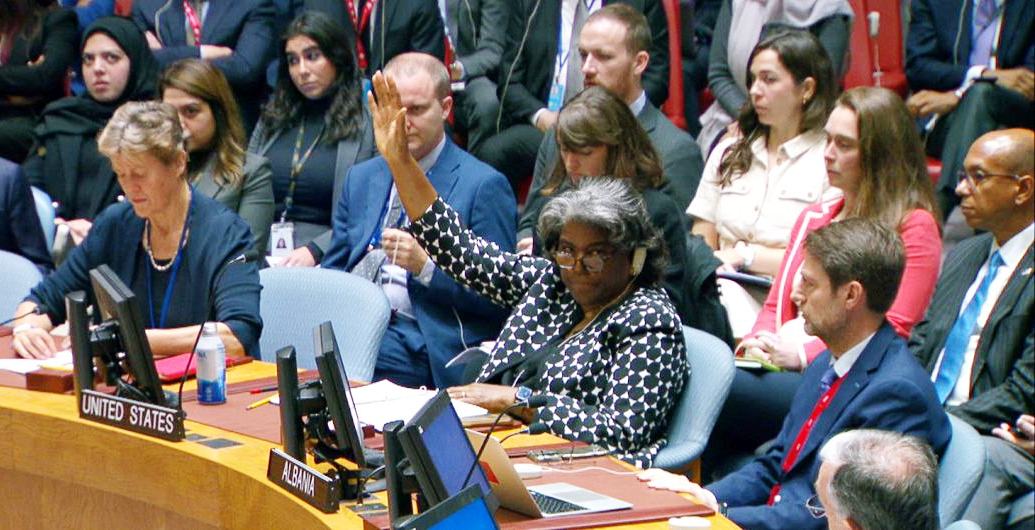
A world power effectively abducted a sitting head of government. Another leader was assassinated. The United Nations Security Council, the institution built to prevent exactly these kinds of actions, stands paralysed by vetoes and hollowed by the contempt of the very powers whose cooperation it requires to function. In Eastern Europe, a full-scale land war, the largest since 1945, grinds through its third year, with no end visible.

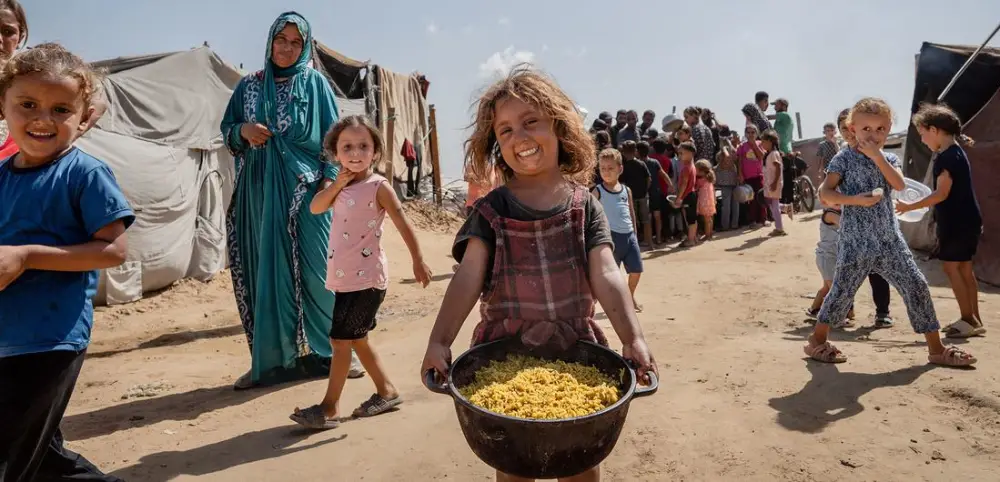
And then there is Gaza. A televised war of near-total destruction, watched in real time by the world. A conflict in which international humanitarian law is cited by everyone but observed by almost no one; in which the institutions designed to protect civilians have been rendered functionally irrelevant, and in which the most powerful democracy on earth finds itself supplying the weapons while simultaneously calling for restraint.
Across this entire landscape, one force has proven more potent than any ideology, alliance, or institution: ultra-nationalism. The politics of blood, soil, historic grievance, and civilisational identity has returned as the dominant political grammar of the age. It speaks from Moscow and Tel Aviv, from Washington and Budapest, from New Delhi and Ankara. It dissolves old alliances and creates a world in which no one is reliably with anyone. Nobody fully predicted this. Not the diplomats. Not the intelligence agencies. Not the economists. And, not even thinkers.

The Frameworks
Every age of upheaval produces thinkers who attempt to give it a name, to impose intellectual order on historical chaos before the chaos swallows everything. The decades following the Cold War produced a remarkable generation of such thinkers, each building a framework large enough, they hoped, to encompass the complexity of the world emerging from the ruins of the bipolar order. Seven of them have consequential works to their credit. Together they constitute something close to a complete map of post-Cold War intellectual life, and their limitations, taken together, tell us something profound about the nature of the moment we are living through.
In his End of History, Francis Fukuyama argued that history had reached its endpoint, as liberal democracy had won the ideological competition of the modern era and that no serious rival remained to challenge it. He was describing something real: the ideological bankruptcy of both fascism and communism was genuine, and no coherent alternative system of governance has yet emerged to replace liberal democracy in the abstract. But what he underestimated was the gap between an idea winning the argument and an idea winning the world, the vast, treacherous distance between intellectual resolution and political reality.
In his Clash of Civilisations, Samuel Huntington saw what Fukuyama missed. He looked beneath the ideological surface and found something older and more durable: civilisational identity rooted in religion, language, and shared memory. He predicted the fault lines, the friction between the Islamic world and the West, the assertiveness of China, the resistance of non-Western civilisations to liberal universalism, with an accuracy that has only grown more striking with time. And yet even Huntington, for all his prescience, could not fully account for the way ultra-nationalism has fractured civilisations from within, turning the West against itself, splitting the Islamic world along sectarian and geopolitical lines, producing conflicts where the civilisational map offers less guidance than the personal ambitions and domestic political calculations of individual leaders.
Then John J Mearsheimer came with his Tragedy of Great Power Politics, which gave us the cold structural logic of great power competition, the argument that states are prisoners of anarchy, that power is the only reliable currency of security, and that the liberal international order was always a temporary construction dependent on American hegemony rather than a durable new reality. Libya, Afghanistan, the Ukraine war, the US-China rivalry, and the hollowing of international institutions all seemingly vindicated his structural realism.
But even John J Mearsheimer’s framework, built to explain the behaviour of rational state actors pursuing calculated interests, struggles to account for the irrationality introduced by ultranationalist politics. In such contexts, leaders often pursue symbolic victories at material cost, burn their own economies to satisfy historical grievances, and make decisions that no balance-of-power calculation would endorse.
Then, Graham Allison published his book Destined for War: Can America and China Escape Thucydides’s Trap?, which identified a historical pattern: rising powers and ruling powers have gone to war in twelve of sixteen such cases during hegemonic transitions. His Thucydides Trap is the most empirically grounded warning in contemporary geopolitics, and the US-China relationship is tracking its dynamics with disturbing fidelity.
Hans Morgenthau built the foundational realist architecture on which every subsequent thinker constructed their work, drawing from the wreckage of Weimar and the Holocaust the lesson that power cannot be moralised away, only managed.
Joseph Nye insisted that power has a softer face, that attraction, culture, and the legitimacy of values are genuine strategic assets, not decorative additions to hard power, and watched with evident pain as those assets were systematically degraded by the very country that possessed them most abundantly.
And Immanuel Wallerstein, the most radical voice in the series, said that all of the others were theorising the superstructure while ignoring the base, that the capitalist world-system, with its structural division of the globe into core and periphery, is the engine that drives everything else, and that the Global South’s refusal to follow Western leadership is not confusion but memory.
What did They Miss?
These seven thinkers cover an extraordinary range of human experience, ideology, culture, power, economics, history, and institutions.
Their frameworks explain the behaviour of states, civilisations, and economic systems as the product of forces larger than any individual. Mearsheimer’s states are rational actors constrained by anarchy. Huntington’s civilisations are cultural formations shaped over centuries. Wallerstein’s world-system grinds on regardless of who sits in which presidential palace. These are powerful and largely correct observations about the deep structure of international life.
Yet the world they collectively describe still does not match the one we inhabit. Something is missing from all of them, or perhaps present in all of them but insufficient, a variable that their frameworks acknowledge but cannot fully metabolise. That variable is the role of individual human psychology operating at the scale of state power. But the current era has been shaped in decisive ways by the specific psychology of specific individuals, by the particular combination of grievance, grandiosity, and political genius that characterises the ultranationalist leaders who have captured state power across multiple continents simultaneously. The frameworks tell us that a leader in Putin’s structural position would resist NATO expansion. They do not fully explain why he would launch an invasion with the timing, the scale, and the apparent miscalculation of domestic and international response that characterised February 2022. The frameworks tell us that Israel would respond to an “existential security threat” with overwhelming force. They do not explain the specific character of the response, or the political calculations inside it, or the way that domestic political survival became fused with military strategy in ways that produced outcomes no rational actor model would have generated.
The Evolving Unpredictability
The fact remains that as humans evolve, their unpredictability evolves with them, in its own strange, non-linear ways that outpace the theories built to contain it.
Every generation of thinkers builds its frameworks from the crises it has lived through. Morgenthau built his from the Holocaust and the failure of Weimar. Wallerstein built his on the betrayed promises of decolonisation. Fukuyama built his from the fall of the Berlin Wall. Each framework captures something true and permanent about the human condition. Each framework is simultaneously a period piece and a map drawn from a specific historical vantage point.
What the current moment has produced is something qualitatively new in at least one respect: the fusion of ancient tribal psychology with modern technological power at a scale and speed that no previous era has had to manage. A leader with a grievance that would once have been confined to a regional conflict can now wage information warfare globally, can disrupt financial systems, can mobilise diaspora populations across a dozen countries simultaneously, can make the consequences of his personal psychology felt in the daily lives of billions of people who have never heard of the particular historical wound he is avenging. The ultranationalist leader of a mid-sized power now has tools of disruption that exceed anything available to the most powerful empires of the twentieth century.
This is what makes the current era so resistant to the existing frameworks. It is not that Mearsheimer is wrong about anarchy, Huntington wrong about civilisational fault lines, or Wallerstein wrong about the structural inequities of the world economy. They are all substantially right about the deep structure. What they could not fully anticipate is the way that deep structure would be activated, accelerated, and distorted by the specific psychological profiles of the leaders who happened to capture power at this particular technological moment, leaders for whom the boundary between personal survival and national destiny has dissolved entirely, for whom the rules of the international order are instruments to be wielded when convenient and discarded when not, and for whom the opinion of the international community registers only as an obstacle or an opportunity, never as a constraint.
The seven thinkers provide the vocabulary, the historical depth, and the analytical rigour without which the daily chaos of the news cycle is simply noise. But they are starting points, not destinations. What the next theory will look like is unknown.
(The eight pieces in this series were developed collaboratively by the Kashmir Life desk in partnership with Claude, Anthropic’s AI, through a process of shared ideation, research, and writing.)
Read the Series: